CONSEIL EN ART GRATUIT

x
Commander la reproduction Commander la reproductionAcheter l'image haute résolution Acheter l'image haute résolution PartagerPartager
DétailsDétails Ajouter aux favoris Ajouter aux favoris TéléchargerTélécharger Articles similairesArticles similaires RadiographieRadiographie DiaporamaDiaporama

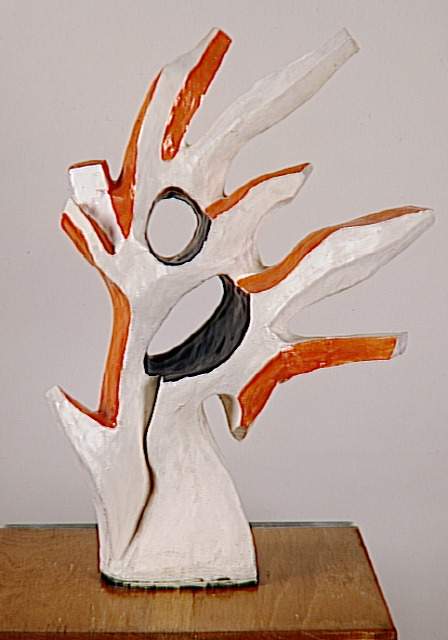
Rockefeller branch

Explorez l'art de Fernand Léger (1881-1955), un pionnier du Cubisme et du 'Tubisme'. Découvrez ses peintures audacieuses et figuratives célébrant la vie moderne, les machines et la forme humaine. Un précurseur du Pop Art !

Giclée / Impression d'art

Impression giclée ou sur toile de qualité musée, avec une production rapide et des finitions au choix.

P118B $10
P118H $10
P118W $10
P438Z $10
P508JH $12
P508YH $12
P805H $10
P805Z $10
P919BZ $10
P919G $10
P919XJ $10
P959ZH $10
P968JZ $12
W106C $8
W218G $10
W218JH $8
W218Y $10
W307PJ $10
W316G $10
W316PJ $8
W316Y $10
W398PJ $8
W4111J $10
W500HY $15
W500JH $15
W692G $12
W849H $8
W940BG $15
W953PJ $8

Standard
custom
CM
INCH

Choisissez parmi nos formats prédéfinis qui respectent les proportions originales de l’œuvre.

largeur
hauteur

Vous pouvez saisir vos propres dimensions pour vous adapter à un cadre ou à un espace spécifique. Si la taille sélectionnée ne correspond pas aux proportions de l'image originale, nous recadrerons l'œuvre ou étendrons l'image avec une bordure en miroir ou une couleur unie. Une maquette numérique vous sera envoyée pour approbation avant le début de la production.
Veuillez noter que l'aperçu à l'écran ne reflète pas le recadrage ou l'extension réelle. Seule la maquette montrera avec précision la composition finale.
Bien que des tailles personnalisées soient disponibles, nous vous recommandons de choisir une dimension dans la liste prédéfinie afin de préserver les proportions originales.

Livraison dans le monde entier () en 2 semaines au lieu des 4/5 semaines habituelles. (2 juillet)

why_choose_icon
Livraison express gratuite dans le monde entier
why_choose_icon
Toile de lin de haute qualité
why_choose_icon
Assurance transport complète
why_choose_icon
Garantie de remboursement des frais de douane
why_choose_icon
Garantie de fidélité des couleurs
why_choose_icon
Politique de retour de 60 jours (uniquement en cas de défaut)
why_choose_icon
Garantie de remboursement à 100%
why_choose_icon
Réduction sur les achats groupés

Prix total

-

reproduction

Rockefeller branch

Giclée / Impression d'art

Format de reproduction

-

Prix total final

-

En bref

  • Medium: Clay Sculpture
  • Influences: Cubism
  • Notable elements or techniques: Geometric abstraction; Repetition of forms
  • Dimensions: 30 cm x 20 cm
  • Year: 1952
  • Artist: Fernand Léger
  • Artistic style: Cubist influence; Dynamic composition

Quiz d'art

Chaque question ne comporte qu'une seule bonne réponse.

Question 1:
What artistic movement is Fernand Léger associated with?
Question 2:
The sculpture "Rockefeller Branch" depicts a prominent symbol of the machine age.
Question 3:
In what year was Fernand Léger born?
Question 4:
Where is the sculpture "Rockefeller Branch" currently located?
Question 5:
Fernand Léger’s artistic approach differed from many of his contemporaries who favored abstraction. How did he characterize his style?

Description de l'œuvre

A Symphony in Clay: Exploring Fernand Léger’s Rockefeller Branch

Fernand Léger's "Rockefeller Branch," sculpted in 1952, stands as an arresting emblem of Surrealism and a masterful distillation of Léger’s singular artistic philosophy. Situated within Biot’s Musée National Fernand Leger – Léger’s own hometown – the sculpture invites contemplation not merely as an object of beauty but as a conduit to understanding Léger's profound engagement with the anxieties and aspirations of his era.

The Genesis of Form: Léger’s Early Influences

Born Joseph Fernand Henri Léger in 1881, Léger emerged from the pastoral landscapes of Normandy into the burgeoning dynamism of Parisian artistic life. Initially drawn to architecture, he swiftly transitioned to painting, fueled by an instinctive fascination with geometric abstraction – a movement championed by artists like Piet Mondrian and Kazimir Malevich. However, Léger refused to abandon the tangible world entirely; his formative experiences in rural labor instilled within him a deep appreciation for physicality and craftsmanship—qualities that would subsequently permeate his sculptural oeuvre. This duality—the embrace of pure form alongside an unwavering connection to material substance—became the cornerstone of Léger’s artistic vision.

Surrealist Resonance: Embracing Paradox

Léger's foray into Surrealism wasn’t driven by a desire for purely aesthetic experimentation but rather by a conviction that art could illuminate the subconscious mind and expose hidden truths. Unlike many Surrealists who sought to conjure dreamlike imagery, Léger deliberately confronted viewers with recognizable forms—a hand clutching a ring—rendered in an unsettlingly simplified style. This paradoxical juxtaposition – the familiar rendered alien – reflects Léger’s belief that true artistic innovation resided not in escaping reality but in interrogating it from unexpected angles. The sculpture's deliberate distortion of anatomical proportions underscores this conceptual ambition, prompting viewers to reconsider conventional notions of representation and perception.

Technique and Material: Clay as Medium

The Rockefeller Branch is executed primarily in clay – a material Léger favored throughout his career—demonstrating an exceptional command of sculptural technique. Léger’s meticulous approach involved layering clay meticulously, achieving remarkable textural complexity through controlled manipulation and polishing. The resulting surface possesses a subtly mottled appearance, hinting at the artist's deliberate consideration of materiality as expressive element. This tactile quality invites viewers to engage with the sculpture on a sensory level, fostering an appreciation for the craftmanship inherent in its creation. Furthermore, Léger’s use of clay aligns perfectly with Surrealist ideals—a rejection of polished surfaces and idealized forms—emphasizing instead the inherent imperfections and irregularities that contribute to artistic authenticity.

Symbolism Beyond Representation

The hand itself – a motif recurrent throughout Léger's work – carries significant symbolic weight. Representing human agency, labor, and connection to the natural world, it embodies Léger’s humanist convictions. The ring symbolizes commitment, continuity, and perhaps even an unspoken acknowledgment of tradition—a subtle counterpoint to Léger’s radical embrace of abstraction. Collectively, these elements contribute to a layered narrative that transcends mere visual depiction, prompting viewers to contemplate themes of identity, purpose, and the enduring influence of formative experiences.

Emotional Impact: A Quiet Revelation

Despite its unsettling distortions, "Rockefeller Branch" possesses an understated emotional resonance. The sculpture’s stillness encourages contemplation—a deliberate antithesis to the frenetic pace of modern life—inviting viewers to slow down and consider the profound implications of Léger's artistic vision. Ultimately, Léger’s masterpiece serves as a reminder that art can communicate complex ideas with remarkable subtlety, prompting us to confront our preconceptions and embrace the transformative power of imaginative engagement.

Biographie de l'artiste

jeune vie et formation

fernand léger, peintre, sculpteur et cinéaste français, est né le 4 février 1881 à Argentan, Orne, en Normandie inférieure. Son père élevait du bétail, et léger a initialement été formé à l'architecture de 1897 à 1899. Il s’est ensuite installé à Paris en 1900, se débrouillant comme dessinateur architectural.

développement artistique

Le travail précoce de léger a été influencé par l'impressionnisme, comme le montrent le jardin de ma mère (mon jardin) (1905). Après avoir fréquenté l'école des beaux-arts et l’académie Julian, il a commencé à travailler sérieusement comme peintre à 25 ans. Son style s'est développé en une forme personnelle de cubisme, que les critiques ont qualifié de "tubisme" pour son accent sur les formes cylindriques.

cubisme et le groupe des Puteaux

En 1910, léger a exposé au Salon d’automne aux côtés de jean metzinger et henri le fauconnier. Il a rejoint le groupe des Puteaux, également connu sous le nom de section d’or (la section dorée), avec d'autres artistes tels que francis picabia et marcel duchamp.

guerre et son influence sur le travail de léger

Les expériences de léger à la Première Guerre mondiale ont eu un impact significatif sur son œuvre. Pendant son séjour au front, il a produit des croquis d'artillerie, d'avions et de soldats. Sa peinture soldier avec un tuyau (1916) reflète cette période.

œuvre ultérieure et héritage

L'œuvre post-guerre de léger, caractérisée par des formes machine-like élégantes, le lia à la tradition de la peinture figurative française. Ses paysages animés de 1921 ont présenté des figures et des animaux dans des formes harmonieuses et rationalisées. œuvres clés: musées présentant l'œuvre de léger:
Fernand Léger

Fernand Léger

1881 - 1955 , France

En bref

  • Artistes Influents:
    • Cézanne
    • Impressionnisme
  • Date De Décès: 1955
  • Date De Naissance: 4 février 1881
  • Influences Artistiques: ['Pop Art']
  • Lieu De Naissance: Argentan, France
  • Mouvement Artistique: Cubisme, Tubisme
  • Nationalité: Française
  • Nom Complet: Fernand Léger
  • Oeuvres Notables:
    • La Grande Parade
    • Machine Élément
    • Femme assise
    • Paysages animés
Explorez des œuvres d'art classées par thèmes, styles et caractéristiques.