CONSEIL EN ART GRATUIT

x
Commander l'impression Commander l'impressionAcheter l'image haute résolution Acheter l'image haute résolution PartagerPartager
Détails de l'œuvreDétails de l'œuvre Ajouter aux favoris Ajouter aux favoris TéléchargerTélécharger Articles similairesArticles similaires RadiographieRadiographie DiaporamaDiaporama

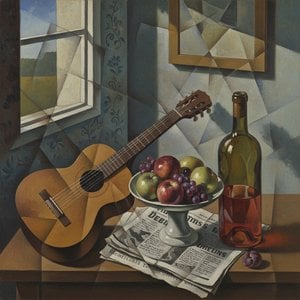
Pear Compotoir

Fernand Léger’s vibrant Cubist still life ‘Pear Compotoir,’ painted in 1923, captures the energy of industrial modernity through fragmented forms and bold colors—a captivating glimpse into a revolutionary artistic vision. Explore this iconic piece and bring its timeless beauty home.

Explorez l'art de Fernand Léger (1881-1955), un pionnier du Cubisme et du 'Tubisme'. Découvrez ses peintures audacieuses et figuratives célébrant la vie moderne, les machines et la forme humaine. Un précurseur du Pop Art !

Reproduction à l'huile faite à la main

Huile sur toile peinte à la main, avec cadre et dimensions personnalisés, réalisée sur commande par nos artistes.

P118B $10
P118H $10
P118W $10
P438Z $10
P508JH $12
P508YH $12
P805H $10
P805Z $10
P919BZ $10
P919G $10
P919XJ $10
P959ZH $10
P968JZ $12
W106C $8
W218G $10
W218JH $8
W218Y $10
W307PJ $10
W316G $10
W316PJ $8
W316Y $10
W398PJ $8
W4111J $10
W500HY $15
W500JH $15
W692G $12
W849H $8
W940BG $15
W953PJ $8

Standard
custom
CM
INCH

Choisissez parmi nos formats prédéfinis qui respectent les proportions originales de l’œuvre.

largeur
hauteur

Vous pouvez saisir vos propres dimensions pour l'adapter à un cadre ou à un espace spécifique. Si la taille sélectionnée ne correspond pas aux proportions de l'image d'origine, nous recadrerons l'œuvre ou prolongerons la peinture avec des éléments peints à la main supplémentaires. Une maquette numérique vous sera envoyée pour approbation avant le début de la production.
Veuillez noter que l'aperçu à l'écran ne reflète pas le recadrage ou l'extension réels. Seule la maquette montrera fidèlement la composition finale.
Bien que des tailles personnalisées soient disponibles, nous vous recommandons de sélectionner une dimension dans la liste prédéfinie afin de préserver les proportions d'origine.

Exemples de personnalisation : remplacer un visage par la photo du client ; ajouter un animal de compagnie (par exemple, remplacer un chat par un chien) ; inclure un message caché en arrière-plan ; modifier le paysage ou les éléments de l'arrière-plan.
Après la commande, l’équipe WahooArt.com contactera le client par e-mail pour obtenir ses instructions et lui fournira une maquette d’aperçu.

Livraison dans le monde entier () en 3 à 4 semaines au lieu des 5 semaines habituelles. (4 juillet). Aucune concession sur la qualité.

why_choose_icon
Livraison express gratuite dans le monde entier
why_choose_icon
Toile de lin de haute qualité
why_choose_icon
Assurance transport complète
why_choose_icon
Garantie de remboursement des frais de douane
why_choose_icon
Garantie de fidélité des couleurs
why_choose_icon
Politique de retour de 60 jours (uniquement en cas de défaut)
why_choose_icon
Garantie de remboursement à 100%
why_choose_icon
Réduction sur les achats groupés

Prix total

-

reproduction

Pear Compotoir

Technique de reproduction

Format de reproduction

-

Prix total final

-

En bref

  • Location: Private Collection
  • Influences: Picasso
  • Artist: Fernand Léger
  • Title: Pear Compotoir
  • Movement: Cubism
  • Artistic style: Analytical Cubism
  • Year: 1923

Description de l'œuvre

A Symphony of Form and Color: Exploring Fernand Léger’s “Pear Compotoir”

Fernand Léger's "Pear Compotoir," painted in 1923, isn’t merely a depiction of fruit; it’s an audacious declaration of Cubist principles applied to the everyday. Created during a period of intense artistic experimentation following World War I, this artwork embodies the burgeoning fascination with industrialization and its influence on human perception—a preoccupation that defined Léger's entire oeuvre. Unlike Impressionists who sought to capture fleeting moments of light and atmosphere, Léger deliberately confronted the viewer with fragmented perspectives and geometric shapes, mirroring the mechanized world around him.

The Cubist Breakthrough: Deconstructing Reality

Cubism revolutionized artistic representation by rejecting traditional illusionistic techniques. Léger’s approach aligns perfectly with this movement's core tenets. Instead of striving for photographic accuracy, he dissected objects into interlocking planes—the pear itself is rendered as a series of overlapping geometric forms—creating a visual puzzle that challenges our ingrained understanding of space and form. This technique wasn’t simply stylistic; it reflected Léger’s belief that art should engage with the underlying structure of reality, mirroring the repetitive patterns and angular contours characteristic of factories and urban landscapes. The artist meticulously analyzed the object's constituent parts, presenting them simultaneously from multiple viewpoints—a radical departure from Renaissance perspective.

Color Palette and Emotional Resonance

Despite its geometric abstraction, “Pear Compotoir” possesses a surprisingly vibrant color palette dominated by reds, yellows, and greens. These hues aren’t chosen arbitrarily; they contribute to the painting's emotional impact. Léger utilized color strategically to convey energy and dynamism—the reds evoke heat and movement, mirroring the furnaces of industrial production, while the yellows illuminate the scene with an optimistic glow. The green tones subtly hint at organic life amidst the mechanical backdrop, suggesting a harmonious coexistence between nature and technology. This juxtaposition speaks to Léger’s broader artistic vision: he aimed to capture not just what things *look* like but also how they *feel*.

Historical Context: Embracing the Machine Age

The painting emerged from a pivotal moment in European history—the aftermath of World War I—a period marked by profound social and technological upheaval. Léger’s artistic impulse stemmed directly from this context, fueled by anxieties about societal transformation and propelled by an unwavering conviction that art could articulate these concerns. He actively sought inspiration from the burgeoning industrial revolution, incorporating motifs of machinery into his compositions as a visual metaphor for progress and change. “Pear Compotoir” stands as a testament to Léger’s commitment to confronting the complexities of modernity with intellectual rigor and artistic boldness.

A Legacy of Geometric Vision

Fernand Léger's influence extends far beyond Cubism itself. His pioneering use of geometric abstraction paved the way for subsequent movements like Constructivism and Bauhaus, shaping the aesthetic landscape of the 20th century. “Pear Compotoir” remains a compelling example of Léger’s distinctive style—a masterful blend of analytical rigor and expressive color—inspiring artists and collectors alike to appreciate the transformative power of visual abstraction. It serves as an enduring reminder that art can transcend mere representation, communicating profound ideas about humanity's relationship with its environment and its technological future.

Biographie de l'artiste

jeune vie et formation

fernand léger, peintre, sculpteur et cinéaste français, est né le 4 février 1881 à Argentan, Orne, en Normandie inférieure. Son père élevait du bétail, et léger a initialement été formé à l'architecture de 1897 à 1899. Il s’est ensuite installé à Paris en 1900, se débrouillant comme dessinateur architectural.

développement artistique

Le travail précoce de léger a été influencé par l'impressionnisme, comme le montrent le jardin de ma mère (mon jardin) (1905). Après avoir fréquenté l'école des beaux-arts et l’académie Julian, il a commencé à travailler sérieusement comme peintre à 25 ans. Son style s'est développé en une forme personnelle de cubisme, que les critiques ont qualifié de "tubisme" pour son accent sur les formes cylindriques.

cubisme et le groupe des Puteaux

En 1910, léger a exposé au Salon d’automne aux côtés de jean metzinger et henri le fauconnier. Il a rejoint le groupe des Puteaux, également connu sous le nom de section d’or (la section dorée), avec d'autres artistes tels que francis picabia et marcel duchamp.

guerre et son influence sur le travail de léger

Les expériences de léger à la Première Guerre mondiale ont eu un impact significatif sur son œuvre. Pendant son séjour au front, il a produit des croquis d'artillerie, d'avions et de soldats. Sa peinture soldier avec un tuyau (1916) reflète cette période.

œuvre ultérieure et héritage

L'œuvre post-guerre de léger, caractérisée par des formes machine-like élégantes, le lia à la tradition de la peinture figurative française. Ses paysages animés de 1921 ont présenté des figures et des animaux dans des formes harmonieuses et rationalisées. œuvres clés: musées présentant l'œuvre de léger:
Fernand Léger

Fernand Léger

1881 - 1955 , France

En bref

  • Artistes Influents:
    • Cézanne
    • Impressionnisme
  • Date De Décès: 1955
  • Date De Naissance: 4 février 1881
  • Influences Artistiques: ['Pop Art']
  • Lieu De Naissance: Argentan, France
  • Mouvement Artistique: Cubisme, Tubisme
  • Nationalité: Française
  • Nom Complet: Fernand Léger
  • Oeuvres Notables:
    • La Grande Parade
    • Machine Élément
    • Femme assise
    • Paysages animés
Explorez des œuvres d'art classées par thèmes, styles et caractéristiques.