Aperçu en situation Aperçu en RA Passer au format impression Passer au format image numérique Partager
Détails Guide imprimable Ajouter aux favoris Télécharger Articles similaires Radiographie Voir le diaporama Statistiques

Landscape

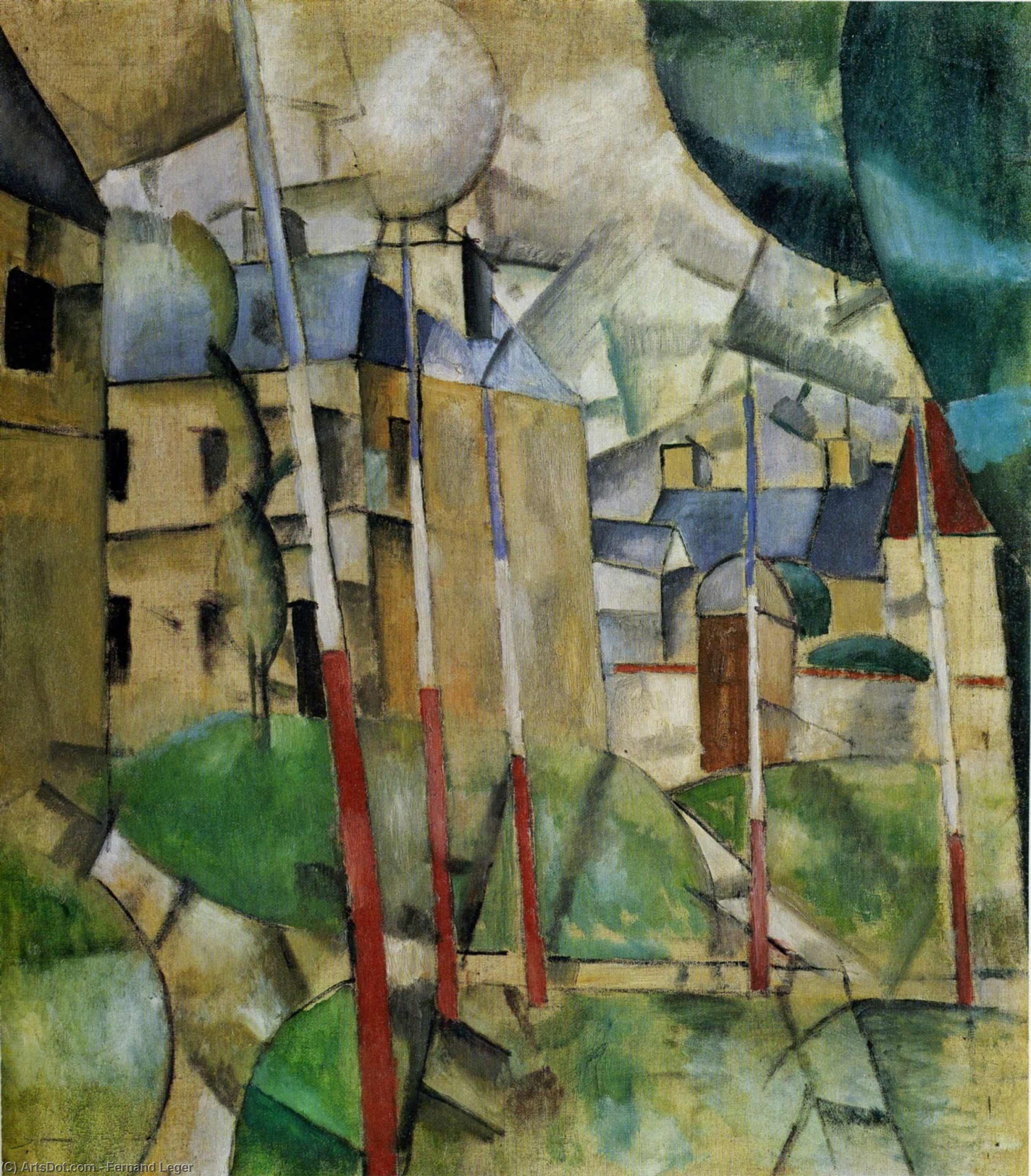
Explore Fernand Léger’s groundbreaking cubist landscape featuring a town with a clock tower and two umbrellas, capturing the dynamism of the machine age in this iconic 1913 artwork. Discover this unique piece and bring art home.

Explorez l'art de Fernand Léger (1881-1955), un pionnier du Cubisme et du 'Tubisme'. Découvrez ses peintures audacieuses et figuratives célébrant la vie moderne, les machines et la forme humaine. Un précurseur du Pop Art !

Reproduction à l'huile faite à la main

Huile sur toile peinte à la main, avec cadre et dimensions personnalisés, réalisée sur commande par nos artistes. ( Passer au format impression Passer au format image numérique)

Corner sample of the P118B picture frame: moulded polystyrene, 5 cm wide and 3 cm thick
P118B 10
Corner sample of the P118H picture frame: moulded polystyrene, 5 cm wide and 3 cm thick
P118H 10
Corner sample of the P118W picture frame: moulded polystyrene, 5 cm wide and 3 cm thick
P118W 10
Corner sample of the P438Z picture frame: moulded polystyrene, 5.5 cm wide and 3.5 cm thick
P438Z 10
Corner sample of the P508JH picture frame: moulded polystyrene, 7 cm wide and 3.5 cm thick
P508JH 12
Corner sample of the P508YH picture frame: moulded polystyrene, 7 cm wide and 3.5 cm thick
P508YH 12
Corner sample of the P805H picture frame: moulded polystyrene, 5 cm wide and 3.5 cm thick
P805H 10
Corner sample of the P805Z picture frame: moulded polystyrene, 5 cm wide and 3.5 cm thick
P805Z 10
Corner sample of the P919BZ picture frame: moulded polystyrene, 7 cm wide and 3.5 cm thick
P919BZ 10
Corner sample of the P919G picture frame: moulded polystyrene, 7 cm wide and 3.5 cm thick
P919G 10
Corner sample of the P919XJ picture frame: moulded polystyrene, 7 cm wide and 3.5 cm thick
P919XJ 10
Corner sample of the P959ZH picture frame: moulded polystyrene, 5 cm wide and 3 cm thick
P959ZH 10
Corner sample of the P968JZ picture frame: moulded polystyrene, 6 cm wide and 4 cm thick
P968JZ 12
Corner sample of the W106C picture frame: solid wood, 5 cm wide and 3 cm thick
W106C 8
Corner sample of the W218G picture frame: solid wood, 5 cm wide and 3 cm thick
W218G 10
Corner sample of the W218JH picture frame: solid wood, 5 cm wide and 3 cm thick
W218JH 8
Corner sample of the W218Y picture frame: solid wood, 5 cm wide and 3 cm thick
W218Y 10
Corner sample of the W307PJ picture frame: solid wood, 6 cm wide and 3 cm thick
W307PJ 10
Corner sample of the W316G picture frame: solid wood, 6 cm wide and 3 cm thick
W316G 10
Corner sample of the W316PJ picture frame: solid wood, 6 cm wide and 3 cm thick
W316PJ 8
Corner sample of the W316Y picture frame: solid wood, 6 cm wide and 3 cm thick
W316Y 10
Corner sample of the W398PJ picture frame: solid wood, 5 cm wide and 3 cm thick
W398PJ 8
Corner sample of the W4111J picture frame: solid wood, 6.5 cm wide and 3.5 cm thick
W4111J 10
Corner sample of the W500HY picture frame: solid wood, 7 cm wide and 5 cm thick
W500HY 15
Corner sample of the W500JH picture frame: solid wood, 7 cm wide and 5 cm thick
W500JH 15
Corner sample of the W692G picture frame: solid wood, 8 cm wide and 4 cm thick
W692G 12
Corner sample of the W849H picture frame: solid wood, 5 cm wide and 3 cm thick
W849H 8
Corner sample of the W940BG picture frame: solid wood, 7.5 cm wide and 4.5 cm thick
W940BG 15
Corner sample of the W953PJ picture frame: solid wood, 6 cm wide and 3.5 cm thick
W953PJ 8

Format standard
personnalisé
CM
INCH

Choisissez parmi nos formats prédéfinis qui respectent les proportions originales de l’œuvre.

largeur
hauteur

Vous pouvez saisir vos propres dimensions pour l'adapter à un cadre ou à un espace spécifique. Si la taille sélectionnée ne correspond pas aux proportions de l'image d'origine, nous recadrerons l'œuvre ou prolongerons la peinture avec des éléments peints à la main supplémentaires. Une maquette numérique vous sera envoyée pour approbation avant le début de la production.
Veuillez noter que l'aperçu à l'écran ne reflète pas le recadrage ou l'extension réels. Seule la maquette montrera fidèlement la composition finale.
Bien que des tailles personnalisées soient disponibles, nous vous recommandons de sélectionner une dimension dans la liste prédéfinie afin de préserver les proportions d'origine.

Exemples de personnalisation possibles : remplacer un visage par la photo du client ; ajouter un animal de compagnie (par exemple, remplacer un chat par un chien) ; inclure un message caché en arrière-plan ; modifier le paysage ou les éléments de l'arrière-plan.
Après la commande, l’équipe WahooArt.com contactera le client par e-mail pour recueillir ses instructions et lui fournira une maquette d’aperçu

Livraison dans le monde entier () en 3 à 4 semaines au lieu des 5 semaines habituelles. (10 octobre). Aucun compromis sur la qualité.

Livraison express gratuite dans le monde entier
Toile de lin de haute qualité
Assurance transport complète
Garantie de remboursement des droits de douane
Garantie de fidélité des couleurs
Garantie de retour de 100 jours (uniquement en cas de défaut)
Garantie de remboursement à 100%
Tarifs dégressifs sur quantité

Prix total

€ 234

Landscape

Technique de reproduction

Format de la reproduction

-

Prix total final

€ 234

L'essentiel de l'œuvre

  • Movement: Cubism
  • Notable elements: Clock tower, umbrellas
  • Influences:
    • Modernity
    • Form
  • Artistic style: Cubist landscape
  • Artist: Fernand Léger
  • Subject or theme: Townscape, modernity

A Fragmented Vision of Modern Life: Exploring Fernand Léger’s “Landscape”

Fernand Léger's 1913 painting, "Landscape," is more than just a depiction of a town; it’s a meticulously constructed meditation on the burgeoning anxieties and exhilarating possibilities of the early 20th century. Executed during a pivotal moment in art history – a time when Cubism was challenging the very foundations of representation – Léger's work embodies the movement’s core tenets while simultaneously injecting a uniquely personal vision rooted in his Normandy upbringing. The scene, rendered with a deliberate fragmentation and geometric precision, captures a town dominated by industrial forms, yet subtly infused with human presence and a sense of quiet observation.

  • Subject Matter: The painting presents a recognizable landscape – a small town with buildings, trees, and a prominent clock tower. However, this familiar subject is radically transformed through Léger’s Cubist lens.
  • Style & Technique: As a key figure in the development of Cubism, Léger employs multiple viewpoints simultaneously, breaking down forms into geometric shapes and reassembling them in an abstract yet recognizable manner. The use of bold colors – primarily blues, ochres, and grays – contributes to the painting’s dynamic energy.
  • Historical Context: Created in 1913, “Landscape” reflects the profound societal shifts occurring at the time. The rise of industrialization, the increasing prevalence of urban life, and the burgeoning fascination with technology are all powerfully represented within the artwork's fractured composition.

The Symbolism of Form and Industry

Léger’s artistic choices resonate deeply with the intellectual currents of his time. The clock tower, a traditional symbol of order and timekeeping, is presented in a fragmented state, suggesting a disruption of established rhythms and a questioning of conventional notions of progress. The buildings themselves are rendered as blocky, machine-like forms, reflecting Léger’s fascination with the mechanics of modern life – a fascination born from his early experiences working on farms. The inclusion of two umbrellas adds an element of human interaction to this otherwise industrial scene, hinting at the enduring importance of individual experience within a rapidly changing world.

  • Mechanical Forms: Léger’s deliberate use of geometric shapes – cubes, cylinders, and cones – evokes the imagery of machinery and industrial structures. This reflects his desire to integrate the spirit of the machine age into his art.
  • Human Presence: The solitary figure standing on the left side of the painting serves as a poignant counterpoint to the dominant mechanical forms. It suggests a moment of contemplation, perhaps a reflection on the impact of industrialization or simply an appreciation for the beauty of the landscape.

A Legacy of Innovation

"Landscape" stands as a testament to Fernand Léger’s groundbreaking contribution to modern art. His innovative approach to Cubism – his willingness to embrace abstraction while retaining a connection to the observable world – paved the way for subsequent generations of artists. Léger's work continues to resonate today, offering a powerful commentary on the relationship between humanity and technology, and reminding us of the enduring power of art to capture the complexities of our time. This reproduction offers an exceptional opportunity to own a piece of this pivotal moment in artistic history.

Perfect for Interior Design & Art Collection

This hand-painted reproduction captures the essence of Léger’s “Landscape” with remarkable fidelity, offering a stunning addition to any interior space or art collection. The vibrant colors and dynamic composition will bring a touch of modern sophistication to your home or office. Its timeless appeal ensures that it will remain a valued piece for years to come.

Questions et réponses

Qui a créé "Landscape" ?

« Landscape » est attribué à Fernand Léger.

Quelle est la taille d'impression recommandée pour «Landscape» de Fernand Léger ?

Une reproduction en Large est suggérée pour «Landscape» de Fernand Léger. Le format peut être ajusté tout en conservant les proportions.

À quelle période de la carrière de Fernand Léger appartient « Landscape » ?

«Landscape» appartient à la période Early Modern de la carrière de Fernand Léger. Cette classification relie l'œuvre à l'évolution de l'artiste.

En quelle année «Landscape» de Fernand Léger a-t-il été créé ?

«Landscape» de Fernand Léger a été créé en 1913.

À quel âge Fernand Léger a-t-il créé « Landscape » ?

Lorsque « Landscape » a été créé en 1913, Fernand Léger — né(e) en 1881 — était âgé(e) de 32 ans.

Quelle atmosphère se dégage de « Landscape » ?

«Landscape» de Fernand Léger est décrit comme ayant une atmosphère Modern. Cette classification peut aider à harmoniser l'œuvre avec un décor.

Quel emplacement convient au format de «Landscape» de Fernand Léger ?

Le format (Portrait) et l'espace recommandé (Living Room) sont les deux caractéristiques de disposition enregistrées pour «Landscape» de Fernand Léger.


Biographie de l'artiste

jeune vie et formation

fernand léger, peintre, sculpteur et cinéaste français, est né le 4 février 1881 à Argentan, Orne, en Normandie inférieure. Son père élevait du bétail, et léger a initialement été formé à l'architecture de 1897 à 1899. Il s’est ensuite installé à Paris en 1900, se débrouillant comme dessinateur architectural.

développement artistique

Le travail précoce de léger a été influencé par l'impressionnisme, comme le montrent le jardin de ma mère (mon jardin) (1905). Après avoir fréquenté l'école des beaux-arts et l’académie Julian, il a commencé à travailler sérieusement comme peintre à 25 ans. Son style s'est développé en une forme personnelle de cubisme, que les critiques ont qualifié de "tubisme" pour son accent sur les formes cylindriques.

cubisme et le groupe des Puteaux

En 1910, léger a exposé au Salon d’automne aux côtés de jean metzinger et henri le fauconnier. Il a rejoint le groupe des Puteaux, également connu sous le nom de section d’or (la section dorée), avec d'autres artistes tels que francis picabia et marcel duchamp.

guerre et son influence sur le travail de léger

Les expériences de léger à la Première Guerre mondiale ont eu un impact significatif sur son œuvre. Pendant son séjour au front, il a produit des croquis d'artillerie, d'avions et de soldats. Sa peinture soldier avec un tuyau (1916) reflète cette période.

œuvre ultérieure et héritage

L'œuvre post-guerre de léger, caractérisée par des formes machine-like élégantes, le lia à la tradition de la peinture figurative française. Ses paysages animés de 1921 ont présenté des figures et des animaux dans des formes harmonieuses et rationalisées. œuvres clés: musées présentant l'œuvre de léger:
Fernand Léger

Fernand Léger

1881 - 1955 , France

En bref

  • Artistes Influents:
    • Cézanne
    • Impressionnisme
  • Date De Décès: 1955
  • Date De Naissance: 4 février 1881
  • Influences Artistiques: ['Pop Art']
  • Lieu De Naissance: Argentan, France
  • Mouvement Artistique: Cubisme, Tubisme
  • Nationalité: Française
  • Nom Complet: Fernand Léger
  • Oeuvres Notables:
    • La Grande Parade
    • Machine Élément
    • Femme assise
    • Paysages animés
Explorez des œuvres d'art classées par thèmes, styles et caractéristiques.