CONSEIL EN ART GRATUIT

x
Commander l'impression Commander l'impressionCommander la reproduction Commander la reproduction PartagerPartager
Détails de l'œuvreDétails de l'œuvre Ajouter aux favoris Ajouter aux favoris TéléchargerTélécharger Articles similairesArticles similaires RadiographieRadiographie DiaporamaDiaporama

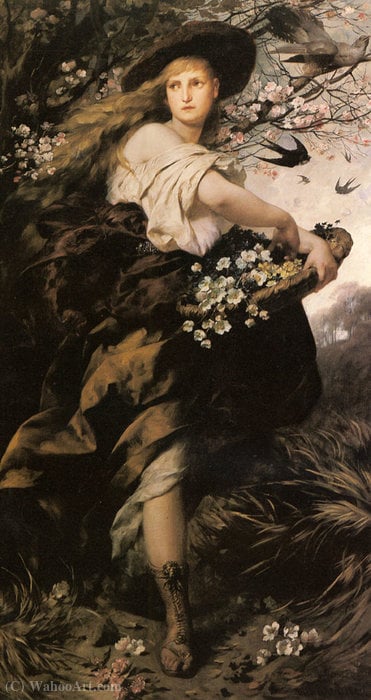
Flora

Explore the genre & history paintings of Ferdinand Keller (1842-1922), a German artist known for his depictions of bullfighting, landscapes, and royal commissions. Discover his legacy!

Acquérez une image numérique haute résolution et améliorée, bien supérieure à l'aperçu en ligne.

Chaque fichier est méticuleusement préparé par nos spécialistes internes à l'aide d'outils avancés et d'une retouche manuelle experte. Nous garantissons que chaque image possède une clarté exceptionnelle, une précision des couleurs irréprochable et un niveau de détail fin.

Le fichier final est livré par e-mail sous 72 heures, optimisé pour une utilisation immédiate dans des contextes professionnels, éditoriaux et d'impression. Il offre la même qualité de confiance que celle utilisée par les plus grands studios de création, éditeurs et galeries.

Image numérique

Téléchargez un fichier haute résolution pour un usage personnel, l'impression et vos projets créatifs.

Prix total

$9.99

Inclus avec chaque achat d'image numérique

Livraison numérique experte, garantie.

En choisissant WahooArt.com, vous n'obtenez pas seulement une simple image : vous recevez une œuvre numérique sublimée avec professionnalisme, conçue avec précision et accompagnée d'une garantie de satisfaction. Voici tout ce qui accompagne automatiquement votre commande :

shipping_icon
Livraison rapide par e-mail

Votre fichier d'image numérique haute résolution vous sera envoyé par e-mail sous 72 heures après votre commande — prêt à un usage immédiat.

canvas_icon
Fichier numérique optimisé par l'IA

Votre œuvre d'art bénéficie d'une optimisation professionnelle grâce à des outils d'IA avancés et une retouche manuelle, garantissant un niveau maximal de détail, de clarté et de fidélité chromatique.

insurance_icon
Réexpédition gratuite à vie

Vous avez accidentellement supprimé ou perdu votre fichier ? Pas de panique — nous vous le renverrons gratuitement, quand vous le souhaitez.

tax_icon
Aucun frais de douane - À jamais

Profitez de votre œuvre d'art instantanément sans frais de douane ni de livraison — les téléchargements numériques sont toujours exonérés de taxes.

color_icon
Garantie de fidélité des couleurs

Nous garantissons que votre image numérique reproduit les couleurs de l'original aussi fidèlement que possible grâce à des outils professionnels et une gestion rigoureuse des couleurs.

return_icon
Garantie de satisfaction de 60 jours

Si vous n'êtes pas satisfait de votre image numérique, nous la réviserons ou vous rembourserons 100% sous 60 jours - sans poser de questions.

guarantee_icon
Garantie de remboursement à 100%

Pas satisfait ? Obtenez un remboursement intégral dans les 60 jours suivant la réception de votre fichier numérique — sans aucune question posée.

discount_icon
Réductions sur les commandes groupées

Achetez 3 images, économisez 10% - Achetez 5, économisez 15% - Achetez 10+, économisez 20%. Idéal pour les projets créatifs, les galeries et les agences.


Biographie de l'artiste

Ferdinand Keller (1842–1922): A Pioneer of Romantic Symbolism

Ferdinand Keller (August 5, 1842 – July 8, 1922) stands as a pivotal figure in German Romantic painting, recognized primarily for his masterful depictions of bullfighting and landscapes imbued with profound symbolic resonance. Born in Karlsruhe to the family of a civil engineer, Keller’s artistic journey began amidst the intellectual fervor of his time—a period marked by burgeoning interest in psychology and philosophical explorations into the human condition. His formative years were shaped by witnessing his father's involvement in ambitious infrastructural projects across Brazil, fostering an early appreciation for observation and meticulous detail. Keller’s formal training commenced at the Karlsruhe Academy of Fine Arts under Johann Wilhelm Schirmer, a celebrated educator who championed classical ideals and instilled in Keller a dedication to artistic rigor. Schirmer’s influence extended beyond technique; he encouraged Keller to contemplate the broader implications of art as a vehicle for conveying emotion and intellectual insight—a cornerstone of Romantic philosophy. Following Schirmer's untimely demise, Keller honed his skills with Ludwig des Coudres, whose teachings further refined Keller’s stylistic sensibilities. Dissatisfaction with the Academy’s conservative approach propelled him toward independent study, prioritizing private instruction in the studio of Hans Canon, a sculptor known for his expressive realism. These formative experiences fueled Keller's artistic explorations, encompassing extensive travel to Switzerland and France between 1866 and 1867—locations that served as sources of inspiration for his landscapes and imbued them with the spirit of Romantic idealism. He achieved considerable acclaim early in his career with “The Death of Philip II,” presented at the International Exposition of Paris in 1867, demonstrating his ability to capture dramatic emotion and psychological complexity within a monumental canvas. From 1867 to 1869, Keller resided in Rome, engaging intellectually with Anselm Feuerbach—a fellow artist and philosopher whose ideas profoundly impacted Keller’s artistic worldview. This collaboration fostered a shared commitment to exploring the relationship between art and spirituality, shaping Keller's distinctive aesthetic vision. Keller’s directorial tenure at Karlsruhe Academy (1870–1913) solidified his position as a leading figure in German art education—a role he embraced with unwavering dedication. Beyond his responsibilities as instructor and director, he undertook significant commissions for theatrical productions, notably decorating the King Carl Hall at the Landesmuseum Württemberg, where his opulent murals showcased his mastery of color and composition. Recognizing Keller’s artistic merit and contribution to cultural heritage, Frederick I, Grand Duke of Baden, bestowed upon him the title of nobility—a testament to his enduring legacy as a visionary artist and humanist. Perhaps most notably, he undertook the monumental task of painting “The History of Baden,” now housed at the Staatliche Kunsthalle Baden-Baden—a project that exemplifies Keller’s ambition to engage with grand narratives and convey profound emotional truths through visual art. Keller's artistic output extended beyond monumental murals; his etchings served as illustrations for numerous literary works, demonstrating his versatility as an artist and furthering his engagement with intellectual discourse. His landscapes, characterized by atmospheric perspective and evocative tonal harmonies, capture the sublime beauty of Alpine vistas—reflecting the Romantic preoccupation with confronting the grandeur of nature and contemplating its spiritual significance. Keller’s paintings are distinguished by their meticulous attention to detail, combined with a masterful command of color and light—elements that contribute to their expressive power and enduring appeal. His artistic legacy continues to inspire artists today, cementing his place as one of Germany's most influential Romantic painters.
ferdinand keller

ferdinand keller

1842 - 1922

Informations clés

  • Artistic Movement Or Style: Romanticism
  • Artists Or Movements Influenced By This Artist: ['Arnold Bocklin']
  • Artists Who Influenced This Artist:
    • Hans Canon
    • Ludwig Richter
  • Date Of Birth: August 5, 1842
  • Date Of Death: July 8, 1922
  • Full Name: Ferdinand Keller
  • Nationality: German
  • Notable Artworks:
    • The Death of Philip II
    • Türkenlouis
  • Place Of Birth: Karlsruhe, Germany