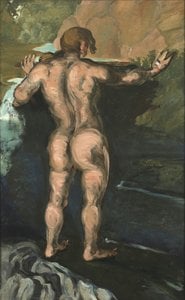
A Life Etched in Symbolism: The World of Ferdinand Hodler
Ferdinand Hodler, un nom intrinsèquement lié à la scène picturale suisse et à la langue évocatrice du symbolisme, est devenu l’un des artistes les plus importants de la fin du XIXe et du début du XXe siècle. Né à Berne, en Suisse, en 1853, sa vie a été profondément marquée par le chagrin d'enfance – un thème récurrent qui imprégnerait sa vision artistique. Les décès prématurés de son père et de ses deux jeunes frères avant qu’il n’atteigne huit ans ont laissé une longue ombre, instillant en lui une profonde contemplation de la mort et de la fragilité de l’existence. Ces expériences, entrelacées avec une sensibilité aiguë à la beauté et au pouvoir du monde naturel, sont devenues des piliers fondamentaux de son œuvre en constante évolution. Initialement apprenti chez des peintres décorateurs, Hodler a rapidement dépassé les contraintes de cet artisanat pour aspirer à une formation artistique plus formelle et à l’exploration d’idées plus profondes. Cette ambition l'a conduit à Genève en 1871, où il s'est plongé dans l'étude, assistant aux cours de sciences tout en copiant méticuleusement des chefs-d'œuvre au musée de la ville – une éducation rigoureuse qui a jeté les bases de ses innovations futures.
De Réalisme à ‘Parallelisme’ : Forger Une Vision Unique
Le parcours artistique de Hodler s'est caractérisé par une évolution constante et une quête incessante de puissance expressive. Ses premières œuvres reflétaient le style réaliste dominant de l'époque – portraits, paysages et scènes de genre exécutés avec un souci du détail extrême. Cependant, il a rapidement trouvé lui-même limité par ces conventions, cherchant un moyen d’exprimer des vérités émotionnelles et intellectuelles plus profondes. Cette quête l'a mené vers le symbolisme, un mouvement qui rejetait la représentation naturaliste au profit de l’expérience subjective et d’images évocatrices. Pourtant, Hodler n’a pas simplement adopté les principes du symbolisme ; il a plutôt forgé sa propre voie unique, développant ce qu’il appelait « le parallélisme ». Ce style distinctif impliquait la disposition des figures et des formes selon des motifs rythmiques, presque géométriques, créant ainsi à la fois un sentiment d'harmonie et de tension – une représentation visuelle de l'interconnexion de toutes choses. Il s’agissait d’une tentative de ne pas seulement *voir* ce qu’il voyait, mais aussi *ressentir* ce qu’il ressentait – les courants émotionnels sous-jacents qui relient tous les êtres.
La Nuit (1890), l'un de ses œuvres les plus marquantes, en témoigne – un tableau monumental dépeignant des figures allongées suggérant la mort et le repos. Malgré les premières critiques, ce tableau a attiré l’attention à Paris, établissant la réputation de Hodler au-delà des frontières de la Suisse et signalant l'arrivée d'une voix véritablement originale.
Marques sur Toile : Œuvres Clés et Leur Signification
Tout au long de sa carrière prolifique, Hodler a produit un corps d’œuvres remarquable qui résonne encore aujourd’hui auprès du public.
Le Jour (1893), l'une de ses réalisations les plus ambitieuses et les plus célébrées – une peinture historique monumentale mettant en valeur sa maîtrise de la composition et du symbolisme – témoigne de cette capacité. Exposé au Kunsthaus Zürich, ce tableau est une méditation puissante sur la vie, la mort et le renouveau, rendu avec un mélange saisissant de réalisme et d'intensité visionnaire. L’ampleur et l’impact émotionnel de
Le Jour ont consolidé la position de Hodler parmi les figures majeures de l’art européen. D’autres œuvres notables incluent de nombreuses représentations des Alpes suisses, imprégnées d’un sentiment d'admiration grandiose, et des portraits qui révèlent sa profonde compréhension de la psychologie humaine. Il a fréquemment exploré les thèmes de la perte et du deuil, peut-être en raison de ses propres traumatismes d’enfance, mais toujours avec un sens de dignité et de résilience. Ses peintures n'étaient pas de simples représentations ; elles étaient des paysages émotionnels, invitant le spectateur à réfléchir aux questions fondamentales de l'existence. Des œuvres telles que
La Vérité II (1897) démontrent sa capacité à fusionner les formes classiques avec les sensibilités modernes, créant des images à la fois intemporelles et étonnamment contemporaines – un témoignage de son esprit innovant.
Héritage Durable : Influence et Contexte Historique
L'influence de Ferdinand Hodler s’est étendue bien au-delà des frontières de la Suisse. Son utilisation novatrice du symbolisme et sa mise au point du « parallélisme » ont ouvert la voie à l’expressionnisme, avec son accent sur l'émotion subjective et les formes déformées. Les artistes qui l'ont suivi reconnaissent en lui un précurseur de leurs propres explorations de l'expérience intérieure. Son œuvre a également résonné dans le contexte culturel plus large de la fin du XIXe et du début du XXe siècle – une période marquée par des changements sociaux rapides, des avancées scientifiques et un sentiment croissant d’anxiété existentielle. Ses peintures offraient un langage visuel pour faire face à ces questions complexes, fournissant du réconfort et de la compréhension dans un monde de plus en plus incertain. Aujourd'hui, les œuvres de Hodler sont conservées dans les principaux musées d'Europe et au-delà, garantissant que sa vision artistique continue d’inspirer et de défier les générations futures. Il reste une figure dominante de l’histoire de l’art suisse, célébré non seulement pour son habileté technique mais aussi pour sa profondeur émotionnelle profonde et son engagement inébranlable à explorer les mystères de la condition humaine.
Explorer Hodler Plus En Détail



 Aperçu en situation
 Passer au format impression
 Partager
 Partager
 Détails
 Guide
Guide

 Télécharger
 Articles similaires
 Radiographie
 Voir le diaporama
 Statistiques


 Afficher la suite






































 L'option verre n'est disponible que pour les dimensions inférieures à 110 cm.