Aperçu en situation Aperçu en RA Passer au format impression Passer au format image numérique Partager
Détails Ajouter aux favoris Télécharger Articles similaires Radiographie Voir le diaporama Statistiques

Coquettery

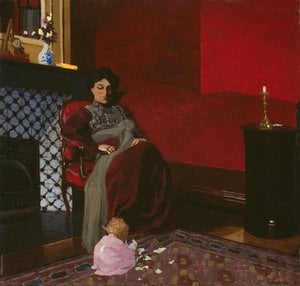
A captivating Post-Impressionist portrait of a woman at a piano by Félix Vallotton captures an intimate fin de siècle mood, inviting you to bring this exquisite piece of art history into your private collection.

Découvrez Félix Vallotton (1865-1925), peintre & graveur franco-suisse! Son style post-impressionniste, ses bois gravés saisissants et sa série 'Intimités' révèlent des relations complexes. Art moderne influent!

Reproduction à l'huile faite à la main

Huile sur toile peinte à la main, avec cadre et dimensions personnalisés, réalisée sur commande par nos artistes. ( Passer au format impression Passer au format image numérique)

P118B $10
P118H $10
P118W $10
P438Z $10
P508JH $12
P508YH $12
P805H $10
P805Z $10
P919BZ $10
P919G $10
P919XJ $10
P959ZH $10
P968JZ $12
W106C $8
W218G $10
W218JH $8
W218Y $10
W307PJ $10
W316G $10
W316PJ $8
W316Y $10
W398PJ $8
W4111J $10
W500HY $15
W500JH $15
W692G $12
W849H $8
W940BG $15
W953PJ $8

Format standard
personnalisé
CM
INCH

Choisissez parmi nos formats prédéfinis qui respectent les proportions originales de l’œuvre.

largeur
hauteur

Vous pouvez saisir vos propres dimensions pour l'adapter à un cadre ou à un espace spécifique. Si la taille sélectionnée ne correspond pas aux proportions de l'image d'origine, nous recadrerons l'œuvre ou prolongerons la peinture avec des éléments peints à la main supplémentaires. Une maquette numérique vous sera envoyée pour approbation avant le début de la production.
Veuillez noter que l'aperçu à l'écran ne reflète pas le recadrage ou l'extension réels. Seule la maquette montrera fidèlement la composition finale.
Bien que des tailles personnalisées soient disponibles, nous vous recommandons de sélectionner une dimension dans la liste prédéfinie afin de préserver les proportions d'origine.

Exemples de personnalisation possibles : remplacer un visage par la photo du client ; ajouter un animal de compagnie (par exemple, remplacer un chat par un chien) ; inclure un message caché en arrière-plan ; modifier le paysage ou les éléments de l'arrière-plan.
Après la commande, l’équipe WahooArt.com contactera le client par e-mail pour recueillir ses instructions et lui fournira une maquette d’aperçu

Livraison dans le monde entier () en 3 à 4 semaines au lieu des 5 semaines habituelles. (19 septembre). Aucun compromis sur la qualité.

why_choose_icon
Livraison express gratuite dans le monde entier
why_choose_icon
Toile de lin de haute qualité
why_choose_icon
Assurance transport complète
why_choose_icon
Garantie de remboursement des droits de douane
why_choose_icon
Garantie de fidélité des couleurs
why_choose_icon
Garantie de retour de 100 jours (uniquement en cas de défaut)
why_choose_icon
Garantie de remboursement à 100%
why_choose_icon
Tarifs dégressifs sur quantité

Prix total

$ 272

reproduction

Coquettery

Technique de reproduction

Format de la reproduction

-

Prix total final

$ 272

L'essentiel de l'œuvre

  • Subject or theme: Woman playing piano in an interior
  • Dimensions: 99 x 116 cm
  • Year: 1911
  • Artistic style: Post-Impressionism
  • Title: Coquettery

A Moment Captured in Intimacy

In the quiet, sun-dappled corners of a private residence, Félix Vallotton captures a scene of profound, silent emotion in his 1911 masterpiece, Coquettery. The painting presents us with a woman seated at a piano, her fingers poised over the keys, yet her attention is momentarily diverted. She gazes upward, lost in a fleeting thought or perhaps listening to a distant melody that exists only in her mind. This sense of suspended animation—a breath held between notes—is what makes the work so deeply captivating. The room around her, filled with the comfortable weight of domestic life, feels both expansive and intensely private, inviting the viewer to step into this serene, interior world.

The composition is a masterclass in the art of Intimism, a style that Vallotton helped define through his ability to find the extraordinary within the ordinary. The arrangement of the furniture—the chairs flanking the subject, the couches receding into the background, and the delicate placement of a vase—creates a structured yet naturalistic environment. Every element, from the ticking clock on the wall to the unexpected presence of a small bird perched in the upper corner, contributes to a narrative of domestic harmony and subtle mystery. For the collector or interior designer, this piece offers a sophisticated focal point that brings a sense of calm, intellectual depth, and historical elegance to any curated space.

Technique and the Language of Light

Vallotton’s technique in Coquettery reflects his unique position at the crossroads of Post-Impressionism and modern graphic clarity. Eschewing the frantic brushwork of some of his contemporaries, he employs a more controlled, deliberate application of paint that emphasizes form and volume. The interplay of light and shadow is not merely decorative but structural; it defines the contours of the woman’s figure and gives weight to the objects within the room. This careful manipulation of light creates a soft, atmospheric quality that wraps the scene in a nostalgic glow, reminiscent of a cherished memory.

The color palette is sophisticated and restrained, utilizing muted tones that allow the subtle shifts in texture and light to take center stage. There is a rhythmic balance between the solid, dark shapes of the furniture and the lighter, more ethereal areas of the room, which guides the eye gracefully across the canvas. This mastery of composition ensures that even when viewed as a reproduction, the painting retains its powerful emotional resonance and its ability to command attention through quiet strength rather than loud spectacle.

A Legacy of Emotional Depth

Beyond its aesthetic beauty, Coquettery serves as a window into the psychological complexity of the early 20th century. Vallotton was a master at depicting the "unspoken"—the subtle tensions and fleeting glances that define human relationships. The title itself suggests a playful or flirtatious undertone, yet the painting’s execution is much more contemplative. It explores the boundary between the public persona and the private self, a theme that remains timelessly relevant.

For those seeking to adorn their homes with art that inspires reflection, this work offers an unparalleled opportunity. It is a piece that does not demand attention through aggression but earns it through its grace and complexity. Whether placed in a contemporary minimalist setting or a more traditional, classical study, a high-quality reproduction of Vallotton’s Coquettery brings with it a rich historical lineage and an enduring sense of peace, making it a profound addition to any serious art collection.


Biographie de l'artiste

Premières années et formation

Félix Édouard Vallotton est né le 28 décembre 1865 à Lausanne, en Suisse. Il a fréquenté le Collège cantonal, obtenant un diplôme d'études classiques en 1882. Cette même année, il s’est installé à Paris pour étudier l'art sous la direction de Jules Joseph Lefebvre et Gustave Boulanger à l'Académie Julian.

Style artistique et influences

Les premières peintures de Vallotton, principalement des portraits, sont fermement ancrées dans la tradition académique. Cependant, son style a rapidement évolué, influencé par le post-impressionnisme, le symbolisme et, surtout, la gravure japonaise. Il a mis l'accent sur les contours et les motifs plats, éliminant les dégradés et le modelage produits traditionnellement par le hachurage.

Œuvres notables

Association avec les Nabis et œuvre ultérieure

Dès 1892, Vallotton était affilié aux Nabis, un groupe de jeunes artistes comprenant Pierre Bonnard, Ker-Xavier Roussel, Maurice Denis et Édouard Vuillard. Ses peintures reflétaient le style de ses gravures sur bois, avec des surfaces planes de couleur, des bords durs et une simplification des détails. Il a produit peu de gravures après 1901 et s'est concentré principalement sur la peinture. Ses œuvres ultérieures comprennent des portraits et des nus très aboutis, ainsi que des paysages peints de mémoire.

Héritage

L’art graphique de Vallotton a atteint son apogée à la fin des années 1890, largement diffusé dans les périodiques et les livres en Europe comme aux États-Unis. Son influence peut être observée dans l'œuvre d'Edvard Munch, Aubrey Beardsley et Ernst Ludwig Kirchner. Liens clés :
Félix Vallotton

Félix Vallotton

1865 - 1925 , Suisse

En bref

  • Artistes Influents:
    • Holbein
    • Ingres
    • Leonardo da Vinci
  • Date De Décès: 29 décembre 1925
  • Date De Naissance: 28 décembre 1865
  • Influence Sur Les Artistes:
    • Edvard Munch
    • Aubrey Beardsley
    • Ernst Ludwig Kirchner
  • Lieu De Naissance: Lausanne, Suisse
  • Mouvement Artistique: Post-Impressionnisme, Symbolisme
  • Nationalité: Suisse/Française
  • Nom Complet: Félix Vallotton
  • Œuvres Notables:
    • Intimités (Intimacies)
    • Baignade au soir d'été
    • Clair de lune
Explorez des œuvres d'art classées par thèmes, styles et caractéristiques.