x
Aperçu en situationAperçu en situation Aperçu en RAAperçu en RA Acheter l'impression Acheter l'impressionAcheter l'image Acheter l'image PartagerPartager
DétailsDétails Ajouter aux favoris Ajouter aux favoris Télécharger l'imageTélécharger l'image Articles similairesArticles similaires RadiographieRadiographie Voir le diaporamaVoir le diaporama

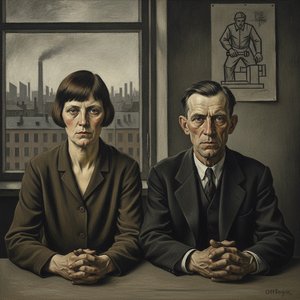
In the camp

Felix Nussbaum’s ‘In the Camp,’ painted in 1940, captures the psychological torment of Jewish prisoners enduring Nazi persecution. This stark depiction showcases Nussbaum's masterful use of Neue Sachlichkeit and serves as a powerful reminder of human suffering during WWII.

Découvrez Felix Nussbaum (1904-1944), peintre juif allemand expressionniste. Ses œuvres poignantes témoignent de l'horreur de la Shoah et de son exil.

Reproduction à l'huile faite à la main

Huile sur toile peinte à la main, avec cadre et dimensions personnalisés, réalisée sur commande par nos artistes. (Acheter l'impression Acheter l'impressionAcheter l'image Acheter l'image)

P118B $10
P118H $10
P118W $10
P438Z $10
P508JH $12
P508YH $12
P805H $10
P805Z $10
P919BZ $10
P919G $10
P919XJ $10
P959ZH $10
P968JZ $12
W106C $8
W218G $10
W218JH $8
W218Y $10
W307PJ $10
W316G $10
W316PJ $8
W316Y $10
W398PJ $8
W4111J $10
W500HY $15
W500JH $15
W692G $12
W849H $8
W940BG $15
W953PJ $8

Format standard
personnalisé
CM
INCH

Choisissez parmi nos formats prédéfinis qui respectent les proportions originales de l’œuvre.

largeur
hauteur

Vous pouvez saisir vos propres dimensions pour l'adapter à un cadre ou à un espace spécifique. Si la taille sélectionnée ne correspond pas aux proportions de l'image d'origine, nous recadrerons l'œuvre ou prolongerons la peinture avec des éléments peints à la main supplémentaires. Une maquette numérique vous sera envoyée pour approbation avant le début de la production.
Veuillez noter que l'aperçu à l'écran ne reflète pas le recadrage ou l'extension réels. Seule la maquette montrera fidèlement la composition finale.
Bien que des tailles personnalisées soient disponibles, nous vous recommandons de sélectionner une dimension dans la liste prédéfinie afin de préserver les proportions d'origine.

Exemples de personnalisation possibles : remplacer un visage par la photo du client ; ajouter un animal de compagnie (par exemple, remplacer un chat par un chien) ; inclure un message caché en arrière-plan ; modifier le paysage ou les éléments de l'arrière-plan.
Après la commande, l’équipe WahooArt.com contactera le client par e-mail pour recueillir ses instructions et lui fournira une maquette d’aperçu

Livraison dans le monde entier () en 3 à 4 semaines au lieu des 5 semaines habituelles. (27 août). Aucun compromis sur la qualité.

why_choose_icon
Livraison express gratuite dans le monde entier

why_choose_icon
Toile de lin de haute qualité
why_choose_icon
Assurance transport complète
why_choose_icon
Garantie de remboursement des droits de douane
why_choose_icon
Garantie de fidélité des couleurs
why_choose_icon
Politique de retour de 60 jours (uniquement en cas de défaut)
why_choose_icon
Garantie de remboursement à 100%
why_choose_icon
Tarifs dégressifs sur quantité

Prix total

$ 272

reproduction

In the camp

Technique de reproduction

Format de la reproduction

-

Prix total final

$ 272

L'essentiel

  • Dimensions: 47 x 42 cm
  • Medium: Oil on panel
  • Subject or theme: Despair, hopelessness
  • Artistic style: Psychological realism
  • Influences: Surrealism
  • Artist: Felix Nussbaum
  • Title: In the camp

Quiz d'art

Chaque question ne comporte qu'une seule bonne réponse.

Question 1:
What is the artist’s name?
Question 2:
In what year was the painting created?
Question 3:
What artistic movement is Nussbaum’s style associated with?
Question 4:
Where was Felix Nussbaum imprisoned during World War II?
Question 5:
What does the painting depict about the experience of imprisonment?

Description de l'œuvre

Felix Nussbaum’s “In The Camp” – A Portrait of Despair Rendered in Bold Minimalism

The painting "In The Camp" by Felix Nussbaum, created in 1940 during his imprisonment at Saint Cyprien internment camp—a harrowing experience that encapsulates the psychological toll of Nazi persecution—stands as a testament to both artistic innovation and profound human emotion. Nussbaum’s oeuvre is marked by Neue Sachlichkeit, or New Objectivity, an art movement born from disillusionment with Expressionism's emotional fervor following World War I. This stylistic choice reflects Nussbaum’s desire to confront the brutal realities of his situation without resorting to sentimental melodrama—a deliberate rejection of artistic conventions that would have obscured the gravity of the subject matter.
  • Subject Matter: The painting depicts a man seated on a crate in the sand, positioned against a bleak landscape dominated by barbed wire and scattered bones. This stark visual representation underscores the dehumanizing conditions endured by Jewish internees during the occupation of France.
  • Composition & Technique: Nussbaum employs a minimalist approach—primarily black and white—to heighten the impact of his depiction. The subdued palette amplifies the sense of isolation and hopelessness, mirroring the psychological state of those imprisoned. Thick brushstrokes contribute to textural richness, conveying both physical discomfort and emotional turmoil.
  • Symbolism: Several elements within the painting carry symbolic weight. The man’s slumped posture embodies defeat and resignation; his downward gaze signifies introspection and despair. The woman defecating into a steel drum serves as a visceral reminder of the degradation inherent in the camp environment, symbolizing loss of dignity and humanity.
  • Historical Context: Created during the Second World War, “In The Camp” captures the pervasive atmosphere of fear and uncertainty that gripped Europe under Nazi rule. Nussbaum’s artistic response to this crisis reflects a broader trend toward confronting uncomfortable truths—a courageous assertion of human experience amidst unimaginable suffering.

Exploring Nussbaum's Artistic Vision: Neue Sachlichkeit & Its Influence

Neue Sachlichkeit, championed by artists like Georg Grosz and Otto Dix, rejected the expressive distortions favored by Expressionism in favor of a rigorously objective portrayal of reality—often unflinching in its depiction of social ills. Nussbaum’s stylistic commitment aligns perfectly with this movement's ethos: he eschews emotional embellishment to convey the bleakness of his surroundings with uncompromising honesty. This deliberate aesthetic choice underscores Nussbaum’s conviction that art should serve as a conduit for confronting difficult truths and fostering empathy for those experiencing hardship.

The Emotional Resonance of “In The Camp”: A Window Into Existential Angst

Beyond its formal qualities, "In The Camp" possesses a palpable emotional resonance—a haunting portrayal of existential angst that transcends time and circumstance. Nussbaum’s masterful use of light and shadow contributes to the painting's dramatic intensity, emphasizing the man’s vulnerability against the backdrop of oppressive surroundings. The overall impression is one of profound sadness and disillusionment—a poignant reminder of the human cost of ideological extremism.

Reproductions & Artistic Legacy: Bringing Nussbaum’s Vision Home

High-quality reproductions of “In The Camp” offer a captivating glimpse into Nussbaum's artistic genius and his unflinching engagement with the horrors of the Holocaust. These prints allow viewers to appreciate the painting’s meticulous detail and expressive power—a testament to Nussbaum’s enduring legacy as an artist who bravely confronted darkness while striving to preserve beauty amidst despair. Consider framing it in a neutral tone to maximize its impact, enhancing its contemplative mood.

Biographie de l'artiste

Felix Nussbaum : Un Artiste Face à l'Horreur

  • Période: Surréalisme, Nouvelle Objectivité
  • Nationalité: Allemand-Juif
  • Dates: 1904 - 1945

Jeunesse et Formation (1904-1933)

  • Né à Osnabrück, en Allemagne, le 11 décembre 1904.
  • Son père, Philipp Nussbaum, était un ancien combattant de la Première Guerre mondiale et amateur d'art, encourageant fortement le talent artistique de son fils.
  • Etudes artistiques à Hambourg et Berlin dès 1920.
  • Influences initiales : Vincent van Gogh et Henri Rousseau.
  • Plus tard, il s’inspire de Giorgio de Chirico et Carlo Carrà. L'approche colorée de Carl Hofer a également influencé son travail.
  • En 1933, bourse à l'Académie des Arts de Berlin à Rome.

L'Exil et la Peinture de la Persécution (1933-1940)

  • La prise de pouvoir nazie en Allemagne force Nussbaum à quitter Rome.
  • Il réalise que, en tant que Juif, il ne peut plus rester dans l’Académie.
  • En 1934, il emmène Felka Platek, une peintre rencontrée à Berlin, et ils se marient à Bruxelles en 1937.
  • Ses parents retournent en Allemagne malgré ses objections, ce qui marque la dernière fois qu'il les voit.
  • Période d’exil principalement en Belgique, marquée par l'isolement émotionnel et artistique, mais aussi une grande productivité.
  • Arrestation en 1940 comme "étranger hostile" après l'invasion de la Belgique par l'Allemagne.
  • Internement au camp de Saint-Cyprien en France, expérience qui influence profondément son œuvre.

L’Œuvre et les Thèmes Majeurs (1940-1944)

  • Auto-Portrait avec Carte d'Identité Juive (1943): Une œuvre emblématique exprimant l'humiliation et la déshumanisation de l'identité juive sous le régime nazi.
  • Triomphe de la Mort (1944): Un tableau puissant et macabre représentant un paysage apocalyptique peuplé de cadavres, symbolisant les horreurs de la guerre et du génocide. La partition musicale froissée est celle de "The Lambeth Walk", contrastant avec l'horreur représentée.
  • Thèmes récurrents: Peur, persécution, exil, déshumanisation, mort.
  • Son style évolue vers une Nouvelle Objectivité, combinant réalisme et éléments surréalistes pour exprimer la réalité brutale de son époque.

Fin Tragique et Postérité

  • En février 1944, ses parents sont assassinés à Auschwitz.
  • En juillet 1944, Nussbaum et Felka sont découverts en fuite et déportés à Auschwitz.
  • Ils meurent tous deux au camp d'Auschwitz en août 1944.
  • Son frère et sa belle-sœur avec leur fille sont également assassinés à Auschwitz peu après.
  • L’œuvre de Nussbaum offre un témoignage poignant sur la condition humaine face à l'horreur du génocide.
  • En 1998, la "Felix Nussbaum Haus" ouvre ses portes à Osnabrück pour exposer son œuvre.
  • Son travail a été reconnu internationalement comme une contribution majeure à l’art témoignant de l’Holocauste.
Felix Nussbaum

Felix Nussbaum

1904 - 1945 , Allemagne

En bref

  • Artistes Influents:
    • Vincent van Gogh
    • Henri Rousseau
    • Giorgio de Chirico
    • Carlo Carrà
    • Karl Hofer
  • Date De Décès: 1945
  • Date De Naissance: 11 décembre 1904
  • Lieu De Naissance: Osnabrück, Allemagne
  • Mouvement Artistique: Surréalisme, Nouvelle Objectivité
  • Nationalité: German-Judaïque
  • Nom Complet: Felix Nussbaum
  • Oeuvres Notables:
    • Autoportrait avec carte d'identité
    • Triomphe de la mort
    • Felka Platek Peinture
    • La cuisine en cachette
    • Juif à la fenêtre
Explorez des œuvres d'art classées par thèmes, styles et caractéristiques.