A Glimpse Through the Veils of Time
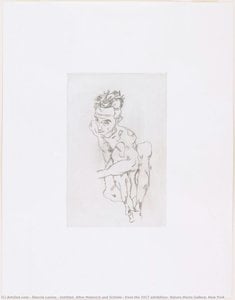
In this evocative black and white drawing from 1880, we are invited into an intimate encounter with a moment frozen in history. The work presents a striking close-up of a female figure, captured in a three-quarter left profile that commands immediate attention. Her wavy hair, parted precisely in the middle, cascades gracefully over her right side, partially veiling the ear and adding a layer of soft mystery to her countenance. There is a profound sense of quietude in her gaze; she looks off into the distance, her expression suggesting a deep, perhaps melancholic, introspection. While the composition focuses intensely on the delicate features of her face, the subtle presence of two figures in the background provides a ghostly depth, reminding the viewer that this private moment exists within a larger, bustling social tapestry.
The technique employed here speaks to the mastery of line and shadow characteristic of late 19th-century portraiture. Through the delicate use of monochrome tones, the artist achieves a sculptural quality, defining the contours of the woman's profile with remarkable precision. The interplay of light and dark—the chiaroscuro effect—not only gives the subject a three-dimensional presence but also imbues the piece with an emotional weight. Every stroke seems calculated to capture not just the physical likeness, but the very essence of the sitter’s spirit. For collectors and decorators alike, this drawing offers a sophisticated study in texture and form, where the softness of the hair contrasts beautifully with the sharp, definitive lines of the facial structure.
The Legacy of Eugenia Belín Sarmiento
To understand the soul of this piece, one must look toward the lineage of its creator, Eugenia Belín Sarmiento. Born in 1860, Sarmiento was a woman shaped by the intellectual and political currents of her era. As the granddaughter of the illustrious Argentine President Domingo Faustino Sarmiento, her life was steeped in the pursuit of progress and education. This historical gravity is subtly reflected in the dignity of her portraiture. Her work often transcends mere representation; it serves as an interpretive window into the character of her subjects. In this particular drawing, we see the artist's ability to weave personal intimacy with a broader historical narrative, creating a piece that feels both deeply personal and universally resonant.
For those looking to integrate fine art into a contemporary interior, this work serves as an exquisite focal point. Its monochromatic palette offers a timeless elegance that complements both minimalist modern spaces and more traditional, classical settings. The emotional impact of the piece—a blend of nostalgia, grace, and quiet strength—can transform a room, providing a conversational anchor that invites contemplation. Whether displayed as part of a curated gallery wall or as a standalone statement in a study, this reproduction of Sarmiento's work brings with it the prestige of 19th-century Latin American artistry, offering a rare opportunity to possess a fragment of a profound artistic legacy.



 Aperçu en situation
 Passer au format impression
 Partager
 Partager
 Détails

 Télécharger
 Articles similaires
 Radiographie
 Voir le diaporama
 Statistiques


 Afficher la suite






































 L'option verre n'est disponible que pour les dimensions inférieures à 110 cm.