Aperçu en situation Visualiser en RA Commander la reproduction peinte à la main Passer au format numérique Envoyer
Détails de l'œuvre Guide Ajouter aux favoris Télécharger l'image Articles similaires Radiographie Diaporama Statistiques

Portrait du Cardinal

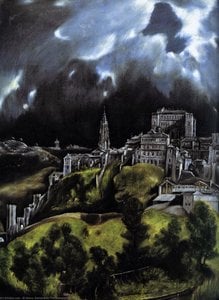
Admirez le chef-d'œuvre de El Greco ! Cette peinture emblématique du Cardinal Tavera, réalisée vers 1608 à Toledo, Espagne, incarne le style maniériste et révèle la richesse émotionnelle de l’artiste grec.

Explorez l'art dramatique et expressif d'Él Greco (Doménikos Theotokopoulos). Découvrez ses peintures maniéristes emblématiques, ses thèmes religieux, ses figures allongées et son influence durable sur l'Expressionnisme et le Cubisme. Admirez des chefs-d’œuvre comme 'Vue de Tolède'!

Giclées et impressions d'art

Impressions giclées ou sur toile de qualité musée, avec une production rapide et des finitions au choix. ( Commander la reproduction peinte à la main Passer au format numérique)

Corner sample of the P118B picture frame: polystyrène moulé, 5 cm wide and 3 cm thick
P118B €10
Corner sample of the P118H picture frame: polystyrène moulé, 5 cm wide and 3 cm thick
P118H €10
Corner sample of the P118W picture frame: polystyrène moulé, 5 cm wide and 3 cm thick
P118W €10
Corner sample of the P438Z picture frame: polystyrène moulé, 5.5 cm wide and 3.5 cm thick
P438Z €10
Corner sample of the P508JH picture frame: polystyrène moulé, 7 cm wide and 3.5 cm thick
P508JH €12
Corner sample of the P508YH picture frame: polystyrène moulé, 7 cm wide and 3.5 cm thick
P508YH €12
Corner sample of the P805H picture frame: polystyrène moulé, 5 cm wide and 3.5 cm thick
P805H €10
Corner sample of the P805Z picture frame: polystyrène moulé, 5 cm wide and 3.5 cm thick
P805Z €10
Corner sample of the P919BZ picture frame: polystyrène moulé, 7 cm wide and 3.5 cm thick
P919BZ €10
Corner sample of the P919G picture frame: polystyrène moulé, 7 cm wide and 3.5 cm thick
P919G €10
Corner sample of the P919XJ picture frame: polystyrène moulé, 7 cm wide and 3.5 cm thick
P919XJ €10
Corner sample of the P959ZH picture frame: polystyrène moulé, 5 cm wide and 3 cm thick
P959ZH €10
Corner sample of the P968JZ picture frame: polystyrène moulé, 6 cm wide and 4 cm thick
P968JZ €12
Corner sample of the W106C picture frame: bois massif, 5 cm wide and 3 cm thick
W106C €8
Corner sample of the W218G picture frame: bois massif, 5 cm wide and 3 cm thick
W218G €10
Corner sample of the W218JH picture frame: bois massif, 5 cm wide and 3 cm thick
W218JH €8
Corner sample of the W218Y picture frame: bois massif, 5 cm wide and 3 cm thick
W218Y €10
Corner sample of the W307PJ picture frame: bois massif, 6 cm wide and 3 cm thick
W307PJ €10
Corner sample of the W316G picture frame: bois massif, 6 cm wide and 3 cm thick
W316G €10
Corner sample of the W316PJ picture frame: bois massif, 6 cm wide and 3 cm thick
W316PJ €8
Corner sample of the W316Y picture frame: bois massif, 6 cm wide and 3 cm thick
W316Y €10
Corner sample of the W398PJ picture frame: bois massif, 5 cm wide and 3 cm thick
W398PJ €8
Corner sample of the W4111J picture frame: bois massif, 6.5 cm wide and 3.5 cm thick
W4111J €10
Corner sample of the W500HY picture frame: bois massif, 7 cm wide and 5 cm thick
W500HY €15
Corner sample of the W500JH picture frame: bois massif, 7 cm wide and 5 cm thick
W500JH €15
Corner sample of the W692G picture frame: bois massif, 8 cm wide and 4 cm thick
W692G €12
Corner sample of the W849H picture frame: bois massif, 5 cm wide and 3 cm thick
W849H €8
Corner sample of the W940BG picture frame: bois massif, 7.5 cm wide and 4.5 cm thick
W940BG €15
Corner sample of the W953PJ picture frame: bois massif, 6 cm wide and 3.5 cm thick
W953PJ €8

Format standard
sur mesure
CM
INCH

Choisissez parmi nos formats prédéfinis qui respectent les proportions originales de l’œuvre.

largeur
hauteur

Saisissez la largeur et la hauteur souhaitées pour qu'elles s'adaptent à votre cadre ou à votre mur. Une impression peut être recadrée, mais jamais agrandie au-delà de l'image originale ; ainsi, un format de forme différente entraînera la perte d'une partie de l'image. Nous vous envoyons une maquette numérique pour approbation avant toute impression. L'image présentée sur cette page ne montre pas le recadrage réel — seule la maquette le permet.

Livraison dans le monde entier () en 2 semaines au lieu des 4/5 semaines habituelles. (25 octobre)

Livraison express gratuite dans le monde entier
Toile de lin de qualité supérieure
Assurance transport complète
Garantie de remboursement des droits de douane
Garantie de fidélité des couleurs
Politique de retour de 100 jours (uniquement en cas de défaut)
Garantie de remboursement à 100%
Offre de tarifs dégressifs

Prix total

€ 60

Portrait du Cardinal

Giclées et impressions d'art

Format de la reproduction

-

Prix total

€ 60

Informations clés

  • Artist: El Greco
  • Influences: Renaissance
  • Subject or theme: Cardinal portraiture
  • Year: c. 1600-1605
  • Artistic style: El Greco's mature style

Quiz d'art

Chaque question ne comporte qu'une seule bonne réponse.

Question 1:
À quel mouvement artistique le « Portrait du Cardinal Tavera » d'El Greco est-il principalement associé ?
Question 2:
Dans quelle ville El Greco est-il né ?
Question 3:
Quelle est une caractéristique du style d'El Greco, telle qu'illustrée par ce portrait ?
Question 4:
Le tableau représente un cardinal portant quelle tenue ?
Question 5:
Où peut-on trouver le « Portrait du Cardinal Tavera » d'El Greco ?

Portrait of Cardinal Tavera: A Masterpiece of Mannerism

El Greco’s “Portrait of Cardinal Tavera,” completed around 1608, stands as one of the artist’s most celebrated achievements and a quintessential example of Mannerist art. This monumental oil painting resides in Toledo’s Museo de El Greco, offering visitors an unparalleled glimpse into the artistic sensibilities of the Spanish Renaissance.

Style and Technique: Doménikos Theotokopoulos—better known as El Greco—revolutionized painting with his distinctive style, characterized by elongated figures, distorted perspectives, and dramatic lighting. In “Portrait of Cardinal Tavera,” he employs a masterful blend of observation and imagination, capturing the cardinal’s likeness while simultaneously elevating it to an almost ethereal realm. The artist utilizes thick impasto – applying paint in textured layers—to imbue the canvas with palpable energy and depth.

Historical Context: Mannerism emerged as a reaction against the harmonious ideals of High Renaissance art, rejecting balance and proportion for expressive distortion and psychological intensity. Toledo during El Greco’s lifetime was a vibrant cultural center under Habsburg rule, attracting artists and intellectuals from across Europe. The painting reflects this intellectual ferment, embodying the artist's preoccupation with spiritual contemplation and conveying a profound sense of solemn dignity.

Symbolism: The cardinal’s attire—a scarlet robe adorned with ermine fur—symbolizes his ecclesiastical authority and prestige. El Greco’s meticulous rendering of the drapery emphasizes movement and dynamism, mirroring the cardinal's inner turmoil and conveying a powerful emotional resonance. The gaze of the cardinal directs upward, suggesting an aspiration towards divine transcendence.

Emotional Impact: “Portrait of Cardinal Tavera” transcends mere representation; it invites contemplation on themes of faith, power, and mortality. El Greco’s masterful use of color—particularly crimson—creates a visual spectacle that captivates the viewer's senses. The painting’s enduring appeal lies in its ability to evoke feelings of awe and reverence, cementing its place as an icon of Mannerist art.

El Greco: A Life Dedicated to Art

Doménikos Theotokópoulos, known universally as El Greco (1541 – 1614), was born in Crete—then under Venetian dominion—and quickly distinguished himself as a prodigious talent within the Byzantine tradition. His formative years instilled in him a rigorous discipline focused on icon painting, where precision and symbolic representation reigned supreme.

Before relocating to Venice and Rome around 1567, El Greco honed his skills in Crete, absorbing influences from Venetian artists like Tintoretto and Titian. These encounters broadened his artistic horizons and fueled his experimentation with innovative techniques—a hallmark of his distinctive style.

Rome became El Greco’s crucible for artistic development; he established a workshop there and produced numerous commissions, integrating Renaissance ideals alongside Mannerist distortions. His unwavering commitment to artistic excellence cemented his legacy as one of the most influential painters of his era.

The Portrait's Significance

“Portrait of Cardinal Tavera” exemplifies El Greco’s profound understanding of human psychology and his ability to convey complex emotions through visual imagery. Unlike many portraits of his time, which prioritized idealized beauty, El Greco sought to capture the cardinal’s inner life—his anxieties, his convictions, and his spiritual yearning.

The painting's dramatic lighting—characteristic of Mannerist aesthetics—creates a theatrical effect that draws the viewer into the scene. The elongated figure—a signature element of El Greco’s style—emphasizes the cardinal’s solemn dignity and underscores the artist’s rejection of Renaissance conventions.

Moreover, “Portrait of Cardinal Tavera” serves as a testament to El Greco's mastery of color and texture. The vibrant crimson robe commands attention, symbolizing papal authority while simultaneously conveying an aura of grandeur. The textured impasto technique—applied with deliberate precision—adds palpable physicality to the canvas.

Exploring El Greco’s Oeuvre

To delve deeper into El Greco's artistic vision and appreciate the breadth of his oeuvre, visit Museo de El Greco in Toledo (Spain). Admire masterpieces like “View of Toledo” and “The Burial of Columbus,” alongside numerous portraits—including “Portrait of Cardinal Tavera”—that showcase the artist’s unparalleled talent.

Discover more about El Greco's life and artistic journey on our website: /art/list/?Filter=85FR9U-El-Greco-(Domenikos-Theotokopoulos)-Portrait-of-Cardinal-Tavera.

We offer hand-made oil paintings reproductions of “Portrait of Cardinal Tavera” on our website: https://WahooArt.com/.

Questions et réponses

Quelle est la luminance de «Portrait du Cardinal» de Él Greco ?

Les couleurs de « Portrait du Cardinal » présentent une luminance Sombre.

Quelle technique a été utilisée pour «Portrait du Cardinal» de Él Greco ?

Él Greco a utilisé la technique du Acrylique sur toile pour « Portrait du Cardinal ». Cette technique définit la nature matérielle de l'œuvre originale.

Comment "Portrait du Cardinal" équilibre-t-il l'ombre et la lumière ?

«Portrait du Cardinal» de Él Greco présente une luminosité de ombres profondes, avec une luminance de Sombre.


Biographie de l'artiste

**Jeunesse et formation**

El Greco (Domenikos Theotokopoulos), un peintre, sculpteur et architecte grec renommé, est né en 1541 à Crète, alors sous domination vénitienne. Son nom de naissance était Domenikos Theotokopoulos. La formation précoce d'El Greco en tant que peintre d'icônes de l'école crétoise, un centre majeur de l'art byzantin post-byzantin, a jeté les bases de ses futurs efforts artistiques.

**Évolution artistique et influences**

Le style artistique d'El Greco s'est façonné par ses voyages à Venise et Rome, où il a absorbé les styles maniéristes et du Renouveau, influencé notamment par Tintoret et Titien. Son déménagement à Tolède, en Espagne, en 1577 a marqué une période de création prolifique, donnant naissance à des chefs-d'œuvre tels que La Vue de Tolède et L'ouverture du cinquième sceau.

**Œuvres notables et style**

* L'allégorie de l'ordre des Camalodites (méroristique, huile) - témoignant du mélange unique d'El Greco entre les traditions byzantines et les éléments stylistiques occidentaux. * Fable (méroristique, huile) – démontrant son utilisation de choix de couleurs vibrantes et inhabituels. * Giacomo Bosio (méroristique, huile) – mettant en valeur la maîtrise d'El Greco du style méroptique.

**Héritage et influence**

Le style dramatique et expressionniste d'El Greco, caractérisé par des figures allongées et une pigmentation fantastique, a été une source d'inspiration pour les poètes et les écrivains. Il est considéré comme un précurseur de l'expressionnisme et du cubisme. Pour en savoir plus sur la vie et les œuvres d'El Greco, visitez [https://WahooArt.com/@/el-greco-(domenikos-theotokopoulos)](https://WahooArt.com/@/el-greco-(domenikos-theotokopoulos)).
  • **Consultez les peintures d'El Greco** sur [https://WahooArt.com/@@/85fr95-el-greco-(domenikos-theotokopoulos)-allegory-of-the-camaldolite-order](https://WahooArt.com/@@/85fr95-el-greco-(domenikos-theotokopoulos)-allegory-of-the-camaldolite-order)
  • **Apprenez-en davantage sur la vie et les œuvres d'El Greco** sur [https://en.wikipedia.org/wiki/el_greco](https://en.wikipedia.org/wiki/el_greco)
  • **Explorez l'Institut hellénique des études byzantines et post-byzantines**, qui présente une large gamme d'artefacts reflétant le riche patrimoine artistique de Byzance, sur /fr/art/show/art-d3b8bv-fr/
**Le style innovant et le mélange idiosyncratique d'influences multiculturelles d'El Greco ont laissé une marque indélébile sur le monde de l'art.**
Él Greco

Él Greco

1541 - 1614 , Grèce

L'essentiel de l'artiste

  • Artistes Influents:
    • Titian
    • Tintoretto
  • Date De Décès: 1614
  • Date De Naissance: 1541
  • Influences Artistiques:
    • Expressionnisme
    • Cubisme
  • Lieu De Naissance: Crète, Grèce
  • Mouvement Artistique: Manierisme, Renaissance espagnole
  • Nationalité: Grecque-Espagnole
  • Nom Complet: Él Greco (Doménikos Theotokópoulos)
  • Oeuvres Notables:
    • Vue de Tolède
    • Entombs du Comte d'Orgaz
    • Allégorie des Camaldoulins
Explorez des œuvres d'art classées par thèmes, styles et caractéristiques.