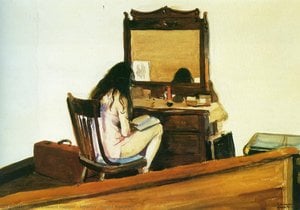
Huile sur toile peinte à la main, avec cadre et dimensions personnalisés, réalisée sur commande par nos artistes. ( Commander l'impression Acheter l'image haute résolution)





























Choisissez parmi nos formats prédéfinis qui respectent les proportions originales de l’œuvre.

Vous pouvez saisir vos propres dimensions pour l'adapter à un cadre ou à un espace spécifique. Si la taille sélectionnée ne correspond pas aux proportions de l'image d'origine, nous recadrerons l'œuvre ou prolongerons la peinture avec des éléments peints à la main supplémentaires. Une maquette numérique vous sera envoyée pour approbation avant le début de la production.
Veuillez noter que l'aperçu à l'écran ne reflète pas le recadrage ou l'extension réels. Seule la maquette montrera fidèlement la composition finale.
Bien que des tailles personnalisées soient disponibles, nous vous recommandons de sélectionner une dimension dans la liste prédéfinie afin de préserver les proportions d'origine.
Livraison dans le monde entier () en 3 à 4 semaines au lieu des 5 semaines habituelles. (6 septembre). Aucun compromis sur la qualité.


The New bridge
Format de la reproduction
Edward Hopper’s “The New Bridge,” painted in 1909, is more than just a depiction of a city street; it’s a poignant meditation on the human condition within the burgeoning landscape of early 20th-century America. The painting immediately draws the viewer into a scene brimming with quiet tension – a tableau of parked automobiles and solitary figures that speaks volumes about the increasing alienation inherent in modern urban life. Hopper, though born in 1882, captured a feeling that would become synonymous with his work: a sense of profound solitude amidst the relentless activity of the city.
"The New Bridge" was created during a pivotal moment in American art history – the transition from Impressionism to Modernism. Hopper, influenced by artists like William Merritt Chase and Robert Henri, embraced realism but infused it with a distinctly modern sensibility. The painting reflects the rapid industrialization and urbanization of America at the turn of the century, themes that would become increasingly prevalent in his work. The presence of automobiles, a relatively new phenomenon at the time, underscores this shift and adds to the sense of unease within the scene. The year 1909 marks a crucial period where Hopper was developing his signature style, experimenting with capturing fleeting moments and exploring psychological states through carefully constructed compositions.
Beyond its realistic depiction, “The New Bridge” is laden with symbolic meaning. The solitary figures – the three people standing near the center – represent individuals adrift in a sea of urban activity, disconnected from one another and perhaps even from themselves. The bridge itself can be interpreted as a symbol of transition or connection, yet here it serves only to emphasize the distance between the figures and the overall sense of isolation. Hopper’s ability to evoke such powerful emotions through seemingly simple scenes is a testament to his artistic genius.
A hand-painted reproduction of “The New Bridge” offers an exceptional opportunity to bring this iconic work into your home or office. WahooArt’s meticulous reproductions capture the essence of Hopper's style, faithfully recreating the painting's nuanced light, precise detail, and profound emotional impact. This artwork is not merely a decorative piece; it’s a window into the soul of modern America – a reminder of the enduring themes of isolation, contemplation, and the search for meaning in an increasingly complex world. Its timeless appeal makes it a valuable addition to any art collection or interior design scheme.


1931 - 1967 , États-Unis d'Amérique

Explore the profound beauty of American Realism. From Winslow Homer’s rural landscapes to the dignity of everyday life, discover how master artists captured the soul of a nation through evocative oil paintings and timeless fine art techniques.

 Aperçu en situation
 Envoyer
 Partager
 Détails de l'œuvre

 Télécharger
 Articles similaires
 Radiographie
 Diaporama

 Lire la suite







 L'option verre n'est disponible que pour les dimensions inférieures à 110 cm.