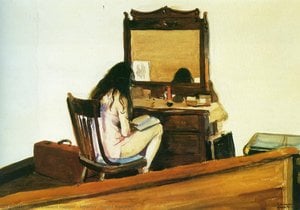
Huile sur toile peinte à la main, avec cadre et dimensions personnalisés, réalisée sur commande par nos artistes. ( Commander l'impression Acheter l'image haute résolution)





























Choisissez parmi nos formats prédéfinis qui respectent les proportions originales de l’œuvre.

Vous pouvez saisir vos propres dimensions pour l'adapter à un cadre ou à un espace spécifique. Si la taille sélectionnée ne correspond pas aux proportions de l'image d'origine, nous recadrerons l'œuvre ou prolongerons la peinture avec des éléments peints à la main supplémentaires. Une maquette numérique vous sera envoyée pour approbation avant le début de la production.
Veuillez noter que l'aperçu à l'écran ne reflète pas le recadrage ou l'extension réels. Seule la maquette montrera fidèlement la composition finale.
Bien que des tailles personnalisées soient disponibles, nous vous recommandons de sélectionner une dimension dans la liste prédéfinie afin de préserver les proportions d'origine.
Livraison dans le monde entier () en 3 à 4 semaines au lieu des 5 semaines habituelles. (7 septembre). Aucun compromis sur la qualité.


Shakespeare at Dusk
Format de la reproduction
In the quiet transition between day and night, Edward Hopper’s “Shakespeare at Dusk” captures a moment that feels suspended in time. Painted in 1935, this monochrome masterpiece is far more than a mere depiction of an urban park; it is a profound distillation of the anxieties and aspirations inherent in the mid-century American consciousness. As the light fades, the canvas reveals a world caught in a palpable stillness, where every subtle gesture and elongated shadow speaks volumes about the human experience. For the discerning collector or interior designer, this piece offers a window into a period of deep introspection, making it an evocative centerpiece for any space dedicated to contemplation and quiet elegance.
The composition centers around a solitary statue of Shakespeare, positioned prominently in the foreground. This silent sentinel stands against the backdrop of a darkening urban park, where scattered benches invite the viewer to pause and reflect. In the distance, figures move like ghosts through the twilight, their presence contributing to an atmosphere of understated observation. Hopper’s signature style—characterized by geometric precision and a flattened perspective—is masterfully employed here to sculpt form through light. Through his expert use of chiaroscuro, he manipulates the stark contrast between illuminated surfaces and deep, impenetrable recesses, heightening the emotional resonance of the scene and emphasizing the profound isolation of the subject.
To understand “Shakespeare at Dusk,” one must look toward the historical landscape of the Great Depression. Created during a time of widespread economic and social upheaval, the painting reflects a broader cultural preoccupation with themes of alienation and disillusionment. Hopper rejects the sentimentalism common in much of the era's art, opting instead for a psychologically astute portrayal of modern life—a world increasingly defined by solitude and detachment. The statue itself serves as a potent symbol; its unwavering gaze directs attention inward, prompting viewers to confront their own questions of identity and purpose amidst a changing society.
The setting of dusk is deeply symbolic, representing a state of transition where the fading light mirrors the uncertainty of the era. This sense of "the moment between" creates a cinematic tension that is uniquely Hopperesque. For those looking to incorporate fine art into a curated interior, this reproduction offers more than just aesthetic beauty; it brings a narrative weight and a sophisticated mood. The monochrome palette lends a timeless quality to the work, ensuring it integrates seamlessly into modern, minimalist, or classic decor, providing a focal point that encourages a slower, more mindful engagement with one's surroundings.


1931 - 1967 , États-Unis d'Amérique

Master the nuances of Giclée printing with our expert guide. Discover how pigment-based inks and museum-grade substrates create fade-resistant, high-fidelity art reproductions designed for discerning collectors seeking unparalleled quality and longevity.
Sublimez votre intérieur avec WahooArt. Transformez vos photos en impressions d'art premium et peintures à l'huile sur mesure. Profitez de notre savoir-faire artisanal, de la qualité muséale et d'une garantie de satisfaction totale pour un héritage visuel éternel.

 Aperçu en situation
 Envoyer
 Partager
 Détails de l'œuvre

 Télécharger
 Articles similaires
 Radiographie
 Diaporama

 Lire la suite







 L'option verre n'est disponible que pour les dimensions inférieures à 110 cm.