A Window Into Modern Loneliness
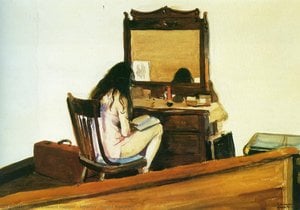
In the quiet corners of Edward Hopper’s “Paris Street,” we encounter more than just a cityscape; we find a profound meditation on the human condition. Painted in 1926, this evocative work captures the essence of urban solitude through a single street corner bathed in muted, atmospheric light. A solitary figure stands amidst the towering architecture, creating a scene that feels both ordinary and deeply significant. Hopper, a master of American Realism, eschews dramatic narratives in favor of understated compositions that prioritize mood over movement. The painting invites the viewer to pause, much like the protagonist themselves, to contemplate the stillness found within the bustling heart of a modernizing world.
The technical mastery behind this piece lies in Hopper’s deliberate control over tonal values and light. Executed in oil on canvas, the work demonstrates a sophisticated layering of pigment that creates a luminous yet somber surface. Through sharp contrasts between light and shadow, Hopper enhances the sense of isolation, making the architecture feel both grand and imposing. His palette—predominantly cool blues and earthy browns—contributes to a melancholic, introspective tone. This careful use of color evokes a sense of stillness, mirroring the psychological state of an individual navigating the vastness of the urban sprawl.
The Symbolism of Urban Solitude
Beyond its visual beauty, “Paris Street” serves as a powerful symbol of the anxieties of the Jazz Age. As rapid urbanization transformed the social landscape in the early 20th century, many felt a growing sense of alienation. Hopper captures this perfectly through the juxtaposition of the darkened interior and the illuminated street. This boundary symbolizes the separation between our private, inner experiences and the external, public world. The lone figure gazing out becomes a universal emblem of the human desire for connection, even as they confront the daunting reality of being alone in a crowd.
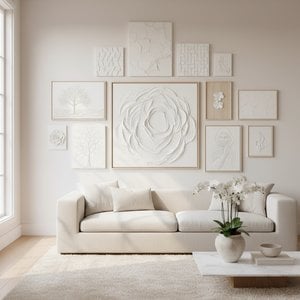
For collectors and interior designers alike, this painting offers a sophisticated focal point that brings depth and narrative weight to any space. Its geometric precision and flattened perspective provide a structural elegance that complements both contemporary and classic decor. Whether displayed in a quiet study or a grand living area, the artwork acts as a window into a contemplative state of mind, offering an enduring sense of peace and intellectual intrigue. To possess a reproduction of this masterpiece is to invite a piece of art history into one's home—a piece that continues to resonate with the timeless themes of light, shadow, and the quiet beauty of solitude.



 Aperçu en situation
 Acheter la peinture faite à la main
 Partager
 Partager
 Détails
 Guide imprimable

 Télécharger
 Articles similaires
 Radiographie
 Voir le diaporama
 Statistiques

 Afficher la suite






































 L'option verre n'est disponible que pour les dimensions inférieures à 110 cm.