Impressions giclées ou sur toile de qualité musée, avec une production rapide et des finitions au choix. ( Commander la reproduction peinte à la main Acheter l'image haute résolution)





























Choisissez parmi nos formats prédéfinis qui respectent les proportions originales de l’œuvre.

Vous pouvez saisir vos propres dimensions pour vous adapter à un cadre ou à un espace spécifique. Si la taille sélectionnée ne correspond pas aux proportions de l'image originale, nous recadrerons l'œuvre ou étendrons l'image avec une bordure en miroir ou une couleur unie. Une maquette numérique vous sera envoyée pour approbation avant le début de la production.
Veuillez noter que l'aperçu à l'écran ne reflète pas le recadrage ou l'extension réelle. Seule la maquette montrera avec précision la composition finale.
Bien que des tailles personnalisées soient disponibles, nous vous recommandons de choisir une dimension dans la liste prédéfinie afin de préserver les proportions originales.
Livraison dans le monde entier () en 2 semaines au lieu des 4/5 semaines habituelles. (6 septembre)


Notre Dame
Format de la reproduction
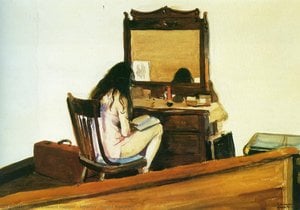
In the quiet, evocative realm of Edward Hopper’s Notre Dame, we are invited into a world where architecture and emotion converge through a masterful use of light and shadow. This striking depiction of the iconic Parisian cathedral transcends mere architectural documentation; it serves as a profound meditation on the human condition. Rendered in a stark, commanding black and white, the painting amplifies the monumental presence of the Gothic edifice, allowing its towering clock towers and intricate, expansive windows to dominate the viewer's gaze. Hopper’s ability to manipulate tonal gradations creates a scene that feels both physically massive and emotionally weightless, capturing a sense of stillness that is as haunting as it is beautiful.
The technique employed here is a testament to Hopper’s signature realism, blended with an understated, almost poetic emotional resonance. Through the careful application of subtle grays, the artist sculpts form out of the darkness, using light not just to illuminate, but to define the very atmosphere of the space. The dramatic silhouettes cast against the cathedral's walls and the meticulous attention to the play of shadow across its ornate surfaces create a rhythmic visual texture. This deliberate manipulation of illumination does more than showcase architectural grandeur; it breathes life into the stone, imbuing the cold masonry with a palpable, melancholic mood that lingers long after the first glance.
To look upon Notre Dame is to glimpse the psychological landscape of the interwar period. Painted in 1931, the work reflects the profound anxieties and social disillusionment that permeated the early 20th century—a time marked by economic hardship and a shifting sense of global stability. While the cathedral itself stands as an enduring symbol of faith, resilience, and French cultural heritage, Hopper’s interpretation focuses on the more introspective and fragmented aspects of modern life. He skillfully isolates figures within the cathedral's interior, creating a poignant tension between the massive, permanent structure and the transient, disconnected individuals within it.
This sense of urban loneliness is the heartbeat of the piece. The solitary figures represent a universal yearning for connection in an increasingly impersonal and industrializing world, a recurring motif that defines much of Hopper’s oeuvre. For the collector or the interior designer, this painting offers more than just a sophisticated aesthetic; it provides a focal point of deep intellectual and emotional substance. Whether placed in a contemporary gallery setting or a classic study, the artwork’s ability to evoke both awe for historical grandeur and empathy for human isolation makes it an incomparable masterpiece of American Realism.


1931 - 1967 , États-Unis d'Amérique

Elevate your most cherished memories with WahooArt’s bespoke service. We transform your personal photos into breathtaking, hand-painted black & white oil masterpieces. Experience museum-quality craftsmanship and timeless elegance for your private collection. Discover the art of legacy.

Explore the profound artistry of black and white photography. From historical mastery to the interplay of light and shadow, discover how monochrome captures timeless emotion and form through a sophisticated lens of art history.

 Aperçu en situation
 Envoyer
 Partager
 Détails de l'œuvre

 Télécharger
 Articles similaires
 Radiographie
 Diaporama

 Lire la suite







 L'option verre n'est disponible que pour les dimensions inférieures à 110 cm.