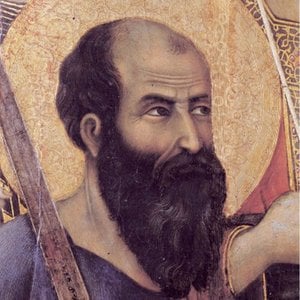
MaestÓ (front, predella), The Flight into Egypt
Duccio di Buoninsegna stands as an undisputed titan of Sienese Gothic painting, his magnum opus, MaestÓ (front, predella), The Flight into Egypt, embodying the pinnacle of his artistic vision and cementing his legacy as a pioneer.
This oil on panel artwork measures 26 x 57 cm and immediately captivates with its serene beauty and masterful execution. More than just a depiction of biblical narrative, it’s a profound meditation on faith, family, and divine protection—a cornerstone of Duccio's Maestá altarpiece.
Introduction to the Painting and its Artist
Born around 1255 in Siena, Duccio’s formative years coincided with the waning influence of Byzantine art and the burgeoning fervor of Gothic sensibilities. He absorbed lessons from Cimabue, his predecessor, skillfully blending Byzantine iconography with emerging naturalistic tendencies. This synthesis resulted in a style characterized by luminous colors, delicately modeled figures, and an unparalleled sense of spatial depth—a stylistic hallmark that distinguishes him from contemporaries.
His work found patronage within Siena’s ecclesiastical elite, notably the Cathedral Chapter, securing commissions for monumental frescoes and altarpieces that would elevate Sienese art to unprecedented heights. Duccio's unwavering dedication to his craft ensured that he became one of the most celebrated artists of his time.
Historical Context
MaestÓ (front, predella), The Flight into Egypt was conceived around 1308-1311 as part of Duccio’s monumental Maestá altarpiece—a project undertaken to honor Siena’s patron saint, Saint Catherine—and commissioned by the Cathedral Chapter. This ambitious undertaking aimed to transform the cathedral's interior into a pilgrimage destination and showcase Sienese artistic prowess.
The predella panels served as the base of this monumental structure, presenting viewers with a sequence of scenes from Christ’s infancy and portraying the Virgin Mary cradling Jesus—a poignant reminder of divine compassion and maternal devotion. Duccio's meticulous attention to detail and his masterful use of color and light elevated these depictions beyond mere illustration, transforming them into emotionally resonant expressions of Christian faith.
Artistic Analysis
Duccio’s compositional brilliance is evident in the careful arrangement of figures within the predella. The central panel depicts Mary holding Jesus on her lap, while Joseph stands beside her—a depiction imbued with tenderness and solemn dignity. The artist skillfully employs atmospheric perspective to create a convincing illusion of depth, drawing viewers into the scene's tranquil landscape.
The luminous gold leaf adorning the background contributes to the overall grandeur of the artwork, symbolizing divine illumination and elevating the narrative’s spiritual significance. Duccio’s meticulous modeling—particularly evident in Mary’s drapery—reveals a profound understanding of human anatomy and enhances the painting's expressive power.
Duccio’s contribution to Italian Gothic art remains unparalleled—a testament to his artistic genius and a beacon of inspiration for generations of artists.



 Aperçu en situation
 Passer au format impression
 Partager
 Partager
 Détails
 Guide
Guide

 Télécharger
 Articles similaires
 Radiographie
 Voir le diaporama
 Statistiques

 Afficher la suite






































 L'option verre n'est disponible que pour les dimensions inférieures à 110 cm.