Aperçu en situation Aperçu en RA Acheter la peinture faite à la main Passer au format image numérique Partager
Détails Guide Ajouter aux favoris Télécharger Articles similaires Radiographie Voir le diaporama Statistiques

The Lying-in Room

Discover "The Lying-in Room" by Daniel Chodowiecki – a captivating 1759 oil painting depicting domestic life with remarkable detail. Explore its history, artistic significance & reproduction options.

Daniel Nikolaus Chodowiecki (1726-1801) était un graveur polonais-allemand célèbre pour ses scènes de la vie bourgeoise du XVIIIe siècle. Ses estampes et portraits reflètent le Zopfstil et l'éveil du nationalisme allemand.

Giclées et impressions d'art

Impressions giclées ou sur toile de qualité musée, avec une production rapide et des finitions au choix. ( Acheter la peinture faite à la main Passer au format image numérique)

P118B $10
P118H $10
P118W $10
P438Z $10
P508JH $12
P508YH $12
P805H $10
P805Z $10
P919BZ $10
P919G $10
P919XJ $10
P959ZH $10
P968JZ $12
W106C $8
W218G $10
W218JH $8
W218Y $10
W307PJ $10
W316G $10
W316PJ $8
W316Y $10
W398PJ $8
W4111J $10
W500HY $15
W500JH $15
W692G $12
W849H $8
W940BG $15
W953PJ $8

Format standard
personnalisé
CM
INCH

Choisissez parmi nos formats prédéfinis qui respectent les proportions originales de l’œuvre.

largeur
hauteur

Vous pouvez saisir vos propres dimensions pour vous adapter à un cadre ou à un espace spécifique. Si la taille sélectionnée ne correspond pas aux proportions de l'image originale, nous recadrerons l'œuvre ou étendrons l'image avec une bordure en miroir ou une couleur unie. Une maquette numérique vous sera envoyée pour approbation avant le début de la production.
Veuillez noter que l'aperçu à l'écran ne reflète pas le recadrage ou l'extension réelle. Seule la maquette montrera avec précision la composition finale.
Bien que des tailles personnalisées soient disponibles, nous vous recommandons de choisir une dimension dans la liste prédéfinie afin de préserver les proportions originales.

Livraison dans le monde entier () en 2 semaines au lieu des 4/5 semaines habituelles. (24 septembre)

why_choose_icon
Livraison express gratuite dans le monde entier
why_choose_icon
Toile de lin de haute qualité
why_choose_icon
Assurance transport complète
why_choose_icon
Garantie de remboursement des droits de douane
why_choose_icon
Garantie de fidélité des couleurs
why_choose_icon
Garantie de retour de 100 jours (uniquement en cas de défaut)
why_choose_icon
Garantie de remboursement à 100%
why_choose_icon
Tarifs dégressifs sur quantité

Prix total

$ 68

reproduction

The Lying-in Room

Giclées et impressions d'art

Format de la reproduction

-

Prix total final

$ 68

L'essentiel de l'œuvre

  • Medium: oil on pine
  • Dimensions: 30 x 24 cm
  • Notable elements: muted colors, realism
  • Artist: daniel nikolaus chodowiecki
  • Subject or theme: domestic life
  • Location: Staatliche Museen, Berlin

A Glimpse into Domesticity: Daniel Chodowiecki’s “The Lying-in Room”

Daniel Nikolaus Chodowiecki's "The Lying-in Room," painted in 1759, isn’t merely a depiction of a scene; it’s a meticulously rendered window into the quiet intimacy and profound realities of 18th-century life. Housed within the Staatliche Museen in Berlin, this oil on canvas offers a remarkably intimate portrait of domesticity—a world often overlooked by grand historical narratives. Chodowiecki, a master of capturing the nuances of bourgeois society through his prints and paintings, here eschews dramatic gesture for a subtle realism that speaks volumes about the roles and experiences of women during that era.

The painting immediately draws the eye to the central figure – a woman seated on a bed, her posture suggesting both diligence and weariness. She’s engaged in sewing, a task ubiquitous in households across Europe at the time, yet Chodowiecki elevates this commonplace activity into something imbued with quiet dignity. The details are astonishing: the precise arrangement of the cushions, the delicate stitching visible on the fabric, even the slight furrow of her brow—all contribute to a sense of palpable presence. The surrounding furniture – a simple chair with a green cushion and a small table holding a bowl – further anchors the scene in a believable, lived-in space. The muted color palette, dominated by creams, greens, and browns, creates a warm, almost comforting atmosphere, despite the inherent vulnerability suggested by the subject’s position.

The Significance of the Lying-in Room

The very title, “The Lying-in Room,” is crucial to understanding the painting's context. This wasn’t simply a room; it was a space deeply intertwined with the rhythms of childbirth and the anxieties surrounding motherhood. In 18th-century Europe, particularly in Prussia (where Chodowiecki spent much of his career), women often spent weeks—sometimes months—in this dedicated chamber following delivery, recovering from labor and caring for their newborns. It was a space of both physical healing and emotional vulnerability, a sanctuary where the mother’s well-being took precedence. Chodowiecki's choice to depict this scene – a woman quietly attending to her duties within this intimate setting – offers a rare glimpse into the often-invisible labor and resilience of women during that period.

A Masterclass in Detail and Technique

Chodowiecki’s skill as an artist is evident in every brushstroke. He employs a technique known as “Zopfstil,” characterized by its meticulous detail and realistic rendering of textures – the fabric, the wood grain, even the subtle shadows on the woman's face. The painting isn’t overly dramatic; rather, it relies on a quiet observation of light and shadow to create depth and form. Notice how he uses highlights to draw attention to the woman’s hands as she works, emphasizing her agency within this domestic scene. The composition is carefully balanced, with the bed dominating the background while the woman remains firmly in the foreground, ensuring that she is both a participant and the focal point of the image.

Symbolism and Emotional Resonance

Beyond its realistic depiction of daily life, “The Lying-in Room” carries significant symbolic weight. The room itself represents not just physical recovery but also the transition from womanhood to motherhood—a pivotal moment in a woman’s life. The quiet solitude of the scene speaks to the private nature of this experience, while the simple act of sewing symbolizes both creation and care. There's an underlying sense of dignity and resilience conveyed by the subject – she is not presented as a passive figure but as someone actively engaged in her role within the household. The painting invites us to contemplate the quiet strength and enduring spirit of women who shaped the lives of their families and communities.

Reproductions and Preservation

For those seeking to experience this remarkable artwork firsthand, or to bring its evocative atmosphere into their own homes, high-quality oil painting reproductions are available through platforms like WahooArt.com. These meticulously crafted copies capture the essence of Chodowiecki’s original while offering a more accessible and affordable option. Preserving works like “The Lying-in Room” is vital not only for art historians but also for future generations, ensuring that we continue to appreciate the rich tapestry of human experience depicted within its frame.


Biographie de l'artiste

L'écho parisien à Berlin : La vie de Daniel Nikolaus Chodowiecki

Daniel Nikolaus Chodowiecki demeure une figure fascinante, située au carrefour de l'héritage polonais et de la vie artistique allemande. Né à Danzig (Gdańsk) en 1726, ses premières années furent imprégnées d'une culture qui allait à jamais informer son regard sensible. Bien que ses racines remontent à des générations d'artisans et à une ascendance huguenote, c'est Berlin qui devint finalement le creuset de son génie. Son voyage vers cette capitale prussienne est raconté avec une ironie pleine d'autodérision — un détail relevé même dans ses lettres, suggérant un « véritable Polonais » transplanté en terre allemande.

Son éducation artistique débuta après son installation à Berlin à l'âge de seize ans, où il fut pris sous l'aile d'un oncle qui lui assura un enseignement crucial. Ce socle précoce permit à son talent de s'épanouir, le menant finalement à devenir un membre reconnu, puis vice-directeur de la prestigieuse Académie des Arts de Berlin. Sa vie fut celle d'une ascension professionnelle constante, marquée par un dévouement total à son art et un engagement indéfectible envers la communauté artistique.

La maîtrise de l'eau-forte : Capturer l'âme bourgeoise

Si la production de Chodowiecki englobait peintures et dessins, ce sont ses eaux-fortes qui lui assurent sa place dans l'histoire de l'art. Il n'était pas seulement un peintre ; il fut peut-être l'artiste graphique allemand le plus célèbre de son époque. Ses milliers d'estampes délicates servent de journal visuel inégalé de la fin du XVIIIe siècle. Ces œuvres possèdent une intimité extraordinaire, nous permettant de plonger dans les rythmes quotidiens et les drames feutrés de la bourgeoisie naissante durant la période connue sous le nom de Zopfstil — une esthétique de transition, suspendue entre l'exubérance du Rococo et la structure émergente du Classicisme.

Ses illustrations de livres sont particulièrement remarquables, couvrant presque tous les grands classiques de la littérature. À travers ces rendus détaillés, Chodowiecki parvint à une capacité remarquable à capturer non seulement des scènes, mais des sensibilités entières. Son art témoigne avec éloquence du culte de la sensibilité qui imprégnait l'époque, mêlant une observation méticuleuse à une profonde résonance émotionnelle.

Signification historique et héritage artistique

L'importance de Chodowiecki dépasse la simple prouesse technique ; il est le chroniqueur d'une ère traversant des transformations profondes. Ses estampes offrent des aperçus inestimables sur la vie de la classe moyenne — l'épine dorsale même de la société représentée. Elles constituent des archives des mœurs, de la mode et de la vie domestique qui, autrement, pourraient s'être perdues dans les méandres du temps.

En devenant directeur de l'Académie des Arts de Berlin en 1797, il a consolidé son rôle de pilier institutionnel. Son œuvre incarne ainsi une confluence d'histoire personnelle — les échos de l'identité polonaise au sein du mécénat artistique allemand — et un engagement profond envers les courants culturels qui déferlaient sur l'Europe. Étudier Chodowiecki, c'est étudier l'équilibre délicat entre vie privée et art public, rendu avec la précision chirurgicale de l'aiguille d'un graveur.

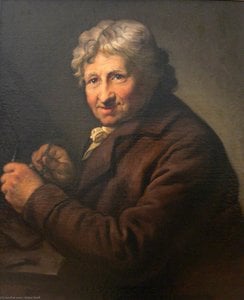
Daniel Nikolaus Chodowiecki

Daniel Nikolaus Chodowiecki

1726 - 1801 , Pologne

En bref

  • Date De Décès: 1801
  • Date De Naissance: 1726
  • Lieu De Naissance: Danzig, Pologne
  • Mouvement Ou Style Artistique: Zopfstil
  • Nationalité: Polonais-Allemand
  • Nom Complet: Daniel Nikolaus Chodowiecki
  • Œuvres Notables:
    • Eaux-fortes
    • Illustrations de livres
Explorez des œuvres d'art classées par thèmes, styles et caractéristiques.