x
Aperçu en situationAperçu en situation Aperçu en RAAperçu en RA Acheter l'impression Acheter l'impressionAcheter l'image Acheter l'image PartagerPartager
DétailsDétails Ajouter aux favoris Ajouter aux favoris Télécharger l'imageTélécharger l'image Articles similairesArticles similaires RadiographieRadiographie Voir le diaporamaVoir le diaporama

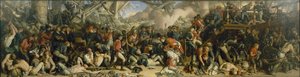
A Scene from 'Undine'

Experience 'A Scene from Undine' by Daniel Maclise – a captivating Victorian masterpiece depicting romance & folklore. Explore this stunning oil painting reproduction, perfect for art lovers.

Découvrez Daniel Maclise (1806-1870), peintre irlandais célébré pour ses fresques historiques, illustrations littéraires & portraits captivants de l'ère victorienne.

Reproduction à l'huile faite à la main

Huile sur toile peinte à la main, avec cadre et dimensions personnalisés, réalisée sur commande par nos artistes. (Acheter l'impression Acheter l'impressionAcheter l'image Acheter l'image)

P118B $10
P118H $10
P118W $10
P438Z $10
P508JH $12
P508YH $12
P805H $10
P805Z $10
P919BZ $10
P919G $10
P919XJ $10
P959ZH $10
P968JZ $12
W106C $8
W218G $10
W218JH $8
W218Y $10
W307PJ $10
W316G $10
W316PJ $8
W316Y $10
W398PJ $8
W4111J $10
W500HY $15
W500JH $15
W692G $12
W849H $8
W940BG $15
W953PJ $8

Format standard
personnalisé
CM
INCH

Choisissez parmi nos formats prédéfinis qui respectent les proportions originales de l’œuvre.

largeur
hauteur

Vous pouvez saisir vos propres dimensions pour l'adapter à un cadre ou à un espace spécifique. Si la taille sélectionnée ne correspond pas aux proportions de l'image d'origine, nous recadrerons l'œuvre ou prolongerons la peinture avec des éléments peints à la main supplémentaires. Une maquette numérique vous sera envoyée pour approbation avant le début de la production.
Veuillez noter que l'aperçu à l'écran ne reflète pas le recadrage ou l'extension réels. Seule la maquette montrera fidèlement la composition finale.
Bien que des tailles personnalisées soient disponibles, nous vous recommandons de sélectionner une dimension dans la liste prédéfinie afin de préserver les proportions d'origine.

Exemples de personnalisation possibles : remplacer un visage par la photo du client ; ajouter un animal de compagnie (par exemple, remplacer un chat par un chien) ; inclure un message caché en arrière-plan ; modifier le paysage ou les éléments de l'arrière-plan.
Après la commande, l’équipe WahooArt.com contactera le client par e-mail pour recueillir ses instructions et lui fournira une maquette d’aperçu

Livraison dans le monde entier () en 3 à 4 semaines au lieu des 5 semaines habituelles. (26 août). Aucun compromis sur la qualité.

why_choose_icon
Livraison express gratuite dans le monde entier

why_choose_icon
Toile de lin de haute qualité
why_choose_icon
Assurance transport complète
why_choose_icon
Garantie de remboursement des droits de douane
why_choose_icon
Garantie de fidélité des couleurs
why_choose_icon
Politique de retour de 60 jours (uniquement en cas de défaut)
why_choose_icon
Garantie de remboursement à 100%
why_choose_icon
Tarifs dégressifs sur quantité

Prix total

$ 272

reproduction

A Scene from 'Undine'

Technique de reproduction

Format de la reproduction

-

Prix total final

$ 272

L'essentiel

  • Notable elements or techniques: Detailed figures, fantasy elements
  • Artist: Daniel Maclise
  • Artistic style: Historical painting, narrative
  • Influences: German Romanticism
  • Dimensions: 45 x 61 cm
  • Location: Private Collection
  • Year: 1843

Description de l'œuvre

A Scene from ‘Undine’ by Daniel Maclise – A Victorian Romance of Water and Soul

Daniel Maclise's “A Scene from ‘Undine’,” painted in 1843, is more than a mere depiction of a fairy tale; it’s a meticulously crafted tableau brimming with Romantic ideals, symbolic weight, and the burgeoning anxieties of Victorian society. This captivating work, now housed within the Royal Gallery at the Palace of Westminster, transports us to a shadowed forest glen, where a young knight, Huldbrand, confronts the elemental forces embodied by Undine, a water spirit yearning for a soul. Maclise’s masterful handling of light, color, and composition creates an atmosphere both alluring and subtly unsettling, reflecting the complex interplay between beauty, danger, and the eternal quest for redemption.

The painting is deeply rooted in Friedrich de la Motte Fouqué's 1819 novella of the same name – a story that resonated powerfully with Victorian audiences. The narrative centers on Undine’s desire to transcend her watery existence and attain a human soul through marriage. Maclise doesn’t simply illustrate the plot; he amplifies its themes of transformation, sacrifice, and the struggle between opposing forces. The scene depicted captures a pivotal moment – Huldbrand's resolute defense against Kuhleborn, the malevolent water spirit who seeks to prevent Undine from achieving her goal. This confrontation isn’t merely physical; it represents a battle for the very essence of existence.

A Symphony of Color and Detail

Maclise was renowned for his meticulous attention to detail and his ability to render textures with astonishing realism. “A Scene from ‘Undine’” exemplifies this skill, showcasing a rich tapestry of colors and intricate details. The deep greens and browns of the forest floor contrast sharply with the ethereal blues and whites of Undine's watery realm. Notice the careful rendering of the foliage – each leaf, branch, and root meticulously depicted to create a sense of depth and immersion. The figures themselves are rendered with remarkable precision; Huldbrand’s determined expression, Undine’s delicate beauty, and Father Heilmann’s solemnity are all conveyed through subtle shifts in posture and facial expression.

Technically, Maclise employed a combination of oil paints on canvas. He was particularly adept at capturing the effects of light and shadow, creating a dramatic chiaroscuro that emphasizes the scene's emotional intensity. The use of glazing techniques – applying thin layers of translucent paint over dried underlayers – allowed him to build up color gradually, achieving remarkable luminosity and depth. Furthermore, Maclise’s background elements are not merely decorative; they contribute significantly to the overall narrative, hinting at the hidden world of spirits and folklore that underlies the story.

Symbolism and Victorian Anxieties

Beyond its surface beauty, “A Scene from ‘Undine’” is laden with symbolism. Undine herself represents a yearning for transcendence – a desire to escape the limitations of her watery existence and achieve something more meaningful. Huldbrand embodies courage and determination, willing to risk his life to protect her. Kuhleborn, the antagonist, symbolizes the destructive forces that threaten to thwart this transformation. The presence of Father Heilmann suggests the influence of Christian morality in guiding the characters towards a virtuous path.

The painting also reflects the anxieties prevalent in Victorian society – particularly those surrounding nature and the supernatural. The Romantic movement had instilled a fascination with the wild, untamed aspects of the natural world, while simultaneously fostering a sense of unease about its potential dangers. Maclise’s depiction of the forest as both alluring and menacing captures this duality perfectly. The inclusion of elves, goblins, and water nymphs further reinforces the painting's connection to folklore and mythology – themes that were experiencing a resurgence during the Victorian era.

A Legacy of Beauty and Intrigue

“A Scene from ‘Undine’,” completed in 1843, remains a powerful testament to Daniel Maclise’s artistic skill and his ability to capture the spirit of his time. Its enduring appeal lies not only in its technical brilliance but also in its evocative storytelling and profound exploration of universal themes. Today, reproductions of this masterpiece continue to captivate audiences, offering a glimpse into a world where romance, danger, and the eternal quest for redemption converge.

Consider commissioning a high-quality reproduction from WahooArt.com – a faithful recreation that will bring the drama and beauty of Maclise’s “A Scene from ‘Undine’” to your home or office.


Biographie de l'artiste

Première Vie et Formation

  • Né: 25 janvier 1806, Cork, Irlande
  • Décédé: 25 avril 1870, Londres, Angleterre
  • Parents: Alexander McLish (tanner/cordonnier) et Rebecca McLeish
  • Formation initiale à Cork ; a montré un talent artistique dès son plus jeune âge.
  • Étudié à l'École d'Art de Cork, se concentrant sur le dessin et l'anatomie.
  • Déménagement auto-financé à Londres en 1827 pour poursuivre ses études artistiques.
  • Entré aux Royal Academy Schools en 1828, excellant dans le dessin de la vie et la peinture historique.

Carrière et Œuvres Majeures

  • A rapidement gagné une reconnaissance pour ses talents de portraitiste, notamment en représentant Charles Kean et Niccolò Paganini.
  • A contribué de manière significative à *Fraser's Magazine* sous le pseudonyme d'"Alfred Croquis", créant une série de portraits de personnages qui ont renforcé sa réputation.
  • Est devenu Associé du Royal Academy en 1835 et membre à part entière en 1840.
  • Œuvres Notables:
  • La Rencontre de Wellington et Blücher après la Bataille de Waterloo (située au Palais de Westminster)
  • La Mort de Nelson (située au Palais de Westminster) – Une fresque monumentale considérée comme l'une de ses œuvres majeures.
  • Le Vœu Chivaleresque des Dames et du Paon
  • Illustrations pour les livres de Noël de Charles Dickens et autres œuvres.

Style Artistique et Influences

  • Le style de Maclise mêlait la narration historique à des éléments de réalisme et de portraiture.
  • Influencé par l'art français et classique, en particulier après sa visite à Paris en 1830.
  • Son travail représentait souvent des scènes de l'histoire, de la littérature (Shakespeare) et de la mythologie.
  • Démontrait un sens aigu du détail et de la caractérisation dans les portraits comme dans les compositions historiques.

Vie Ultérieure et Héritage

  • Une dévotion intense à son art a eu raison de sa santé.
  • A refusé la présidence du Royal Academy en 1865 en raison d'un état de santé déclinant.
  • Décédé à Chelsea, Londres, en 1870.
  • Une biographie a été publiée par William Justin O'Driscoll en 1871.
  • Les fresques de Maclise au Palais de Westminster restent des contributions importantes à l'art et à l'architecture britanniques.
  • Ses illustrations pour Dickens ont contribué à populariser les œuvres de cet auteur.
  • Considéré comme une figure clé de la peinture historique victorienne, reliant le néoclassicisme au réalisme.

Signification Historique

  • Maclise a joué un rôle crucial dans la documentation d'événements historiques et de figures importants pour un public plus large.
  • Son travail reflète les tendances culturelles et artistiques du XIXe siècle, en particulier la fascination victorienne pour l'histoire et la littérature.
  • Il a contribué à établir la tradition de la peinture narrative à grande échelle dans l'art britannique.
  • Ses contributions à la décoration du Palais de Westminster sont intégrales à l'esthétique et à l'importance symbolique du bâtiment.
Daniel Maclise

Daniel Maclise

1806 - 1870 , Irlande

En bref

  • Artistes Influents: ['Sir Walter Scott']
  • Date De Décès: 25 avril 1870
  • Date De Naissance: 25 janvier 1806
  • Full Name: Daniel Maclise
  • Lieu De Naissance: Cork, Irlande
  • Mouvement Artistique: Peinture historique
  • Nationalité: Irlandais
  • Œuvres Notables:
    • La rencontre Wellington-Blücher
    • La mort de Nelson
    • Le serment chevaleresque
    • Illustrations pour Dickens
Explorez des œuvres d'art classées par thèmes, styles et caractéristiques.