CONSEIL EN ART GRATUIT

x
Commander l'impression Commander l'impressionAcheter l'image haute résolution Acheter l'image haute résolution PartagerPartager
DétailsDétails Ajouter aux favoris Ajouter aux favoris TéléchargerTélécharger Articles similairesArticles similaires RadiographieRadiographie DiaporamaDiaporama

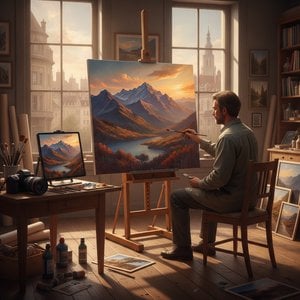
Self Portrait

Admire Claude Buck’s ‘Self Portrait’ (1919), an oil on canvas capturing a contemplative figure in a natural setting. A unique Camargue-inspired piece – explore this evocative artwork.

Explore the art of Claude Buck! Discover his works showcasing Camargue traditions & regional influences through paintings & artifacts. A French heritage artist.

Reproduction à l'huile faite à la main

Huile sur toile peinte à la main, avec cadre et dimensions personnalisés, réalisée sur commande par nos artistes.

P118B $10
P118H $10
P118W $10
P438Z $10
P508JH $12
P508YH $12
P805H $10
P805Z $10
P919BZ $10
P919G $10
P919XJ $10
P959ZH $10
P968JZ $12
W106C $8
W218G $10
W218JH $8
W218Y $10
W307PJ $10
W316G $10
W316PJ $8
W316Y $10
W398PJ $8
W4111J $10
W500HY $15
W500JH $15
W692G $12
W849H $8
W940BG $15
W953PJ $8

Standard
custom
CM
INCH

Choisissez parmi nos formats prédéfinis qui respectent les proportions originales de l’œuvre.

largeur
hauteur

Vous pouvez saisir vos propres dimensions pour l'adapter à un cadre ou à un espace spécifique. Si la taille sélectionnée ne correspond pas aux proportions de l'image d'origine, nous recadrerons l'œuvre ou prolongerons la peinture avec des éléments peints à la main supplémentaires. Une maquette numérique vous sera envoyée pour approbation avant le début de la production.
Veuillez noter que l'aperçu à l'écran ne reflète pas le recadrage ou l'extension réels. Seule la maquette montrera fidèlement la composition finale.
Bien que des tailles personnalisées soient disponibles, nous vous recommandons de sélectionner une dimension dans la liste prédéfinie afin de préserver les proportions d'origine.

Exemples de personnalisation : remplacer un visage par la photo du client ; ajouter un animal de compagnie (par exemple, remplacer un chat par un chien) ; inclure un message caché en arrière-plan ; modifier le paysage ou les éléments de l'arrière-plan.
Après la commande, l’équipe WahooArt.com contactera le client par e-mail pour obtenir ses instructions et lui fournira une maquette d’aperçu.

Livraison dans le monde entier () en 3 à 4 semaines au lieu des 5 semaines habituelles. (3 juillet). Aucune concession sur la qualité.

why_choose_icon
Livraison express gratuite dans le monde entier

why_choose_icon
Toile de lin de haute qualité
why_choose_icon
Assurance transport complète
why_choose_icon
Garantie de remboursement des frais de douane
why_choose_icon
Garantie de fidélité des couleurs
why_choose_icon
Politique de retour de 60 jours (uniquement en cas de défaut)
why_choose_icon
Garantie de remboursement à 100%
why_choose_icon
Réduction sur les achats groupés

Prix total

-

reproduction

Self Portrait

Technique de reproduction

Format de reproduction

-

Prix total final

-

Œuvres apparentées


Biographie de l'artiste

Claude Buck: A Visionary of the Camargue

Claude Buck (1890-1974) wasn’t merely a painter; he was an immersion in the soul of southern France, specifically the wild and captivating landscape of the Camargue. Born in New York City amidst the burgeoning artistic energy of the early 20th century, Buck's journey led him to establish himself as a pivotal figure in French art, deeply rooted in regional traditions yet infused with a distinctly modern sensibility. His work, characterized by luminous color palettes and an almost hallucinatory intensity, captures not just the physical beauty of the Camargue – its vast plains, shimmering lagoons, and formidable white horses – but also the emotional resonance of its unique atmosphere.

Buck’s early artistic training laid a crucial foundation. He began drawing at age four, encouraged by his father, a commercial artist, and quickly demonstrated an exceptional talent. He honed his skills at the National Academy of Design in New York City, absorbing influences from masters like Emil Carlsen and Francis Jones, but it was his subsequent studies in Munich that truly shaped his artistic vision. This immersion in European art, particularly German Symbolism, exposed him to a world of dreamlike imagery, psychological depth, and an exploration of the subjective experience – elements he would later integrate into his own distinctive style.

The move to Chicago in 1919 marked a significant turning point. He became a key member of the Introspectives group, a collective of avant-garde artists who sought to express profound emotions through symbolic and allegorical imagery. This period saw Buck experimenting with surrealist techniques, drawing inspiration from writers like Edgar Allan Poe and the operatic works of Richard Wagner – influences that would continue to permeate his work throughout his career. His paintings during this time were often characterized by a heightened sense of drama, employing rich colors and evocative compositions to convey complex psychological states.

The Camargue: A Source of Endless Inspiration

Buck’s relocation to France in the early 1920s solidified his connection to the Camargue. This vast wetland region, located in southeastern France, proved to be an inexhaustible source of inspiration for him. The Camargue is a place of stark contrasts – sun-drenched plains juxtaposed with dark, brooding lagoons; wild horses roaming freely alongside flocks of flamingos painting the sky pink. Buck’s paintings are not simply depictions of this landscape; they are attempts to capture its essence, its spirit, and the profound sense of timelessness that pervades it.

His subjects frequently revolved around the Camargue's iconic white horses – *falcões* – a breed unique to the region. These magnificent animals, with their flowing manes and powerful presence, became central figures in many of his paintings. Buck didn’t merely portray them realistically; he imbued them with symbolic weight, representing themes of freedom, wildness, and the untamed spirit of nature. He often depicted them in dramatic settings, bathed in the golden light of the setting sun or galloping across the vast plains under a stormy sky.

Technique and Style: A Master of Light and Color

Buck’s artistic technique was characterized by a remarkable mastery of color and light. He employed a vibrant palette, utilizing rich reds, yellows, and blues to create luminous effects that seemed to radiate from the canvas. His brushwork was often loose and expressive, conveying a sense of movement and energy. He was particularly adept at creating an illusion of depth and atmosphere, using layering techniques and glazing to build up complex surfaces.

Buck’s style can be described as a blend of Impressionism, Symbolism, and early Modernism. He retained the Impressionists' focus on capturing fleeting moments of light and color, while incorporating the Symbolist’s interest in exploring psychological themes and using symbolic imagery. His work also anticipates some of the techniques of later Modernist painters, such as the use of flattened perspectives and simplified forms.

Legacy and Historical Significance

Despite facing periods of critical skepticism during his lifetime, Claude Buck is now recognized as a significant figure in French art. His paintings offer a unique and compelling vision of the Camargue – a region that he captured with an unparalleled sensitivity to its beauty and spirit. Buck’s work continues to be exhibited in museums and private collections around the world, testament to the enduring power of his artistic vision.

His influence can also be seen in later generations of artists who were inspired by the Camargue's landscape and culture. Buck’s legacy lies not only in his individual paintings but also in his ability to evoke a profound emotional response in viewers, transporting them to the heart of this extraordinary region.

claude buck

claude buck

1890 - 1974

En bref

  • Artistic Movement Or Style: Impressionism/Symbolism
  • Artists Or Movements Influenced By This Artist:
    • Rudolph Weisenborn
    • Emil Armin
  • Artists Who Influenced This Artist:
    • Ralph Blakelock
    • Albert Pinkham Ryder
  • Date Of Birth: July 3, 1890
  • Date Of Death: August 4, 1974
  • Full Name: Claude Buck
  • Nationality: American
  • Notable Artworks:
    • Labor
    • Lisa Meyerowitz
  • Place Of Birth: New York City, USA