Aperçu en situation Aperçu en RA Passer au format impression Passer au format image numérique Partager
Détails Guide Ajouter aux favoris Télécharger Articles similaires Radiographie Voir le diaporama Statistiques

Swnage

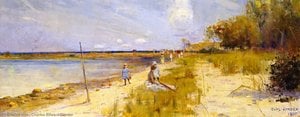
Charles Conder's 'Swnage' captures a vibrant beach scene with figures enjoying the coastal landscape. A stunning example of Heidelberg School art, showcasing warm hues and relaxed atmosphere.

Découvrez Charles Edward Conder (1868-1909), figure clé de l'École de Heidelberg en Australie ! Ses paysages impressionnistes & scènes animées vous captiveront sur WahooArt.

Reproduction à l'huile faite à la main

Huile sur toile peinte à la main, avec cadre et dimensions personnalisés, réalisée sur commande par nos artistes. ( Passer au format impression Passer au format image numérique)

P118B $10
P118H $10
P118W $10
P438Z $10
P508JH $12
P508YH $12
P805H $10
P805Z $10
P919BZ $10
P919G $10
P919XJ $10
P959ZH $10
P968JZ $12
W106C $8
W218G $10
W218JH $8
W218Y $10
W307PJ $10
W316G $10
W316PJ $8
W316Y $10
W398PJ $8
W4111J $10
W500HY $15
W500JH $15
W692G $12
W849H $8
W940BG $15
W953PJ $8

Format standard
personnalisé
CM
INCH

Choisissez parmi nos formats prédéfinis qui respectent les proportions originales de l’œuvre.

largeur
hauteur

Vous pouvez saisir vos propres dimensions pour l'adapter à un cadre ou à un espace spécifique. Si la taille sélectionnée ne correspond pas aux proportions de l'image d'origine, nous recadrerons l'œuvre ou prolongerons la peinture avec des éléments peints à la main supplémentaires. Une maquette numérique vous sera envoyée pour approbation avant le début de la production.
Veuillez noter que l'aperçu à l'écran ne reflète pas le recadrage ou l'extension réels. Seule la maquette montrera fidèlement la composition finale.
Bien que des tailles personnalisées soient disponibles, nous vous recommandons de sélectionner une dimension dans la liste prédéfinie afin de préserver les proportions d'origine.

Exemples de personnalisation possibles : remplacer un visage par la photo du client ; ajouter un animal de compagnie (par exemple, remplacer un chat par un chien) ; inclure un message caché en arrière-plan ; modifier le paysage ou les éléments de l'arrière-plan.
Après la commande, l’équipe WahooArt.com contactera le client par e-mail pour recueillir ses instructions et lui fournira une maquette d’aperçu

Livraison dans le monde entier () en 3 à 4 semaines au lieu des 5 semaines habituelles. (22 septembre). Aucun compromis sur la qualité.

why_choose_icon
Livraison express gratuite dans le monde entier
why_choose_icon
Toile de lin de haute qualité
why_choose_icon
Assurance transport complète
why_choose_icon
Garantie de remboursement des droits de douane
why_choose_icon
Garantie de fidélité des couleurs
why_choose_icon
Garantie de retour de 100 jours (uniquement en cas de défaut)
why_choose_icon
Garantie de remboursement à 100%
why_choose_icon
Tarifs dégressifs sur quantité

Prix total

$ 272

reproduction

Swnage

Technique de reproduction

Format de la reproduction

-

Prix total final

$ 272

L'essentiel de l'œuvre

  • Notable elements: Beach scene, figures
  • Title: Swnage
  • Location: Tate Britain
  • Artist: Charles Conder
  • Medium: Oil on canvas
  • Subject or theme: Coastal landscape
  • Influences:
    • Roberts
    • Streeton

Quiz d'art

Chaque question ne comporte qu'une seule bonne réponse.

Question 1:
What is the primary subject depicted in Charles Edward Conder’s ‘Swnage’?
Question 2:
In what artistic movement is Charles Edward Conder primarily associated?
Question 3:
Approximately when was ‘Swnage’ painted by Charles Edward Conder?
Question 4:
Which of the following best describes Charles Edward Conder’s artistic style?
Question 5:
What is the significance of the figures in ‘Swnage’?

Charles Edward Conder’s “Swnage”: A Coastal Symphony of Light and Leisure

“Swnage,” painted by Charles Edward Conder in approximately 1901, isn't merely a depiction of a beach scene; it’s an immersive experience of the Australian coastline captured with Impressionistic fervor. This captivating work, now housed within the Tate Britain collection, transports the viewer to a moment of serene leisure amidst the rugged beauty of South Wales – specifically, Swnage Bay. Conder, a pivotal figure in Australia's Heidelberg School movement, masterfully employed light and color to evoke not just a visual representation but also a palpable sense of atmosphere and emotion.

Conder’s artistic journey began in England, yet it was his relocation to Sydney in 1884 that truly ignited his creative spirit. He quickly abandoned surveying for the more immediate allure of landscape painting, finding inspiration in the vibrant hues and dramatic light of the Australian bush. “Swnage” reflects this newfound passion, showcasing a deliberate shift away from rigid realism towards a looser, more expressive style. The brushstrokes are visible, creating a textured surface that seems to shimmer with reflected sunlight. Notice how Conder doesn’t meticulously render every detail; instead, he focuses on capturing the essence of the scene – the play of light on water and sand, the suggestion of figures enjoying the day.

Impressionistic Techniques and Color Palette

The painting's strength lies in its masterful use of Impressionistic techniques. Conder’s approach mirrors that of his contemporaries like Monet and Renoir, prioritizing the fleeting effects of light and atmosphere over precise detail. He employed broken color – applying small dabs of paint side-by-side rather than blending them seamlessly – to create a vibrant, luminous quality. The dominant colors are warm ochres, yellows, and blues, reflecting the intense sunlight bathing the beach. These hues aren’t applied uniformly; Conder strategically uses darker tones in the shadows to heighten the sense of depth and volume, particularly in the foreground dunes. The subtle gradations of color create a dynamic visual experience, as if the scene is constantly shifting with the movement of light.

Furthermore, Conder’s use of atmospheric perspective—a technique where distant objects appear paler and less distinct—effectively conveys the vastness of the coastline. The figures in the painting are small and indistinct, emphasizing their insignificance against the grandeur of nature. This compositional choice invites the viewer to become part of the scene, sharing in the feeling of peaceful contemplation.

Symbolism and Context

“Swnage” is more than just a pretty beach scene; it’s imbued with symbolic meaning rooted in Conder's personal experiences and artistic philosophy. As an expatriate Englishman living in Australia, Conder often explored themes of displacement and the search for belonging. The painting can be interpreted as a yearning for a simpler life, a retreat from the complexities of urban existence. The figures on the beach represent leisure, friendship, and connection with nature – values that were particularly appealing to artists of the Heidelberg School.

Considering Conder’s background, it's also important to note the painting’s context within the broader artistic landscape. The Heidelberg School, which emerged in Melbourne during the late 19th century, challenged traditional academic art by embracing a more informal and subjective approach. Conder’s work exemplifies this shift, prioritizing personal observation and emotional expression over strict adherence to classical conventions. The influence of Impressionism is undeniable, but Conder infused it with his own unique Australian sensibility.

A Legacy of Light and Landscape

“Swnage” remains a powerful testament to Charles Edward Conder’s artistic vision. It's a painting that invites viewers to slow down, breathe deeply, and appreciate the beauty of the natural world. Reproductions of this evocative work capture not only its visual splendor but also the spirit of leisure and connection with nature that defined the Heidelberg School. Whether displayed in a contemporary home or a prestigious gallery, “Swnage” continues to resonate with audiences today, reminding us of the enduring power of art to transport us to another time and place.


Biographie de l'artiste

Première vie et parcours artistique

Charles Edward Conder, peintre, lithographe et designer d'origine britannique, a laissé une marque indélébile sur le monde de l'art. Né à Tottenham, Middlesex, le 24 octobre 1868, son enfance fut marquée par la mort de sa mère en Inde alors qu’il n’avait que quatre ans.

Carrière artistique en Australie

En 1884, à l'âge de 16 ans, Conder déménagea à Sydney, en Australie, où il travailla pour son oncle en tant que géomètre. Il découvrit rapidement que sa véritable passion résidait dans le dessin des paysages plutôt que dans la topographie. Dès 1886, il devint artiste pour le Illustrated Sydney News, aux côtés d'artistes notables tels qu’Albert Henry Fullwood et Frank Mahony.

L'École de Heidelberg et œuvres remarquables

La pièce maîtresse de Conder, Departure of the Orient – Circular Quay (1888), a mis en évidence sa maîtrise nouvellement acquise de la forme et du travail à l'huile. Cette scène portuaire, représentant le port animé de Sydney Cove, fut rapidement achetée par la Art Gallery of New South Wales, faisant de ce tableau sa première œuvre à entrer dans une collection publique.
  • A Holiday at Mentone (1888), une peinture pleine d'entrain représentant des hommes et des femmes se relaxant sur la plage, est un autre exemple notable de son travail.
  • L’association de Conder avec G. P. Nerli, un peintre italien itinérant, a considérablement influencé son développement artistique.
  • Ses contributions à l’exposition « 9 by 5 Impression » à Melbourne, aux côtés de Tom Roberts et Arthur Streeton, ont consolidé sa position au sein du mouvement de l'École de Heidelberg.

Héritage et vie ultérieure

Les dernières années de Conder furent marquées par de mauvais problèmes de santé, notamment la paralysie et un épisode de délirium tremens. Malgré cela, il continua à peindre, laissant derrière lui un héritage en tant que figure clé de l'École de Heidelberg. Son art fut mieux accueilli en Angleterre qu’à Paris, son portrait étant peint par Henri de Toulouse-Lautrec en 1892. Consultez les œuvres de Conder à la Art Gallery of New South Wales ou explorez davantage l'École de Heidelberg sur la page Charles Edward Conder de WahooArt.

Conclusion

L’impact de Charles Edward Conder sur l'impressionnisme australien est indéniable. Son héritage, marqué par ses peintures captivantes et son association avec l'École de Heidelberg, continue d’inspirer les passionnés d'art du monde entier.
Charles Edward Conder

Charles Edward Conder

1868 - 1909 , Royaume-Uni

En bref

  • Artistic Movement Or Style: Impressionnisme australien
  • Artists Who Influenced This Artist: ['G. P. Nerli']
  • Date Of Birth: 24 octobre 1868
  • Date Of Death: 1909
  • Full Name: Charles Edward Conder
  • Nationality: Britannique
  • Notable Artworks:
    • Departure of the Orient
    • A Holiday at Mentone
  • Place Of Birth (City And Country): Tottenham, Royaume-Uni
Explorez des œuvres d'art classées par thèmes, styles et caractéristiques.