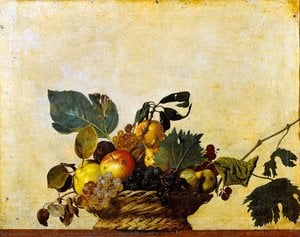
Impressions giclées ou sur toile de qualité musée, avec une production rapide et des finitions au choix. ( Commander la reproduction peinte à la main Passer au format numérique)





























Choisissez parmi nos formats prédéfinis qui respectent les proportions originales de l’œuvre.

Saisissez la largeur et la hauteur souhaitées pour qu'elles s'adaptent à votre cadre ou à votre mur. Une impression peut être recadrée, mais jamais agrandie au-delà de l'image originale ; ainsi, un format de forme différente entraînera la perte d'une partie de l'image. Nous vous envoyons une maquette numérique pour approbation avant toute impression. L'image présentée sur cette page ne montre pas le recadrage réel — seule la maquette le permet.
Livraison dans le monde entier () en 2 semaines au lieu des 4/5 semaines habituelles. (8 novembre)
St Francis
Format de la reproduction
Les statistiques concernant «St Francis» de Caravage sont disponibles sur la page Statistiques de l'œuvre : nombre de visites mensuelles, consultations des autres œuvres de l'artiste, ainsi que la répartition des visiteurs récents par pays et par langue.
Un téléchargement est disponible pour « St Francis » : la page Téléchargement de l'œuvre propose téléchargement d'une image numérique haute résolution.
«St Francis» appartient à la période Mature Period de la carrière de Caravage. Cette classification relie l'œuvre à l'évolution de l'artiste.


1571 - 1610 , Espagne

Discover the profound emotional power of Baroque painting. Explore the mastery of chiaroscuro, the realism of Caravaggio, and the dramatic interplay of light and shadow in this expert guide for classical art enthusiasts and collectors.

Explore the profound mastery of Caravaggio's tenebrism. Discover how his dramatic use of chiaroscuro revolutionized Baroque art through intense emotion and realism. An expert guide for classic art enthusiasts seeking to understand the power of shadow in historical masterpieces.

Embark on a sophisticated journey through Italian Baroque art. Discover the dramatic interplay of light and emotion in Caravaggio’s masterpieces and explore how to bring this timeless grandeur into your collection with expert art insights.

Maîtrisez le clair-obscur et l'énergie du Baroque avec notre analyse d'experts. Explorez les secrets de Caravage et Rembrandt dès maintenant.
 Aperçu en situation
 Envoyer
 Partager
 Détails de l'œuvre
 Guide
Guide

 Télécharger l'image
 Articles similaires
 Radiographie
 Diaporama
 Questions et réponses
 Statistiques


 Lire la suite









 L'option verre n'est disponible que pour les dimensions inférieures à 110 cm.


![Légende De Saint François - [08] - Vision Du Chariot Flamboyant — Giotto Di Bondone, Proto-renaissance Gothic](/media/artworks/images-thumb/65/6e/656e345ff55e49ce2e4377a050b85aa1.jpg)


![La Légende De Saint François - [23] - Saint François Dépouillé De Douleurs Par Sainte Claire — Giotto Di Bondone, Gothique](/media/artworks/images-thumb/17/1c/171c284c41dc3ef8bca83e51c1e1e531.jpg)

![Légende De Saint François - [02] - Saint François Offrant Sa Cape À Un Pauvre — Giotto Di Bondone, Gothic](/media/artworks/images-thumb/1f/84/1f842a0319a02eaaa27d431c94a53fd1.jpg)
![La Légende De Saint François – [24] – La Canonisation De Saint François — Giotto Di Bondone, Gothic](/media/artworks/images-thumb/81/9b/819b5f0656848eb5cb3fcd40fd5756aa.jpg)