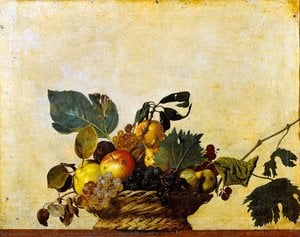
David, 1600
Michelangelo Merisi da Caravaggio’s *David*, painted around 1600, stands as an emblem of Baroque art—a movement defined by dramatic emotion and masterful illusionism. More than just a depiction of biblical heroism, it embodies the spirit of its time, reflecting anxieties about faith and power within the turbulent political landscape of Rome. This monumental canvas resides in the Museo del Prado in Madrid, alongside other versions housed in Vienna and Rome, cementing Caravaggio’s legacy as one of the most influential artists of the seventeenth century.
Style and Technique: The Power of Chiaroscuro
Caravaggio revolutionized painting with his uncompromising commitment to realism—a radical departure from Mannerist conventions that prioritized elegance and abstraction. His signature technique, *chiaroscuro*, is instantly recognizable. He employed stark contrasts between light and dark, sculpting figures out of shadow and highlighting key areas with intense illumination. This dramatic effect wasn’t merely stylistic; it served a profound psychological purpose—to convey the inner turmoil of David as he contemplates the imminent confrontation with Goliath. The artist meticulously studied anatomy and musculature, achieving an unprecedented level of naturalism that captivated audiences and influenced generations of painters. Observe how Caravaggio captures the tension between David's gaze and the looming presence of Goliath’s severed head – a visual metaphor for overcoming fear and doubt.
A Biblical Narrative Illuminated
The painting recounts the biblical tale of David slaying Goliath, a young shepherd who defied the giant Philistine warrior armed with spear and shield. Caravaggio eschewed idealized depictions of heroism, presenting David as a man wrestling with moral responsibility—a figure humbled by circumstance yet resolute in his determination. The artist’s decision to portray David as pensive and vulnerable is deliberate; he seeks to communicate not triumph but the psychological impact of victory. This portrayal resonates deeply with viewers because it speaks to universal themes of courage, faith, and overcoming adversity.
Symbolism and Context: Rome Under Papal Patronage
Caravaggio’s *David* was commissioned by Cardinal Francesco Maria Del Monte, a prominent patron of the arts who championed Caravaggio's innovative style. The painting reflects the broader artistic climate of Rome during the Baroque period—a time marked by papal ambition and religious fervor. The dramatic lighting underscores the moral struggle at the heart of the narrative, mirroring the anxieties surrounding papal authority and the challenges faced by Catholic Europe in confronting Protestantism. Furthermore, Caravaggio’s use of a young boy as David – referencing Michelangelo Buonarroti's depiction of David—was a bold artistic statement that challenged conventional notions of masculinity and heroism. The image itself embodies the triumph of faith over fear, mirroring the spiritual aspirations of the era.
Handmade oil painting reproductions of *David* by
Michelangelo Merisi Da Caravaggio are available on WahooArt.com, allowing art lovers to own a piece of history and beauty. For more information about the artist and his works, visit
Michelangelo Merisi Da Caravaggio on WahooArt.com.
Questions et réponses
Quelle est la notoriété de « David » au sein du mouvement Baroque ?
«David» de Caravage est classé comme Iconique et appartient au mouvement Baroque.
En quoi "David" s'inscrit-il dans l'œuvre de Caravage ?
«David» partage avec les autres œuvres de Caravage son style Baroque ainsi que ses thèmes récurrents : dramatic lighting & tenebrism, biblical narrative: david vs goliath, psychological realism & emotion, influence of titian & giorgione, religious symbolism & moral lesson, iconic masterpiece in caravaggio's oeuvre, revolutionary style shaping baroque art.
Quelle taille de reproduction est suggérée pour «David» de Caravage ?
La taille d'impression recommandée pour «David» de Caravage est Grand format.



 Aperçu en situation
 Passer au format impression
 Envoyer
 Partager
 Détails de l'œuvre
 Guide
Guide

 Télécharger l'image
 Articles similaires
 Radiographie
 Diaporama
 Q&A
Q&A Statistiques

 Lire la suite






































 L'option verre n'est disponible que pour les dimensions inférieures à 110 cm.