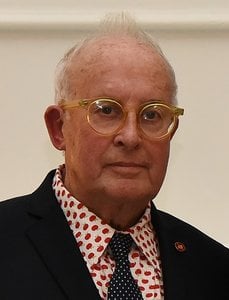
Billy Apple : Un pionnier du Pop Art et de l'art conceptuel
Né sous le nom de Barrie Bates à Auckland, en Nouvelle-Zélande, le 31 décembre 1935, le parcours artistique de Billy Apple fut une transformation radicale — un dépouillement délibéré de son identité pour forger un nouveau personnage entièrement dédié à l'exploration de l'intersection entre l'art, le commerce et la vie quotidienne. Sa carrière, qui s'est étendue sur six décennies, fut marquée par une expérimentation incessante des matériaux, des concepts et de son propre auto-branding, l'établissant finalement comme une figure pivot des mouvements Pop Art et Art Conceptuel. L'œuvre d'Apple ne consistait pas simplement à créer des objets ; il s'agissait de questionner la nature même de l'art — sa valeur, son contexte et sa relation avec le monde qui nous entoure.
Ses premières influences furent étonnamment diverses. La formation initiale de Bates à l'Elam School of Fine Arts d'Auckland l'exposa à une scène artistique néo-zélandaise en plein essor, mais son véritable éveil artistique survint lors de ses études au Royal College of Art de Londres en 1959. Là, au cœur de l'environnement vibrant et stimulant de l'art britannique d'après-guerre, il rencontra des artistes tels que David Hockney et Ridley Scott, absorbant leurs approches novatrices tout en traçant simultanément son propre chemin distinct. Cette période jeta les bases de sa fascination ultérieure pour la culture populaire du Pop Art et sa critique du consumérisme — un thème qui allait devenir central dans sa pratique.
La naissance de Billy Apple
En 1962, Bates se réinventa de manière spectaculaire sous le nom de Billy Apple. Ce ne fut pas un simple changement de nom ; ce fut une déclaration artistique complète. Il décolora ses cheveux et ses sourcils avec la crème Lady Clairol Instant Cremé Whip — un acte délibéré d'appropriation et de subversion, signalant immédiatement le rejet des notions traditionnelles de la personnalité de l'artiste. La création de « Billy Apple » coïncida avec son installation à New York en 1964, où il commença à participer activement à la scène Pop Art naissante. Ce repositionnement stratégique lui permit d'opérer en dehors des contraintes de l'identité personnelle pour se concentrer uniquement sur sa vision artistique.
Les premiers travaux d'Apple à New York furent caractérisés par un engagement ludique avec la technologie et la culture de consommation. L'exposition « American Supermarket », organisée par Ben Birillo en 196 et mettait en scène des objets du quotidien — produits frais, conserves, publicités — tous créés par d'éminents artistes Pop, dont Apple lui-même. Ce projet mit brillamment en lumière la porosité des frontières entre l'art et le commerce, reflétant l'influence croissante des médias de masse et de la publicité sur la société. Plus tard, son exploration de l'enseigne au néon — particulièrement dans des œuvres comme « Apples to Xerox » (1965) et « Neon Rainbows » (1965) — devint un élément signature, utilisant une lumière synthétique et éclatante pour attirer l'attention sur l'artificialité de la vie moderne.
Innovations conceptuelles et espaces Apple
Au fil des années 1970, Apple orienta ses recherches vers des approches plus conceptuelles. Il fonda « APPLE », un espace d'exposition alternatif révolutionnaire dans le West Village de New York en 1969. Il ne s'agissait pas simplement d'une galerie ; c'était un environnement autonome conçu pour défier les pratiques artistiques conventionnelles et favoriser le dialogue. « APPLE » fonctionnait à la fois comme lieu d'exposition et forum d'expérimentation artistique, accueillant des œuvres d'artistes tels que Geoff Hendricks, Larry Miller et Davi Det Hompson. L'espace devint un centre vital pour l'avant-garde, repoussant les limites et remettant en question les hiérarchies établies au sein du monde de l'art.
Au-delà d'« APPLE », Apple continua de développer son propre système unique de branding et d'autopromotion. Il créa une ligne de produits — cidre « Billy Apple », café, et même une variété de pomme — étendant son identité artistique au domaine du commerce. Cette démarche stratégique ne visait pas seulement à générer des revenus ; c'était une exploration délibérée de la relation entre l'art et le capital, questionnant la définition même de la valeur sur le marché de l'art.
Héritage et influence
L'influence de Billy Apple sur l'art contemporain est profonde. Il a été un pionnier de techniques telles que la sculpture au néon et l'auto-branding, repoussant les limites de l'expression artistique et défiant les notions traditionnelles du rôle de l'artiste. Son œuvre continue d'être exposée internationalement, reconnue pour sa rigueur conceptuelle, son expérimentation ludique et son engagement critique envers la société. L'héritage d'Apple dépasse ses œuvres individuelles ; il a fondamentalement modifié la manière dont les artistes abordent leur pratique, démontrant le pouvoir de l'auto-invention et le potentiel de l'art en tant que commentaire sur le monde qui nous entoure. Il s'est éteint à Auckland, en Nouvelle-Zélande, le 6 septembre 2021, laissant derrière lui un corpus d'œuvres qui demeure à la fois provocateur et profondément perspicace.



 Aperçu en situation
 Commander l'impression
 Envoyer
 Partager
 Détails de l'œuvre

 Télécharger
 Articles similaires
 Radiographie
 Diaporama
 Lire la suite