Balthus's 'Landscape with Oxen': A Vision of Rural Intensity
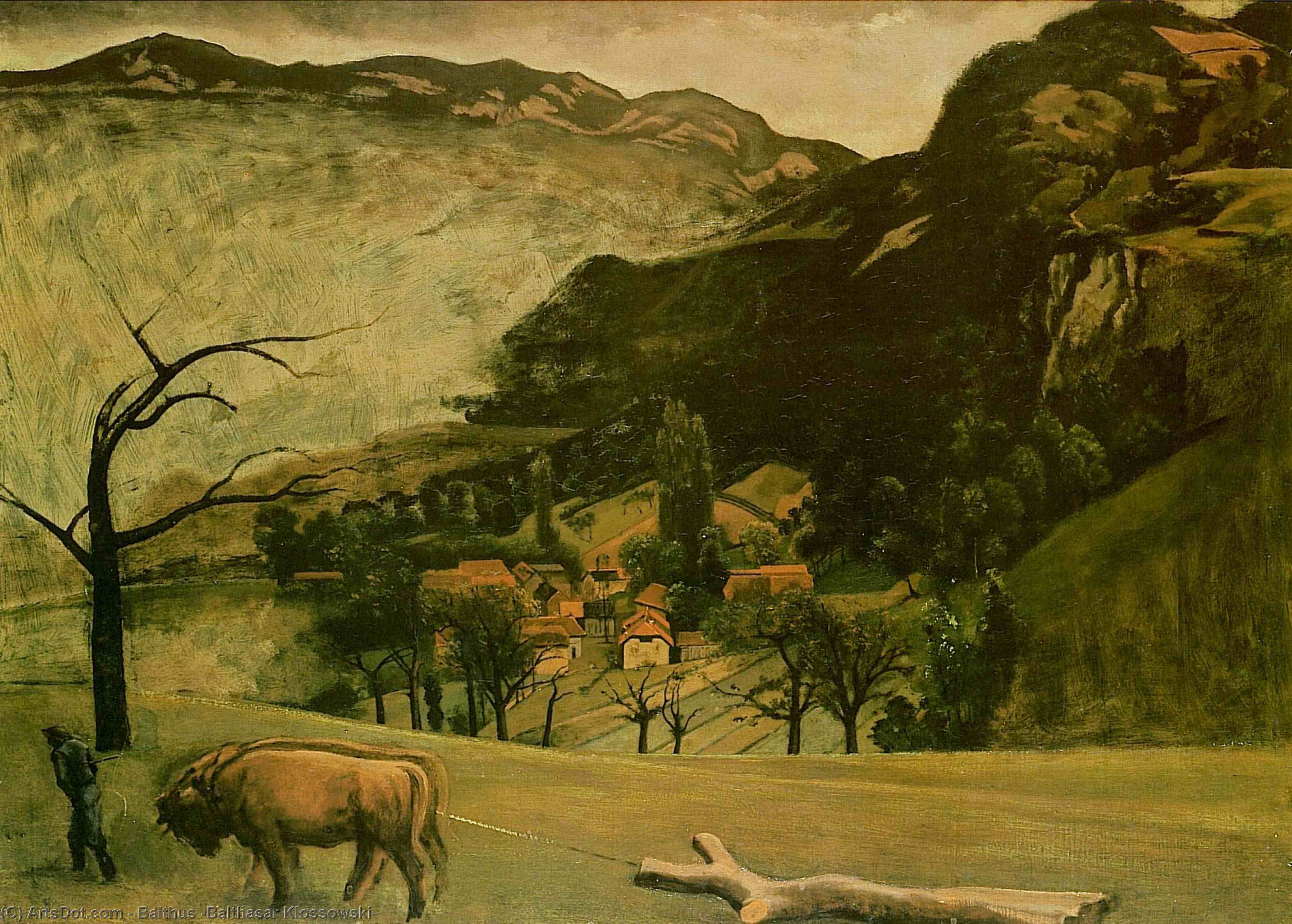
Balthus’s ‘Landscape with Oxen,’ painted in 1942, is more than just a depiction of a rural scene; it’s an immersion into a world of quiet intensity and unsettling beauty. Executed in oil on canvas to dimensions of 100 x 72 cm, this work exemplifies the artist's unique approach – a masterful blend of Expressionist sensibilities with a rigorously observed realism that feels both deeply rooted in tradition and profoundly modern.
- Subject Matter: The painting centers on a solitary cow laboring to pull a plow through a field, framed by imposing mountains. Two figures, subtly placed along the edges, add an element of human presence without disrupting the dominant mood of isolation.
- Style & Technique: Balthus’s signature style is immediately apparent – a deliberate avoidance of easy sentimentality. The colors are rich and muted, creating a sense of atmospheric depth, while the forms possess a subtly distorted quality that invites contemplation rather than simple observation. The brushwork is precise yet loose, contributing to the painting's palpable texture.
Echoes of Tradition and Expressionist Influence
Born in Paris in 1908, Balthus was shaped by a lineage steeped in artistic heritage – his father, an art historian, and his mother, a painter herself – fostering a deep respect for the Old Masters. This influence is evident in the painting’s classical composition and subject matter, yet it's tempered by a distinctly Expressionist impulse. The scene isn’t idyllic; there’s a palpable sense of hardship and toil embedded within the landscape, reflecting Balthus’s interest in exploring darker aspects of human experience.
The painting resonates with themes found in European folklore and mythology, adding layers of symbolic meaning to the seemingly straightforward depiction. The plow itself represents labor, tradition, and perhaps even a struggle against the forces of nature – while the mountains stand as silent witnesses to time and change.
Symbolism and Emotional Resonance
'Landscape with Oxen' is profoundly evocative, prompting questions about human connection to the land and the burdens of existence. The solitary cow, the weathered figures, and the vastness of the landscape combine to create a powerful sense of isolation and contemplation. Balthus’s ability to convey such complex emotions through seemingly simple imagery is a testament to his artistic skill and vision.
The painting's placement within the broader context of Balthus's oeuvre – alongside works like ‘Window,’ ‘Cour de Rohan,’ and ‘Getting Up’ – reveals a consistent thematic preoccupation with vulnerability, sexuality, and the darker aspects of human nature. This piece is a key example of his ability to create art that is both beautiful and unsettling.
Own a Piece of Art History
WahooArt offers meticulously crafted hand-painted reproductions of Balthus’s ‘Landscape with Oxen,’ allowing you to bring this iconic artwork into your home or office. Each reproduction is created using the same techniques and materials as the original, ensuring exceptional quality and authenticity. Discover more at https://WahooArt.com.


 Aperçu en situation
 Acheter la peinture faite à la main
 Partager
 Partager
 Détails
 Guide
Guide

 Télécharger
 Articles similaires
 Radiographie
 Voir le diaporama
 Statistiques


 Afficher la suite






































 L'option verre n'est disponible que pour les dimensions inférieures à 110 cm.