Aperçu en situation Visualiser en RA Passer au format impression Passer au format numérique Envoyer
Détails de l'œuvre Guide Ajouter aux favoris Télécharger l'image Articles similaires Radiographie Diaporama Q&A Statistiques

David and Caspar Hand-painted oil painting reproduction

Experience the captivating portrait 'David and Caspar' by Augustus Edwin John (1912). A poignant depiction of two figures, showcasing post-impressionist style & a profound connection.

Découvrez Augustus Edwin John (1878-1961), maître gallois post-impressionniste ! Portraits saisissants, paysages évocateurs et héritage artistique à explorer.

L’œuvre d'art présentée sur cette page est protégée par le droit d'auteur, ce qui signifie que nous ne pouvons légalement créer ou vendre de reproduction identique. Cette protection est appliquée en vertu d'accords internationaux tels que la Convention de Berne et par les lois nationales, notamment celles énoncées par le Loi américaine sur le droit d'auteur - Titre 17.

En tant qu'alternative respectueuse et légale, nous proposons des œuvres d'art personnalisées, peintes à la main et inspirées de l'original. Nos artistes talentueux et professionnels étudient avec soin le style, l'ambiance et l'essence artistique de l'œuvre originale pour créer une pièce nouvelle et unique qui évoque la même émotion — tout en restant une création originale en soi.

Cette méthode est pleinement conforme aux réglementations sur le droit d'auteur car elle ne repose pas sur la copie ou la duplication de l'œuvre protégée. Il s'agit plutôt d'une réinterprétation créative — une nouvelle peinture qui s'inspire de l'original sans pour autant lui être identique.

Reproduction à l'huile faite à la main

Huile sur toile peinte à la main, avec cadre et dimensions personnalisés, réalisée sur commande par nos artistes. ( Passer au format impression Passer au format numérique)

Corner sample of the P118B picture frame: polystyrène moulé, 5 cm wide and 3 cm thick
P118B €10
Corner sample of the P118H picture frame: polystyrène moulé, 5 cm wide and 3 cm thick
P118H €10
Corner sample of the P118W picture frame: polystyrène moulé, 5 cm wide and 3 cm thick
P118W €10
Corner sample of the P438Z picture frame: polystyrène moulé, 5.5 cm wide and 3.5 cm thick
P438Z €10
Corner sample of the P508JH picture frame: polystyrène moulé, 7 cm wide and 3.5 cm thick
P508JH €12
Corner sample of the P508YH picture frame: polystyrène moulé, 7 cm wide and 3.5 cm thick
P508YH €12
Corner sample of the P805H picture frame: polystyrène moulé, 5 cm wide and 3.5 cm thick
P805H €10
Corner sample of the P805Z picture frame: polystyrène moulé, 5 cm wide and 3.5 cm thick
P805Z €10
Corner sample of the P919BZ picture frame: polystyrène moulé, 7 cm wide and 3.5 cm thick
P919BZ €10
Corner sample of the P919G picture frame: polystyrène moulé, 7 cm wide and 3.5 cm thick
P919G €10
Corner sample of the P919XJ picture frame: polystyrène moulé, 7 cm wide and 3.5 cm thick
P919XJ €10
Corner sample of the P959ZH picture frame: polystyrène moulé, 5 cm wide and 3 cm thick
P959ZH €10
Corner sample of the P968JZ picture frame: polystyrène moulé, 6 cm wide and 4 cm thick
P968JZ €12
Corner sample of the W106C picture frame: bois massif, 5 cm wide and 3 cm thick
W106C €8
Corner sample of the W218G picture frame: bois massif, 5 cm wide and 3 cm thick
W218G €10
Corner sample of the W218JH picture frame: bois massif, 5 cm wide and 3 cm thick
W218JH €8
Corner sample of the W218Y picture frame: bois massif, 5 cm wide and 3 cm thick
W218Y €10
Corner sample of the W307PJ picture frame: bois massif, 6 cm wide and 3 cm thick
W307PJ €10
Corner sample of the W316G picture frame: bois massif, 6 cm wide and 3 cm thick
W316G €10
Corner sample of the W316PJ picture frame: bois massif, 6 cm wide and 3 cm thick
W316PJ €8
Corner sample of the W316Y picture frame: bois massif, 6 cm wide and 3 cm thick
W316Y €10
Corner sample of the W398PJ picture frame: bois massif, 5 cm wide and 3 cm thick
W398PJ €8
Corner sample of the W4111J picture frame: bois massif, 6.5 cm wide and 3.5 cm thick
W4111J €10
Corner sample of the W500HY picture frame: bois massif, 7 cm wide and 5 cm thick
W500HY €15
Corner sample of the W500JH picture frame: bois massif, 7 cm wide and 5 cm thick
W500JH €15
Corner sample of the W692G picture frame: bois massif, 8 cm wide and 4 cm thick
W692G €12
Corner sample of the W849H picture frame: bois massif, 5 cm wide and 3 cm thick
W849H €8
Corner sample of the W940BG picture frame: bois massif, 7.5 cm wide and 4.5 cm thick
W940BG €15
Corner sample of the W953PJ picture frame: bois massif, 6 cm wide and 3.5 cm thick
W953PJ €8

Format standard
sur mesure
CM
INCH

Choisissez parmi nos formats prédéfinis qui respectent les proportions originales de l’œuvre.

largeur
hauteur

Saisissez la largeur et la hauteur souhaitées, pour s'adapter à votre cadre ou à votre mur. Cette œuvre est peinte à la main ; ainsi, pour un format de forme différente, l'artiste peut peindre un peu plus autour du tableau ou réduire légèrement les bords — c'est vous qui choisissez. Nous vous envoyons une maquette numérique pour approbation avant que la peinture ne commence. L'image présentée sur cette page ne reflète pas le résultat réel — seule la maquette le fait.

Exemples de personnalisation possibles : remplacer un visage par la photo du client ; ajouter un animal de compagnie (par exemple, remplacer un chat par un chien) ; inclure un message caché en arrière-plan ; modifier le paysage ou les éléments de l'arrière-plan.
Après la commande, l’équipe WahooArt.com contactera le client par e-mail pour recueillir ses instructions et lui fournira une maquette d’aperçu

Livraison dans le monde entier () en 3 à 4 semaines au lieu des 5 semaines habituelles. (30 octobre). Aucun compromis sur la qualité.

Livraison express gratuite dans le monde entier
Toile de lin de qualité supérieure
Assurance transport complète
Garantie de remboursement des droits de douane
Garantie de fidélité des couleurs
Politique de retour de 100 jours (uniquement en cas de défaut)
Garantie de remboursement à 100%
Offre de tarifs dégressifs

Prix total

€ 240

David and Caspar

Technique de reproduction

Format de la reproduction

-

Prix total

€ 240

Informations clés

  • Movement: Post-Impressionism
  • Artistic style: Portraiture
  • Notable elements: Two children, landscape
  • Artist: Augustus Edwin John
  • Year: 1912
  • Dimensions: 53 x 35 cm

Quiz d'art

Chaque question ne comporte qu'une seule bonne réponse.

Question 1:
What is the primary subject depicted in Augustus Edwin John’s ‘David and Caspar’?
Question 2:
In what year was ‘David and Caspar’ painted?
Question 3:
Augustus Edwin John was known for which artistic movement?
Question 4:
According to the image description, what is the overall style of ‘David and Caspar’?
Question 5:
What does the image description suggest about the time period in which ‘David and Caspar’ was created?

The Enigmatic Duo: David and Caspar

Augustus Edwin John’s “David and Caspar,” painted in 1912, isn't merely a portrait; it’s a carefully constructed tableau of youthful camaraderie and profound introspection. The canvas immediately draws the viewer into a quiet, sun-drenched meadow, dominated by two figures – a young boy, identified as David, and a slightly older youth, Caspar – standing in relaxed contemplation. Their postures are remarkably naturalistic, suggesting an easy familiarity born from shared experience and mutual respect. John masterfully captures the fleeting expressions of their faces, hinting at unspoken thoughts and a deep connection that transcends mere friendship. The scene is imbued with a palpable sense of serenity, yet beneath this surface tranquility lies a subtle current of melancholy, reflecting perhaps the transient nature of youth and beauty.

John’s style during this period leaned heavily into Post-Impressionism, characterized by bold brushstrokes, vibrant color palettes, and an emphasis on capturing subjective experience rather than photographic realism. He eschewed meticulous detail in favor of conveying mood and atmosphere. Notice the loose application of paint, particularly in the rendering of the sky – a wash of blues and purples that evokes both warmth and a hint of foreboding. The figures themselves are painted with a slightly flattened perspective, contributing to the overall sense of intimacy and immediacy. The choice of medium—oil on panel—allowed John to build up layers of color and texture, creating a rich and luminous surface.

Echoes of Myth and Romanticism

The pairing of “David” and “Caspar” is deliberately evocative, immediately conjuring associations with the biblical story of David and Jonathan. While not a direct illustration of that famous tale, John clearly intended to tap into its powerful themes of loyalty, brotherhood, and sacrifice. The names themselves—David, after the shepherd king, and Caspar, referencing the biblical figure known for his wisdom—suggest a deliberate layering of symbolism. Furthermore, the painting resonates with the spirit of Romanticism, a movement that prized emotion, individualism, and the sublime beauty of nature. The meadow setting, bathed in golden light, embodies this ideal – a space of tranquility and spiritual reflection.

The inclusion of Caspar adds an intriguing layer to the composition. He’s not simply a companion; he possesses a certain gravitas, a quiet intensity that contrasts with David's youthful exuberance. Some art historians have suggested that Caspar represents the older generation, offering guidance and wisdom to the younger boy. The subtle shift in gaze between the two figures—David looking slightly upwards, as if contemplating something beyond the immediate scene—further reinforces this interpretation. The painting invites us to ponder the complexities of human relationships and the enduring power of youthful bonds.

A Window into John’s World

Augustus Edwin John was a complex and often enigmatic figure, known for his bohemian lifestyle and unconventional artistic practices. Born in Wales, he spent much of his life traveling throughout Europe, immersing himself in diverse cultures and artistic traditions. His work is deeply personal, reflecting his own experiences and emotions. “David and Caspar” offers a glimpse into this world—a world of passionate friendships, spiritual quests, and a profound appreciation for the beauty of the natural world. The painting’s enduring appeal lies not only in its technical skill but also in its ability to evoke a sense of nostalgia and wonder.

Further research reveals that John was particularly fascinated by the Romani people, whom he often depicted in his paintings. His interest in their culture led him to travel extensively throughout Europe, documenting their lives and customs. The painting’s composition—with its emphasis on natural light and simple forms—can be seen as a reflection of this fascination with the beauty of everyday life. The inclusion of Caspar, a figure who appears to be of Romani descent, adds another layer of complexity to the painting's symbolism.

Useful Links:

Questions et réponses

Quelle place occupe « David and Caspar » parmi les thèmes récurrents de Augustus Edwin John ?

Les thèmes récurrents de Augustus Edwin John incluent influenced by friedrich, john, romanticism, brotherhood, friendship, wales, bohemian life, travel ; « David and Caspar » se concentre sur david, caspar, portrait, cowboy, landscape, victorian, brotherhood.

Quelle pièce s'accorde avec les couleurs de «David and Caspar» de Augustus Edwin John ?

Les nuances Earthy de «David and Caspar» de Augustus Edwin John s'accordent parfaitement avec l'espace recommandé : une Living Room.

«David and Caspar» de Augustus Edwin John est-il une composition en portrait, en paysage ou carrée ?

«David and Caspar» de Augustus Edwin John présente un format Portrait. Le format décrit les proportions de la composition.


Biographie de l'artiste

Augustus Edwin John : Une Vie Dédicée à l'Art

  • Né: 4 janvier 1878, Tenby, Pays de Galles
  • Décédé: 31 octobre 1961, Fordingbridge, Angleterre

Jeunesse et Formation Artistique

  • La vie précoce de John a été façonnée par son héritage gallois et un environnement familial favorable. Sa mère lui a inculqué l'amour du dessin dès son plus jeune âge.
  • Il a fréquenté la Tenby School of Art à 17 ans, démontrant une aptitude artistique précoce.
  • Des études ultérieures à la Slade School of Fine Art, University College London (1894-1898), se sont avérées déterminantes dans son développement en tant qu'artiste. Il y a excellé, remportant le prix estival de l'Académie Slade en 1898.
  • Un traumatisme crânien important en 1897 a entraîné un changement radical dans sa personnalité et son style artistique, marqué par une spontanéité et une audace accrues.

Style Artistique et Œuvres Majeures

  • Influences: Le travail de John a été influencé par les peintres des Vieilles Maîtres comme Pierre Paul Rubens, ainsi que par ses contemporains français tels que Matisse et Gauguin. Il s'est également inspiré de Puvis de Chavannes.
  • Style: Son style a évolué à travers le Post-Impressionnisme, caractérisé par des couleurs vibrantes, un travail pictural expressif et une concentration sur la capture de l'essence de ses sujets.
  • Portraiture: John est surtout connu pour ses portraits, qui représentaient souvent des figures aristocratiques et des personnalités littéraires. Il avait le don de saisir une "attitude instantanée" chez ses modèles. Des exemples notables incluent les portraits de David Lloyd George, James Joyce et George Bernard Shaw.
  • Œuvres Notables:
    • Caspar (1909) : Un portrait poignant qui met en valeur l'innocence juvénile.
    • Portraits d'Archibald Henry Macdonald Sinclair (1924)
    • Portrait de Francis Henry Crittall (1919)
    • Air Mechanic Shaw (Colonel T. E. Lawrence of Arabia, 1935)
    • David John (1937)
  • Lore Gitane: Une fascination pour la culture Romani a conduit à une période où lui et sa famille ont voyagé en caravane, influençant ses thèmes artistiques et le menant finalement à devenir président de la Gypsy Lore Society.

Évolution et Importance Historique

  • Initialement célébré pour ses dessins de figures et ses techniques innovantes d'esquisse à l'huile, le travail ultérieur de John a parfois souffert d'un déclin de la brillance picturale, devenant plus flamboyant que percutant.
  • Pendant la Première Guerre mondiale, il a servi comme artiste de guerre attaché aux forces canadiennes, créant des portraits mémorables de soldats. Un incident ultérieur a conduit à son rappel en Angleterre.
  • Malgré les fluctuations de l'accueil critique tout au long de sa carrière, Augustus Edwin John reste une figure importante de l'histoire de l'art britannique. Il était l'un des rares artistes britanniques qui ont obtenu une reconnaissance publique généralisée et qui ont contribué à populariser le Post-Impressionnisme au Royaume-Uni.
  • Son héritage réside dans son dessin exceptionnel, sa capacité à capturer le caractère dans les portraits et sa contribution au développement de la peinture britannique moderne.

Dernières Années et Héritage

  • John a reçu l'Ordre du Mérite en 1942, reconnaissant ses contributions artistiques.
  • Il a écrit deux volumes d'autobiographie, Chiaroscuro (1952) et Finishing Touches (publiés à titre posthume en 1964).
  • Bien que sa réputation ait connu un déclin après la Seconde Guerre mondiale, il y a eu un regain d'intérêt pour son travail, en particulier ses premières œuvres.
  • La sœur de John, Gwen John, était également une artiste très respectée, consolidant ainsi l'héritage artistique de la famille.
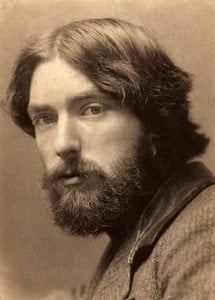
Augustus Edwin John

Augustus Edwin John

1878 - 1961 , Pays de Galles

L'essentiel de l'artiste

  • Artistes Influents:
    • Rubens
    • Matisse
    • Gauguin
    • Puvis de Chavannes
  • Date De Décès: 31 octobre 1961
  • Date De Naissance: 4 janvier 1878
  • Lieu De Naissance: Tenby, Royaume-Uni
  • Mouvement Artistique: Post-Impressionnisme
  • Nationalité: Gallois
  • Nom Complet: Augustus Edwin John
  • Oeuvres Notables:
    • Caspar
    • Air Mechanic Shaw
    • David John
Explorez des œuvres d'art classées par thèmes, styles et caractéristiques.