


Huile sur toile peinte à la main, avec cadre et dimensions personnalisés, réalisée sur commande par nos artistes. ( Commander l'impression Acheter l'image haute résolution)
Choisissez parmi nos formats prédéfinis qui respectent les proportions originales de l’œuvre.

Vous pouvez saisir vos propres dimensions pour l'adapter à un cadre ou à un espace spécifique. Si la taille sélectionnée ne correspond pas aux proportions de l'image d'origine, nous recadrerons l'œuvre ou prolongerons la peinture avec des éléments peints à la main supplémentaires. Une maquette numérique vous sera envoyée pour approbation avant le début de la production.
Veuillez noter que l'aperçu à l'écran ne reflète pas le recadrage ou l'extension réels. Seule la maquette montrera fidèlement la composition finale.
Bien que des tailles personnalisées soient disponibles, nous vous recommandons de sélectionner une dimension dans la liste prédéfinie afin de préserver les proportions d'origine.
Livraison dans le monde entier () en 3 à 4 semaines au lieu des 5 semaines habituelles. (6 septembre). Aucun compromis sur la qualité.


Clothing fabric
Format de la reproduction
In the delicate interplay of color and pattern found within Anna Borkowska’s Clothing fabric, we encounter more than just a textile design; we find a vibrant testament to the enduring beauty of life amidst historical turbulence. Created in 1964, this piece serves as a window into a mid-century aesthetic where bold, stylized flora meets a rhythmic, repeating composition. The artwork presents a lush garden of yellow blooms with deep brown centers, crimson flowers accented by verdant leaves, and pristine white blossoms that dance across a soft, pale green backdrop. Each element is defined by deliberate, confident outlines, creating a graphic clarity that feels both timeless and strikingly modern. For the discerning collector or interior designer, this work offers a sophisticated touch of nostalgia, bringing a sense of organic warmth and structured elegance to any curated space.
The technique employed in this textile design speaks to Borkowska’s mastery of flat color and rhythmic repetition, a style that evokes the charm of folk art while maintaining a refined, decorative grace. The way the colors interact—the warmth of the yellow against the coolness of the green—creates a visual vibration that captures the eye without overwhelming it. This balance is essential for high-quality reproductions intended for home decor, as the pattern provides a focal point that can anchor a room, whether integrated into a textile installation or presented as a standalone piece of art. The composition possesses an inherent rhythm, much like a visual melody, where the repetition of the floral motifs suggests a continuous, unbroken cycle of growth and renewal.
To understand the emotional resonance of this work, one must look toward the life of Anna Borkowska herself. Having endured the profound displacements of the mid-20th century, from her origins in Mykolaiv to the hardships of Siberian resettlement, Borkowska utilized the medium of textiles to weave together fragments of memory and resilience. In Clothing fabric, the bright, unapologetic vitality of the flowers can be seen as a symbolic triumph over the shadows of the past. There is a profound sense of peace found in this pattern—a celebration of the domestic and the beautiful that persists even when the world outside is in flux. For those seeking to adorn their surroundings with art that possesses both aesthetic brilliance and a deep, soulful narrative, this piece stands as an exquisite choice, offering a legacy of strength wrapped in the soft embrace of floral beauty.

Anna Borkowska was born in Mykolaiv, Russia, in 1916. Her formative years were marked by the devastation of World War II and subsequent Soviet occupation of Poland, experiences that profoundly shaped her worldview and instilled within her a deep appreciation for resilience.
Borkowska’s artistic passion originated from an instinctive desire to capture intangible emotions—memories woven into fabric itself. Rejecting representational painting, she embraced abstraction, drawing inspiration from the tranquil yet turbulent Baltic Sea landscape.
Her breakthrough came with her portrayal of a compassionate elderly woman in Jafar Panahi’s “The White Balloon” (1995), securing her reputation as an actress adept at conveying empathy and capturing the essence of human connection. This role demonstrated her ability to portray complex characters with sensitivity.
"Clothing Fabric" (1972) exemplifies Borkowska’s distinctive style—a watercolor design characterized by cool blues and purples arranged in a mosaic-like pattern. Her meticulous technique conveyed emotion through color and texture, reflecting her belief that art could communicate profound ideas.
Despite her relatively modest output, Anna Borkowska’s unwavering dedication to her craft ensured that her legacy would endure beyond her lifetime. She remains a symbol of artistic resilience and creativity in the face of adversity—a testament to the transformative power of art.

1916 - 2008 , Russie

Embark on a sophisticated journey through the tactile realm of textile art. Unveil the historical evolution from utilitarian craft to museum-grade masterpieces, exploring the intricate textures and legendary artists that redefine the boundaries of fine art.
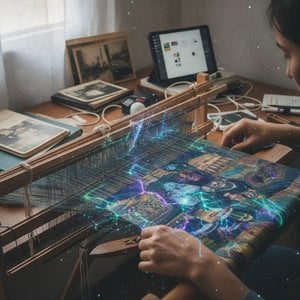
Elevate your home with WahooArt's bespoke AI-textured art. Transform cherished photos into hand-painted textile masterpieces through a seamless fusion of cutting-edge technology and classical craftsmanship. Discover timeless, luxury heirlooms designed to preserve your personal legacy.

 Envoyer
 Partager
 Détails de l'œuvre

 Télécharger
 Articles similaires
 Diaporama


 Lire la suite




































 L'option verre n'est disponible que pour les dimensions inférieures à 110 cm.


