Obtenez un fichier prêt pour l'impression qui dépasse de loin la qualité de l'aperçu web. Chaque image numérique que nous proposons est issue d'un fichier maître haute résolution de notre base de données — mesurant généralement entre 5 000 et 15 000 pixels de large — vous permettant ainsi d'imprimer en grand format, de recadrer avec précision ou de reproduire les détails les plus fins en toute confiance.
Aucun fichier ne quitte notre studio sans être retouché. Un expert numérique vérifie la colorimétrie par rapport à l'œuvre originale et la corrige si nécessaire, puis améliore la clarté et les détails à l'aide d'outils de retouche professionnels — tout en restant toujours fidèle au coup de pinceau et au style de l'artiste. Le résultat est une image qui ressemble au tableau, et non à un simple scan filtré.
Validez avant de finaliser : notre expert vous envoie l'image par e-mail sous 72 heures pour examen. Non satisfait ? Demandez des améliorations ou des corrections, ou demandez un remboursement si la qualité ne répond pas à vos attentes.
C'est une qualité sur laquelle s'appuient éditeurs, studios de création, galeries et ateliers d'impression.
Téléchargez un fichier haute résolution pour votre usage personnel, l'impression et vos projets créatifs. ( Passer au format impression Commander la reproduction peinte à la main)
En choisissant WahooArt.com, vous n'obtenez pas seulement une simple image : vous recevez une œuvre numérique sublimée avec professionnalisme, conçue avec précision et accompagnée d'une garantie de satisfaction. Voici tout ce qui accompagne automatiquement votre commande :
Votre fichier d'image numérique haute résolution vous sera envoyé par e-mail sous 72 heures après votre commande — prêt à un usage immédiat.
Votre œuvre d'art bénéficie d'une optimisation professionnelle grâce à des outils d'IA avancés et une retouche manuelle, garantissant un niveau maximal de détail, de clarté et de fidélité chromatique.
Vous avez accidentellement supprimé ou perdu votre fichier ? Pas d'inquiétude — nous vous le renverrons gratuitement, quand vous le souhaitez.
Profitez de votre œuvre d'art instantanément sans frais de douane ni de livraison — les téléchargements numériques sont toujours exonérés de taxes.
Nous garantissons que votre image numérique reproduit les couleurs de l'original aussi fidèlement que possible grâce à des outils professionnels et une gestion rigoureuse des couleurs.
Si vous n'êtes pas satisfait de votre image numérique, nous la retoucherons ou vous rembourserons 100% sous 100 jours — sans poser de questions.
Pas satisfait ? Obtenez un remboursement intégral dans les 100 jours suivant la réception de votre fichier numérique — sans aucune question posée.
Achetez 3 images, économisez 10% - Achetez 5, économisez 15% - Achetez 10+, économisez 20%. Idéal pour les projets créatifs, les galeries et les agences.
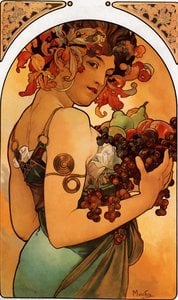
Alphonse Maria Mucha’s “Autumn Panel,” painted in 1896, is more than just a depiction of a serene outdoor scene; it’s a crystallized embodiment of the Art Nouveau movement at its peak. This exquisite piece, currently residing in private collection, captures a fleeting moment of autumnal beauty with a masterful blend of naturalism and stylized elegance – a hallmark of Mucha's distinctive artistic vision. The painting immediately draws the viewer into a world of delicate color, flowing lines, and an almost palpable sense of tranquility, inviting contemplation of nature’s transient grace.
Created during a pivotal moment in art history – the late 19th century – “Autumn Panel” exemplifies the core tenets of Art Nouveau. Rejecting the rigid formality of academic styles, Mucha and his contemporaries sought to draw inspiration from nature’s organic forms, particularly the flowing lines of plants and flowers. This influence is strikingly evident here, not just in the depiction of the blossoming trees and vibrant foliage, but also in the graceful curves of the woman's garments and the overall composition. The piece showcases a deliberate rejection of sharp angles and geometric precision, favoring instead a sense of movement and fluidity that was revolutionary for its time.
The central figure – a young woman seated amongst the autumnal splendor – is a quintessential Mucha muse. She embodies an idealized femininity, presented with a serene expression and draped in flowing robes that seem to ripple with the gentle breeze. Her pose is relaxed yet poised, suggesting both vulnerability and strength. The use of warm, golden tones—particularly in her hair and clothing—creates a luminous effect, enhancing the painting’s ethereal quality. The woman's presence isn't merely decorative; she acts as a focal point for the viewer's gaze, inviting us to share in her peaceful observation of nature.
Beyond its aesthetic beauty, “Autumn Panel” is rich with symbolic meaning. The autumnal theme itself represents transition – the cycle of life, death, and renewal. The vibrant colors—russet reds, golden yellows, and earthy browns—are traditionally associated with this season, evoking feelings of warmth, nostalgia, and reflection. The presence of flowers, particularly chrysanthemums and poppies, adds another layer of symbolism, representing beauty, remembrance, and sleep respectively. Mucha’s careful attention to detail transforms a simple landscape scene into a complex tapestry of visual and emotional resonance.
Alphonse Mucha's “Autumn Panel” stands as a testament to his artistic genius and the enduring appeal of Art Nouveau. Its delicate beauty, combined with its rich symbolism and masterful technique, continues to captivate audiences today. Reproductions of this iconic artwork offer an opportunity to bring a touch of Mucha’s timeless elegance into any space, reminding us of the profound beauty that can be found in nature's fleeting moments.
Un aperçu de «Autumn panel» de Alphonse Maria Mucha est disponible sur la page Aperçu en situation de l'œuvre.
Un téléchargement est disponible pour « Autumn panel » : la page Téléchargement de l'œuvre propose téléchargement d'une image numérique haute résolution.
«Autumn panel» tend vers une nuance Amber to Saffron.


1860 - 1939 , République tchèque
 Aperçu en situation
 Envoyer
 Partager
 Détails de l'œuvre
 Guide
Guide

 Télécharger l'image
 Articles similaires
 Radiographie
 Diaporama
 Questions et réponses
 Statistiques

 Lire la suite