x
Aperçu en situationAperçu en situation Visualiser en RAVisualiser en RA Commander l'impression Commander l'impressionAcheter l'image haute résolution Acheter l'image haute résolution EnvoyerEnvoyer
Détails de l'œuvreDétails de l'œuvre Ajouter aux favoris Ajouter aux favoris TéléchargerTélécharger Articles similairesArticles similaires RadiographieRadiographie DiaporamaDiaporama

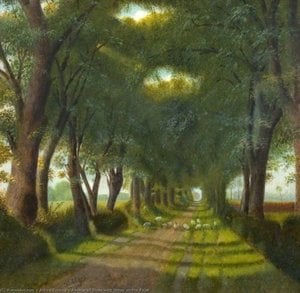
Bulbfields at Newton, Norfolk

  • Dimensions36.0 x 54.0 cm

Explore the evocative sporting paintings of Alfred Balding, renowned for his 'Gypsy Lane' scenes & British countryside depictions. Discover a master of light & atmosphere.

Reproduction à l'huile faite à la main

Huile sur toile peinte à la main, avec cadre et dimensions personnalisés, réalisée sur commande par nos artistes. (Commander l'impression Commander l'impressionAcheter l'image haute résolution Acheter l'image haute résolution)

Format standard
sur mesure
CM
INCH

Choisissez parmi nos formats prédéfinis qui respectent les proportions originales de l’œuvre.

largeur
hauteur

Vous pouvez saisir vos propres dimensions pour l'adapter à un cadre ou à un espace spécifique. Si la taille sélectionnée ne correspond pas aux proportions de l'image d'origine, nous recadrerons l'œuvre ou prolongerons la peinture avec des éléments peints à la main supplémentaires. Une maquette numérique vous sera envoyée pour approbation avant le début de la production.
Veuillez noter que l'aperçu à l'écran ne reflète pas le recadrage ou l'extension réels. Seule la maquette montrera fidèlement la composition finale.
Bien que des tailles personnalisées soient disponibles, nous vous recommandons de sélectionner une dimension dans la liste prédéfinie afin de préserver les proportions d'origine.

Exemples de personnalisation possibles : remplacer un visage par la photo du client ; ajouter un animal de compagnie (par exemple, remplacer un chat par un chien) ; inclure un message caché en arrière-plan ; modifier le paysage ou les éléments de l'arrière-plan.
Après la commande, l’équipe WahooArt.com contactera le client par e-mail pour recueillir ses instructions et lui fournira une maquette d’aperçu

Livraison dans le monde entier () en 3 à 4 semaines au lieu des 5 semaines habituelles. (4 septembre). Aucun compromis sur la qualité.

why_choose_icon
Livraison express gratuite dans le monde entier

why_choose_icon
Toile de lin de qualité supérieure
why_choose_icon
Assurance transport complète
why_choose_icon
Garantie de remboursement des droits de douane
why_choose_icon
Garantie de fidélité des couleurs
why_choose_icon
Politique de retour de 60 jours (uniquement en cas de défaut)
why_choose_icon
Garantie de remboursement à 100%
why_choose_icon
Offre de tarifs dégressifs

Prix total

$ 272

reproduction

Bulbfields at Newton, Norfolk

Technique de reproduction

Format de la reproduction

-

Prix total

$ 272


Biographie de l'artiste

Alfred Balding: A Master of the English Countryside

Alfred Balding (1858-1915) remains a quietly significant figure in British art, an artist whose evocative depictions of the rural landscape and sporting scenes have earned him a devoted following. Often overshadowed by his more flamboyant contemporaries, Balding’s work possesses a subtle power—a mastery of light, atmosphere, and a deep understanding of the rhythms of the English countryside that speaks volumes about his profound connection to the land.

Born in Walsoken, Norfolk, into a family with a strong artistic tradition – his father was a landscape painter – Balding’s early life was steeped in the visual world. He initially pursued a career as a solicitor, but the pull of art proved too strong. He began exhibiting his work seriously in the 1880s, quickly establishing himself as a skilled painter of sporting scenes and landscapes. His style evolved considerably over time, moving from a more academic approach to one characterized by loose brushwork, vibrant color palettes, and an emphasis on capturing fleeting moments of light and mood. Balding’s early influences included the Dutch Masters, particularly their use of light and atmospheric perspective, as evidenced in works like “Interior of Parson Drove,” a meticulously rendered depiction of a Cambridgeshire mill scene that demonstrates his ability to recreate the textures and details of rural life with remarkable precision.

The Rise of ‘Gypsy Lane’

Balding's most celebrated work, undoubtedly, is "Gypsy Lane," painted in 1913. This iconic image, depicting a scene on the Norfolk Broads – a network of waterways and marshes – captures a quintessential moment of rural life. A group of gypsies are seen traveling along a muddy track, their horses silhouetted against the golden light of the setting sun. The painting’s enduring appeal lies in its ability to evoke a sense of timelessness and tranquility. It's not merely a representation of a specific scene; it’s an embodiment of the spirit of the English countryside – its beauty, its solitude, and its connection to generations past.

The success of “Gypsy Lane” brought Balding considerable recognition, but he continued to paint prolifically throughout his career. He was particularly drawn to scenes of Norfolk, capturing the unique character of the region’s landscapes and people with a keen eye for detail and an empathetic understanding of their lives. His depictions of the Broads, the coastline, and the surrounding villages are imbued with a sense of warmth and nostalgia – reflecting his deep affection for the area.

Technique and Style

Balding’s artistic technique was characterized by a loose, expressive brushstroke that allowed him to capture the fleeting effects of light and atmosphere. He employed a vibrant color palette, often using complementary colors to create a sense of depth and luminosity. His compositions were typically balanced and harmonious, with an emphasis on creating a sense of visual rhythm. Unlike some of his contemporaries who favored dramatic lighting and bold brushwork, Balding’s style was more subtle and understated – relying on the careful observation of nature and the skillful manipulation of color to convey his artistic vision.

He wasn't afraid to experiment with Impressionistic techniques, particularly in works like “A Large Number of Standing Stones,” where he used broken brushstrokes and a hazy atmosphere to create a sense of distance and mystery. However, his paintings always retained a strong sense of realism – reflecting his commitment to accurately portraying the details of the natural world.

Legacy and Historical Significance

Alfred Balding’s work has had a lasting impact on British art. He is remembered as one of the foremost painters of the English countryside, whose evocative depictions have helped to shape our understanding of this iconic landscape. His paintings are exhibited in major museums and galleries throughout the country, and his work continues to be admired for its beauty, its sensitivity, and its profound connection to the spirit of England.

Balding’s legacy extends beyond his artistic achievements. He was also a dedicated conservationist, actively campaigning to protect the Norfolk Broads from development. His paintings serve as a powerful reminder of the importance of preserving this unique landscape for future generations. His work stands as a testament to the enduring power of art to capture and celebrate the beauty of the natural world.

alfred balding

alfred balding

1858 - 1915

L'essentiel de l'artiste

  • Artistic Movement Or Style: Sporting art, Impressionism
  • Artists Or Movements Influenced By This Artist:
    • William Frith
    • Pre-Raphaelites
  • Artists Who Influenced This Artist:
    • John Constable
    • J.M.W. Turner
  • Date Of Birth: 1858
  • Date Of Death: 1915
  • Full Name: Alfred Balding
  • Nationality: British
  • Notable Artworks:
    • Gypsy Lane, Walsoken
    • Parson Drove Mill
    • Standing Stones
  • Place Of Birth: WahooArt, Norfolk, UK