Un pionnier des visions orientalistes : la vie et l'art d'Alexandre Gabriel Decamps
Alexandre Gabriel Decamps, un nom qui résonne avec les teintes vibrantes des paysages exotiques et le souffle dramatique du Romantisme, s'est imposé comme une figure incontournable de la peinture française du XIXe siècle. Né à Paris le 3 mars 1803, son parcours artistique fut celui d'une innovation audacieuse, défiant les conventions académiques pour tracer un chemin vers ce qui allait devenir l'Orientalisme. Alors que des contemporains tels que Delacroix et Ingres occupaient également des positions de premier plan dans le monde de l'art français, Decamps se distingua par un style intensément personnel — un mélange d'observation méticuleuse, de composition dramatique et d'une qualité narrative captivante qui transportait les spectateurs vers des mondes à la fois familiers et totalement étrangers. Sa reconnaissance précoce en tant qu'artiste talentueux préfigurait une carrière marquée par le succès critique, culminant avec l'obtention de la médaille de grand ordre lors de l'Exposition Universelle de Paris en 1855, témoignage de son talent exceptionnel et de sa vision unique. Au-delà de la toile, Decamps était un homme profondément lié à la nature, trouvant réconfort et inspiration dans la campagne entourant Paris, où il se livrait à sa passion pour les animaux et les activités de plein air — une affection qui allait imprégner subtilement une grande partie de sa production artistique.
Des Écritures au Sahara : l'évolution d'un style artistique
Le développement artistique de Decamps fut caractérisé par une volonté d'explorer des sujets et des techniques diversifiés. Initialement attiré par les scènes historiques et bibliques, il se distingua rapidement en dépeignant ces récits avec un niveau de réalisme sans précédent, les ancrant dans des cadres locaux authentiques plutôt que de s'appuyer sur des représentations idéalisées ou conventionnelles. Cet engagement envers la vraisemblance découlait de ses voyages en Orient, des expériences qui marquèrent profondément sa sensibilité artistique. Il ne se contentait pas de dépeindre ce qu'il voyait ; il transmettait un sentiment d'atmosphère, de lumière et l'essence même de ces terres lointaines.
Joseph vendu par ses frères, par exemple, n'est pas une simple illustration d'une histoire biblique, mais le portrait vivant d'un temps et d'un lieu précis, imprégné de profondeur émotionnelle et de finesse psychologique. Cette approche s'étendit à ses œuvres historiques plus vastes comme
La Défaite des Cimbres, où il captura avec maestria le chaos et la brutalité de la bataille, démontrant sa capacité à gérer des compositions à grande échelle avec une énergie dynamique. Cependant, ce furent ses représentations de la vie orientale qui le distinguèrent véritablement. Il révélait des scènes quotidiennes — marchés, écoles, intérieurs domestiques — avec une fidéliente qui déconcerta initialement les critiques habitués à des représentations plus romancées ou stéréotypées.
Le père de l'Orientalisme et son influence durable
Decamps est à juste titre considéré comme le père fondateur de l'Orientalisme dans la peinture française. Avant lui, les représentations de l'Orient étaient souvent filtrées par un prisme de fantaisie et d'exotisme. Il présenta une vision différente, ancrée dans l'observation directe et une curiosité sincère. Son exposition au Salon de 1831 marqua un tournant, offrant au public parisien un aperçu sans fard de la vie en Afrique du Nord et au Moyen-Orient. Cette approche révolutionnaire trouva un écho chez les artistes comme chez les écrivains, inspirant une vague d'œuvres orientalistes qui domineraient une grande partie de l'art du XIXe siècle. Son style — caractérisé par des coups de pinceau audacieux, des contrastes saisissants d'ombre et de lumière, et un sens palpable de l'atmosphère — devint un point de référence pour des générations de peintres, de photographes et d'auteurs.
Maxime du Camp le surnomma fameusement le « Christophe Colomb de l'Orient », reconnaissant son rôle de pionnier dans l'ouverture de ce nouveau territoire artistique.
La Danseuse albanaise, avec ses couleurs vibrantes et sa composition énergique, illustre sa capacité à capturer l'esprit d'une culture tout en maintenant une sensibilité esthétique distinctement française. Même ses œuvres satiriques comme
Les Singes Connaisseurs, une plaisanterie malicieuse adressée au jury conservateur de l'Académie des Beaux-Arts, démontrent sa volonté de défier les normes établies et d'embrasser une vision artistique plus indépendante.
Une fin tragique et un héritage éternel
Tragiquement, la vie de Decamps fut fauchée le 22 août 1860, à l'âge de 57 ans, à la suite d'un accident de chasse près de Fontainebleau. Sa mort prématurée priva le monde de l'art d'un talent véritablement innovant, mais son héritage perdure à travers ses peintures captivantes et leur attrait indémodable. Aujourd'hui, des chefs-d'œuvre tels que
Incendie d'un village italien, avec sa représentation dramatique du conflit et son usage magistral de l'empâtement, ainsi que
Un Bédouin et un chameau se reposant dans le désert, mettant en scène les textures et la tranquillité de la vie nomade, sont célébrés pour leur mérite artistique et leur importance historique. Ses œuvres se trouvent dans des institutions prestigieuses telles que le Musée du Louvre à Paris, garantissant que sa vision continue d'inspirer et de captiver les publics du monde entier. Des plateformes comme WahooArt.com jouent un rôle vital dans la préservation et la diffusion de son art, offrant des reproductions de haute qualité qui permettent aux admirateurs de découvrir directement la beauté et la puissance des peintures de Decamps. Son influence s'étend au-delà du domaine de la peinture, façonnant les perceptions de l'Orient et laissant une marque indélébile sur le paysage culturel de l'Europe du XIXe siècle.
Explorer l'univers de Decamps : Œuvres notables
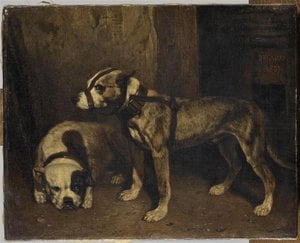
CHIENS BRIFAUTS : Une charmante scène orientaliste présentant des chiens dans un cadre vibrant.
LA COUR DE FERME : Une peinture captivante du XIXe siècle mêlant romantisme français et détails historiques.
L’ÉCOLE TURQUE : Une représentation animée d'une école turque, capturant l'énergie et l'atmosphère de la vie quotidienne.
PAYSAGE TURC : Un paysage serein explorant le réalisme et le romantisme dans un cadre français.



 Aperçu en situation
 Acheter la peinture faite à la main
 Partager
 Partager
 Détails

 Télécharger
 Articles similaires
 Radiographie
 Voir le diaporama
 Statistiques

 Afficher la suite






































 L'option verre n'est disponible que pour les dimensions inférieures à 110 cm.