CONSEIL EN ART GRATUIT

x
Commander la reproduction Commander la reproductionAcheter l'image haute résolution Acheter l'image haute résolution PartagerPartager
DétailsDétails Ajouter aux favoris Ajouter aux favoris TéléchargerTélécharger Articles similairesArticles similaires RadiographieRadiographie DiaporamaDiaporama

Spring

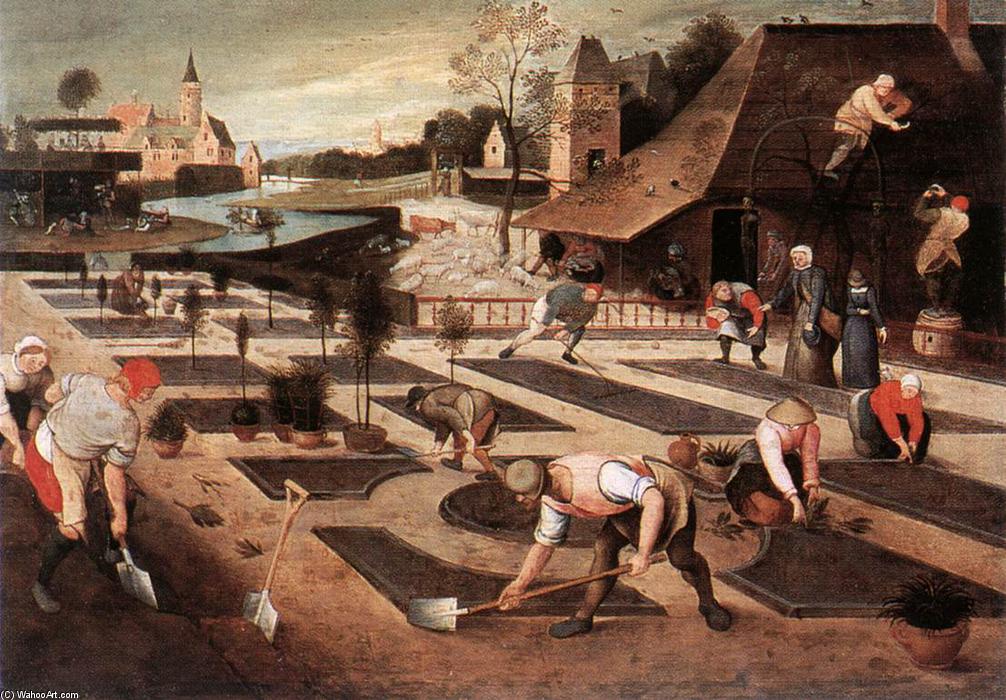
Discover Abel Grimmer's 'Spring,' a vibrant 1607 Flemish masterpiece depicting bustling springtime life in Antwerp. Explore its rich details and historical context.

Abel Grimmer, né vers 1570 à Anvers où il est mort vers 1619, est un peintre baroque flamand. Sa notoriété est proche de celle de son contemporain Jan Brueghel l'Ancien pourtant plus intégré, par ses natures mortes ou son maniérisme, à une époque ultérieure. Abel Grimmer serait plus proche de Pieter Brueghel le Jeune,

Giclée / Impression d'art

Impression giclée ou sur toile de qualité musée, avec une production rapide et des finitions au choix.

Standard
custom
CM
INCH

Choisissez parmi nos formats prédéfinis qui respectent les proportions originales de l’œuvre.

largeur
hauteur

Vous pouvez saisir vos propres dimensions pour vous adapter à un cadre ou à un espace spécifique. Si la taille sélectionnée ne correspond pas aux proportions de l'image originale, nous recadrerons l'œuvre ou étendrons l'image avec une bordure en miroir ou une couleur unie. Une maquette numérique vous sera envoyée pour approbation avant le début de la production.
Veuillez noter que l'aperçu à l'écran ne reflète pas le recadrage ou l'extension réelle. Seule la maquette montrera avec précision la composition finale.
Bien que des tailles personnalisées soient disponibles, nous vous recommandons de choisir une dimension dans la liste prédéfinie afin de préserver les proportions originales.

Livraison dans le monde entier () en 2 semaines au lieu des 4/5 semaines habituelles. (2 juillet)

why_choose_icon
Livraison express gratuite dans le monde entier

why_choose_icon
Toile de lin de haute qualité
why_choose_icon
Assurance transport complète
why_choose_icon
Garantie de remboursement des frais de douane
why_choose_icon
Garantie de fidélité des couleurs
why_choose_icon
Politique de retour de 60 jours (uniquement en cas de défaut)
why_choose_icon
Garantie de remboursement à 100%
why_choose_icon
Réduction sur les achats groupés

Prix total

-

reproduction

Spring

Giclée / Impression d'art

Format de reproduction

-

Prix total final

-

En bref

  • Year: 1607
  • Notable elements: Vibrant colors
  • Location: Antwerp, Belgium
  • Dimensions: 33 x 47 cm
  • Influences: Bruegel the Elder
  • Artistic style: Flemish genre painting
  • Artist: Abel Grimmer

Quiz d'art

Chaque question ne comporte qu'une seule bonne réponse.

Question 1:
What is the primary subject depicted in Abel Grimmer’s ‘Spring’?
Question 2:
In what year was Abel Grimmer’s ‘Spring’ painted?
Question 3:
Which museum currently houses Abel Grimmer's ‘Spring’?
Question 4:
What artistic movement is Abel Grimmer associated with?
Question 5:
The painting ‘Spring’ by Abel Grimmer is notable for its use of what technique?

Description de l'œuvre

A Springtime Reverie: Abel Grimmer’s “Spring”

Abel Grimmer's "Spring," painted in 1607, isn’t merely a depiction of a season; it’s a carefully constructed tableau of Flemish life imbued with the quiet dignity and burgeoning energy of renewal. Housed within the Koninklijk Museum voor Schone Kunsten in Antwerp, this oil-on-panel masterpiece offers a glimpse into a world where daily routines intertwine with the promise of warmer days and blossoming landscapes – a testament to Grimmer’s skill in capturing both the tangible details of everyday existence and the subtle poetry of nature.

The painting immediately draws the eye into a bustling, yet remarkably ordered, scene. The foreground is populated by figures engaged in familiar tasks: tending to vegetable gardens, mending clothes, perhaps preparing for market day. Their attire—simple tunics and skirts rendered with meticulous detail—grounds the image firmly within its historical context, suggesting a community bound by shared labor and tradition. Yet, these aren’t idealized portraits; they are ordinary people going about their business, radiating an understated sense of contentment.

The Language of Landscape: Technique and Style

Grimmer's approach to landscape painting was revolutionary for his time. He eschewed the dramatic mountainscapes favored by earlier masters like Joachim Patinir, instead opting for a more intimate portrayal of the Flemish countryside – rolling fields, meandering streams, and modest farmhouses. This shift reflects a growing interest in observing and documenting the natural world with increasing accuracy. Grimmer’s technique is characterized by its remarkable economy; he employs a limited palette of earthy tones—ochres, greens, and browns—to create a sense of depth and atmosphere. The brushstrokes are precise yet fluid, conveying both the texture of fabrics and the subtle variations in light across the landscape.

Notably, Grimmer’s work demonstrates an impressive understanding of perspective and spatial relationships. Buildings recede into the distance with convincing accuracy, while figures are rendered with a naturalistic sense of proportion. This attention to detail is further enhanced by his use of chiaroscuro—the dramatic contrast between light and shadow—which adds volume and realism to the scene.

Symbolism and Narrative

Beyond its realistic depiction of daily life, “Spring” carries a subtle symbolic weight. The painting isn’t simply celebrating the arrival of warmer weather; it's suggesting a cycle of renewal – a return to productivity after winter’s dormancy. The presence of figures engaged in agricultural labor speaks to the importance of this season for sustaining the community. The river, flowing serenely through the scene, represents life and fertility, while the modest buildings hint at a stable and prosperous village.

Interestingly, Grimmer's work often draws inspiration from biblical narratives, as evidenced by his series depicting the Tower of Babel. This connection to religious themes adds another layer of meaning to “Spring,” suggesting that human endeavors are ultimately subject to divine judgment and renewal. The painting subtly reminds us of our place within a larger cosmic order.

A Timeless Resonance

Despite being created over four centuries ago, "Spring" retains an extraordinary power to resonate with contemporary viewers. Grimmer’s masterful use of light, color, and composition creates a scene that is both familiar and captivating. The painting's quiet dignity and understated beauty invite us to pause and reflect on the simple pleasures of life – the rhythms of nature, the bonds of community, and the enduring promise of renewal. It stands as a poignant reminder of the timeless appeal of Flemish genre painting and Abel Grimmer’s remarkable contribution to the art world.

Œuvres apparentées


Biographie de l'artiste

Abel Grimmer (c. 1570–c. 1620): The Streamlined Landscape Painter

Abel Grimmer (family name variations: 'Grimer' and 'Grimmaert') (c. 1570–c. 1620) was a Flemish late Renaissance painter, mainly of landscapes and, to a lesser extent, of architectural paintings. His works were important in the development towards more naturalism in Flemish landscape painting. Grimmer’s artistic legacy resides not merely in his impressive output but also in his innovative approach—a method that prioritized efficiency and stylistic consistency—which secured him a prominent place within the Antwerp art market during his lifetime. Born and died in Antwerp, he honed his craft under the tutelage of his father, Jacob Grimmer (c. 1526–1590), who himself had established renown by imitating Pieter Bruegel the Elder’s miniature landscapes and distributing them at affordable prices. This familial influence profoundly shaped Grimmer's artistic sensibilities, fostering a dedication to meticulous observation and a masterful command of technique—a commitment that would ultimately define his distinctive style. Jacob Grimmer’s workshop served as the crucible for Abel’s formative years, immersing him in the traditions of Flemish landscape painting while simultaneously encouraging experimentation with new approaches. He learned from his father, who was himself renowned for imitating Pieter Bruegel the Elder and distributing them at affordable prices. This familial influence profoundly shaped Grimmer's artistic sensibilities, fostering a dedication to meticulous observation and a masterful command of technique—a commitment that would ultimately define his distinctive style. In 1591, Abel married Catharina Lescornet and swiftly ascended to mastership within the Antwerp Guild of Saint Luke—a pivotal moment signifying his recognition as a skilled artist and securing him access to lucrative commissions. This achievement cemented Grimmer’s position in the artistic community and ensured he could continue producing landscape paintings that adhered to established formulas while subtly elevating them through careful simplification and stylistic refinement. Grimmer’s Artistic Style: Bruegel’s Influence & The Pursuit of Efficiency Grimmer’s artistic style is characterized by a striking convergence of influences—primarily Pieter Bruegel the Elder and Hans Bol—yet simultaneously distinguished by an unwavering commitment to streamlining technique. Unlike his predecessors who often employed elaborate compositions and nuanced color palettes, Grimmer embraced a minimalist aesthetic, prioritizing clarity and visual impact. This stylistic choice stemmed from a pragmatic understanding of the Antwerp marketplace, where affordability and accessibility were paramount considerations. Each pictorial area of his landscapes was meticulously rendered in a single hue—often muted shades of ochre or brown—with minimal modulation to achieve maximum luminosity and reduce varnishing’s effect on surface texture. This deliberate simplification wasn't merely a stylistic preference; it represented a fundamental shift towards a more economical production process, ensuring that Grimmer’s paintings remained competitive within the prevailing artistic landscape. He skillfully employed color harmonies reminiscent of Bruegel and Bol, capturing atmospheric light with remarkable accuracy—a hallmark of his oeuvre. Buildings were depicted as geometric shapes—a deliberate departure from earlier conventions—further enhancing the overall visual impact of his landscapes. Grimmer’s technique involved applying minimal varnishing, eliminating surface reflections and maximizing color vibrancy—a strategy that underscored his dedication to efficiency and artistic precision. Notable Works & Recurring Themes Grimmer's oeuvre encompasses a diverse range of subjects—primarily landscapes depicting seasonal changes and architectural interiors—but several works stand out for their stylistic innovation and thematic resonance. Among these are the twelve “Months” series (1592), an exact copy of Hans Bol’s prints after designs by Pieter Bruegel the Elder, published by Hans van Luyck in 1585; ‘Spring’ and ‘Summer,’ which mirror two prints by Pieter van der Heyden based on Bruegel's compositions; and depictions of the Tower of Babel—a narrative inspired by Bruegel’s seminal paintings on this subject matter. These artworks exemplify Grimmer’s masterful adaptation of established artistic conventions while simultaneously conveying profound moral messages rooted in biblical allegory. The tower motif, reflecting anxieties about human pride and defiance against divine authority, mirrored the turbulent political climate of Antwerp during Grimmer's lifetime—a city embroiled in conflict with Protestant provinces. Grimmer’s legacy endures as a pivotal figure in the evolution of Flemish landscape painting. His streamlined technique—characterized by single-hue color palettes and geometric building representations—established a precedent for subsequent generations of artists, securing his place within Antwerp's artistic tradition. Furthermore, Grimmer’s unwavering commitment to capturing atmospheric light and faithfully reproducing architectural spaces foreshadowed developments in Dutch interior painting championed by Pieter Saenredam—demonstrating the breadth of his influence on the broader artistic landscape of the Low Countries. Abel Grimmer’s contribution to Flemish art is undeniable: he represents a crucial step toward naturalism, while simultaneously upholding an economical production process that ensured his paintings remained accessible and influential for centuries to come.
Abel Grimmer

Abel Grimmer

1570 - 1620 , Belgique

En bref

  • Artistic Movement Or Style: Late Renaissance
  • Artists Or Movements Influenced By This Artist: ['Joachim Patinir']
  • Artists Who Influenced This Artist:
    • Pieter Bruegel the Elder
    • Hans Bol
  • Date Of Birth: c. 1570
  • Date Of Death: c. 1620
  • Full Name: Abel Grimmer
  • Nationality: Flemish
  • Notable Artworks:
    • The Tower of Babel
    • Winter
    • Autumn
  • Place Of Birth: Antwerp, Belgium