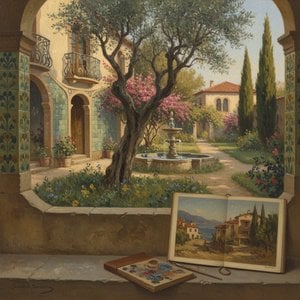
Willem Bodeman: A Painter of Tranquility and Dutch Golden Age Spirit
Willem Bodeman (1605 – 1678) stands as a cornerstone of Dutch Baroque painting, embodying the serene beauty and meticulous realism that defined the era’s artistic landscape. Born in Leiden, Bodeman's formative years coincided with the zenith of Dutch prosperity—the Golden Age—a period characterized by burgeoning trade, intellectual curiosity, and an unparalleled flourishing of art and culture. His artistic journey began modestly, apprenticed to Jacob Savertijns, a respected Leiden painter who instilled in him a foundational understanding of perspective and anatomical accuracy. This early training would prove instrumental in shaping Bodeman’s distinctive style—one that prioritized atmospheric depth and subtle tonal variations over dramatic gesture or flamboyant ornamentation.
- Early Influences: Bodeman's artistic sensibilities were profoundly impacted by Caravaggio, whose masterful use of chiaroscuro – the interplay between light and shadow – captivated him and established a precedent for portraying emotion through visual drama. However, unlike Caravaggio’s theatrical approach, Bodeman sought to convey inner tranquility and contemplative reflection.
- Notable Works: Bodeman achieved considerable renown during his lifetime, producing an impressive oeuvre encompassing landscapes, portraits, and genre scenes. Among his most celebrated paintings are ‘The Shepherdess,’ a luminous depiction of rural pastoral life imbued with a palpable sense of peace, and ‘The Return from Fishing,’ which captures the quiet dignity of fishermen returning ashore after a day’s toil. These works exemplify Bodeman's commitment to capturing fleeting moments of natural beauty with unwavering precision.
Technique and Artistic Vision
Bodeman’s technique was characterized by painstaking observation and meticulous execution. He employed a layered glazing method—applying thin washes of color over subsequent layers—to achieve remarkable luminosity and tonal subtlety. This approach allowed him to render the textures of foliage, water surfaces, and human skin with astonishing realism. Furthermore, Bodeman meticulously studied anatomy, ensuring that his figures possessed accurate proportions and musculature. His artistic vision centered on conveying psychological depth alongside visual splendor; he aimed not merely to depict what he saw but also to evoke a feeling of contemplative contemplation within the viewer.
- Glazing Technique: The glazing technique involved applying thin, translucent layers of pigment over previously painted surfaces, gradually building up color and creating rich, luminous effects.
- Attention to Detail: Bodeman’s meticulous attention to detail—from the delicate folds of drapery to the subtle nuances of facial expression—underscored his commitment to artistic excellence.
Legacy and Historical Significance
Willem Bodeman's paintings continue to resonate with audiences today, serving as enduring emblems of Dutch Baroque artistry and embodying the humanist ideals prevalent during the Golden Age. His landscapes are revered for their serene beauty and masterful depiction of natural light—a testament to his profound understanding of atmospheric perspective. Moreover, Bodeman’s portraits capture the dignity and composure of his subjects, reflecting the aristocratic sensibilities of his time. He is remembered as a pivotal figure in shaping Dutch artistic tradition and remains an inspiration for contemporary landscape painters who strive to emulate his unparalleled skill and expressive vision. His work exemplifies the harmonious blend of observation, intellect, and emotion that defines the best achievements of Baroque art.
Further Exploration
For deeper insights into Willem Bodeman’s life and artistic accomplishments, consider visiting these resources: