Théodore Géricault, 1791 – 1824

The 100 Most Famous Paintings by Théodore Géricault

The painting that made Théodore Géricault famous is Laudan Raudat (1818); it hangs in the Louvre, Pariisi. Nymph and Satyr (Jupiter and Antiope) (1820) and The Oath of Brutus after the Death of Lucretia (1815) follow it in the hearts of collectors and museum visitors. Of the 183 works by Théodore Géricault in our catalogue, these 100 are the most admired, each presented with its date, its museum and what sets it apart.

Sijoitus perustuu suosiotulokseemme, joka yhdistää kunkin teoksen hakuja, vierailuja ja tilauksia. Päivitetty lokakuu 2026. Every masterpiece on this page can be ordered as a museum-quality, hand-painted oil reproduction or a fine art print, at the size you choose.

Théodore Géricault muotokuva
Théodore Géricault · 1791 – 1824
Syntynyt · kuollut
1791 – 1824, Rouen
Taidesuuntaus
Romantic painting
Teokset valikoimassamme
183
Tunnetuimmat
Laudan Raudat (1818)
Eniten teoksia kohteessa
Louvre

Théodore Géricault: the ten masterpieces

Laudan Raudat (1818) tekijä Théodore Géricault
1

Laudan Raudat

1818 · Öljyväri kankaalle · Louvre, Pariisi

Jean-Louis André Théodore Géricault’n monumentaalinen mestariteos on paljon enemmän kuin pelkkä kuvaus merikaatumisesta; se on viskeraalinen tutkimusmatka ihmisen epätoivoon, poliittiseen skandaaliin ja luonnon ylevään voimaan. Vuonna 1819 valmistunut, valtava kangas (491 x 716 cm) ikuistaa ranskalaisen fregatti Médusen vuoden 1816 haaksirikosta seuranneet kauheat jälkipyykki. Tämä tragedia, joka syntyi epäpätevyydestä ja korruptiosta, järkytti koko Ranskaa.

Nymph and Satyr (Jupiter and Antiope) (1820) tekijä Théodore Géricault
2

Nymph and Satyr (Jupiter and Antiope)

1820 · Acrylic On Canvas · Musée des Beaux-Arts et de la Céramique, Rouen

The Allure of the Divine Encounter: Géricault’s *Nymph and Satyr* Jean-Louis André Théodore Géricault's *Nymph and Satyr*, painted in 1819, isn’t merely a depiction of a mythological scene; it’s a profound exploration of desire, transgression, and the inherent tension between innocence and primal instinct. Born amidst the tumultuous backdrop of post-revolutionary France, Géricault, already recognized for his dramatic intensity, sought to capture not just a narrative but an emotional truth—a…

Lions in a Mountainous Landscape (1818) tekijä Théodore Géricault
4

Lions in a Mountainous Landscape

1818 · Acrylic On Canvas · Metropolitan Museum of Art, New York

This vigorous painting of six lions in a remote, spectrally illuminated lair—possibly intended to evoke the Atlas Mountains of Morocco—is an extraordinary example of Gericault’s spontaneous handling of paint. Rather than applying finishing touches to make a polished cabinet picture, the artist left the painting in a state known as an esquisse, or sketch, a work prized by fellow artists for its strength of directly capturing a subject or effect.…

The Kiss (1822) tekijä Théodore Géricault
5

The Kiss

1822 · Acrylic On Canvas · Thyssen-Bornemisza Museum, Madrid

Théodore Géricault's "The Kiss," painted in 1816, isn’t merely a depiction of lovers entwined; it’s a visceral embodiment of the burgeoning Romantic movement’s fascination with raw emotion, dramatic intensity, and the sublime. This arresting work, housed within the Thyssen-Bornemisza Museum in Madrid, transcends simple representation to become a profound meditation on passion, vulnerability, and the very essence of human connection. Géricault, already a figure known for his unflinching portrayals of…

Wounded Soldiers Retrating from Russia (1814) tekijä Théodore Géricault
6

Wounded Soldiers Retrating from Russia

1814 · Acrylic On Canvas · Musée des Beaux-Arts, Rouen

A Symphony of Suffering: Géricault’s “Wounded Soldiers Retrating from Russia” Jean-Louis André Théodore Géricault's "Wounded Soldiers Retrating from Russia" is not merely a painting; it’s a visceral embodiment of the horrors and human cost of war, rendered with an unprecedented level of realism and emotional intensity for its time. Completed in 1814, this monumental canvas—measuring a commanding 250 x 206 cm—captures a pivotal moment during Napoleon's disastrous invasion of Russia,…

Study of Feet and Hands (1818) tekijä Théodore Géricault
7

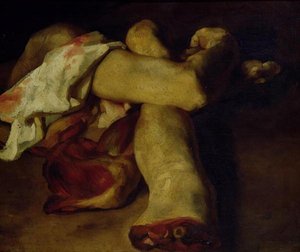
Study of Feet and Hands

1818 · Oil On Canvas · Musée Fabre, Montpellier

Jean-Louis André Théodore Géricault's "Study of Feet and Hands," painted in 1818, isn’t a grand statement of Romantic drama like his monumental “The Raft of the Medusa.” Instead, it offers a profoundly intimate glimpse into the artist’s meticulous process and a poignant meditation on the human form. This unassuming oil painting—measuring a modest 52 x 64 cm—is far more than just a preparatory sketch; it's a concentrated distillation of Géricault’s…

The Raft of the Medusa (detail) (1818) tekijä Théodore Géricault
8

The Raft of the Medusa (detail)

1818 · Oil On Canvas · Louvre, Pariisi

Jean-Louis André Théodore Géricault's "The Raft of the Medusa," a monumental detail from his 1818 painting, isn’t merely a depiction of shipwreck; it’s a visceral plunge into the depths of human suffering and political indictment. The scene, rendered with a dramatic intensity characteristic of Romanticism, captures the harrowing aftermath of the French frigate *Medusa*'s wreck off the coast of Mauritania in 1816. This disaster, largely attributed to the incompetence and…

The Wreck (1821) tekijä Théodore Géricault
10

The Wreck

1821 · Oil On Canvas · Louvre, Pariisi

Théodore Géricault's "The Wreck," painted in 1821, isn’t merely a seascape; it’s a visceral confrontation with the sublime—a raw depiction of humanity’s vulnerability against the overwhelming force of nature. Born amidst the turbulent currents of post-revolutionary France, Géricault, a figure both lauded and controversial within the burgeoning Romantic movement, channeled his own anxieties and the era's fascination with dramatic events into this monumental canvas. The painting immediately commands attention not…

More Théodore Géricault masterpieces, 11 to 100

The Horse Race (1816) tekijä Théodore Géricault
#11

The Horse Race

1816 · Thyssen-Bornemisza Museum

Jean-Louis André Théodore Géricault's "The Horse Race," painted in 1816, isn’t merely a depiction of a sporting event; it’s a visceral embodiment of Romanticism’s core tenets – passion,…

Bring it home →
Swiss Guard and Wounded Veteran (1819) tekijä Théodore Géricault
#12

Swiss Guard and Wounded Veteran

1819 · Louvre

Jean-Louis André Théodore Géricault's "Swiss Guard and Wounded Veteran," painted in 1819, is not merely a historical depiction; it’s a profound meditation on duty, sacrifice, and the lingering…

Order a reproduction →
Mazeppa (1823) tekijä Théodore Géricault
#13

Mazeppa

1823 · Château de Chantilly

Théodore Géricault's "Mazeppa," painted in 1823, isn’t merely a depiction of a dramatic legend; it’s a visceral embodiment of Romantic turmoil—a raw exploration of suffering, resilience, and the…

Bring it home →
Two Horses (1809) tekijä Théodore Géricault
#14

Two Horses

1809 · The Phillips Collection

Jean-Louis André Théodore Géricault's "Two Horses," painted in 1808-1809, isn’t merely a depiction of two magnificent animals; it’s a visceral exploration of movement, power, and the fleeting nature…

Bring it home →
A Turk (Mustapha) (1820) tekijä Théodore Géricault
#15

A Turk (Mustapha)

1820 · Louvre

Jean-Louis André Théodore Géricault's "A Turk (Mustapha)," painted in 1820, is not merely a portrait; it’s a carefully constructed tableau of exoticism, melancholy, and the burgeoning Romantic sensibility…

Order a reproduction →
A Carabinier with his Horse (1814) tekijä Théodore Géricault
#16

A Carabinier with his Horse

1814 · Musée des Beaux-Arts

In the quiet intensity of Jean-Louis André Théodore Géricault’s 1814 masterpiece, "A Carabinier with His Horse," we encounter more than a mere military portrait; we witness a profound…

Order a reproduction →
Riderless Horse Races (detail) (1817) tekijä Théodore Géricault
#17

Riderless Horse Races (detail)

1817 · Louvre

A Moment Frozen in Time: Géricault’s “Riderless Horse Races” Jean-Louis André Théodore Géricault's "Riderless Horse Races (detail)" is not merely a depiction of a sporting event; it’s a…

Bring it home →
Boxers (1818) tekijä Théodore Géricault
#18

Boxers

1818 · Château de Chantilly

A Tempestuous Vision: Géricault’s “Boxers” Jean-Louis André Théodore Géricault's "Boxers," completed in 1818, isn’t merely a depiction of a boxing match; it’s a visceral embodiment of Romanticism’s fascination…

Order a reproduction →
The Epsom Derby (1821) tekijä Théodore Géricault
#20

The Epsom Derby

1821 · Louvre

Jean-Louis André Théodore Géricault's "The Epsom Derby," painted in 1821, isn’t merely a depiction of horse racing; it’s a visceral embodiment of Romanticism’s fascination with drama, movement, and…

Bring it home →
Three Lovers (1817) tekijä Théodore Géricault
#22

Three Lovers

1817 · J. Paul Getty Museum

Théodore Géricault captured a private, feverish moment in Three Lovers. This small oil sketch, created about 1817–1820, offers a rare glimpse into the artist's more intimate preoccupations. It…

Order a reproduction →
Lion devouring a horse tekijä Théodore Géricault
#26

Lion devouring a horse

Château de Chantilly

Théodore Géricault's "Lion Devouring a Horse," painted in 1819, isn’t merely a depiction of predatory action; it’s a visceral exploration of power, mortality, and the primal instincts that…

Bring it home →
Untitled (ARJCHM) tekijä Théodore Géricault
#28

Untitled (ARJCHM)

Louvre

In the annals of art history, few works command the room with such visceral intensity as Théodore Géricault’s The Raft of the Medusa. This monumental oil on canvas…

Bring it home →
Portrait of a Young Man (1818) tekijä Théodore Géricault
#32

Portrait of a Young Man

1818 · Minneapolis Institute of Art

A young man emerges from a deep, indistinct darkness, his presence felt through the sudden, sharp clarity of light hitting his features. He sits in a quiet, intimate…

Order a reproduction →
A study for a nude. (1801) tekijä Théodore Géricault
#33

A study for a nude.

1801 · Kansallismuseo Varsovassa

A study for a nude. emerges from the shadows as a powerful presence by Théodore Géricault. Created about 1801, this oil on canvas captures a singular moment of…

Bring it home →
Study of a Model (1818) tekijä Théodore Géricault
#34

Study of a Model

1818 · J. Paul Getty Museum

This oil on canvas portrait study presents a close-up, three-quarter view of a Black man's head and shoulders. The subject is positioned slightly off-center, looking toward the viewer…

Commission a hand-painted copy →
The Martyrdom of Saint Peter (1814) tekijä Théodore Géricault
#35

The Martyrdom of Saint Peter

1814 · Kunstmuseum Basel

The Martyrdom of Saint Peter is an oil on canvas by Théodore Géricault. Created about 1814, the work captures a moment of profound tension. The physical presence of…

Bring it home →
The Wreck (1824) tekijä Théodore Géricault
#36

The Wreck

1824 · Louvre

In the annals of French Romanticism, few works command the visceral attention of Théodore Géricault’s The Wreck as profoundly as this haunting seascape. Painted in 1824, a year…

Commission a hand-painted copy →
Mater dolorosa, Copy after Ribera (1811) tekijä Théodore Géricault
#38

Mater dolorosa, Copy after Ribera

1811 · Kunstmuseum Basel

Mater dolorosa, Copy after Ribera is a religious oil painting by the French artist Théodore Géricault. Created about 1811–1815, the work reflects the artist's engagement with the traditions…

Bring it home →
Lion in Repose tekijä Théodore Géricault
#39

Lion in Repose

Walters Art Museum

Jean-Louis André Théodore Géricault’s “Lion in Repose,” painted circa 1820-1823, isn’t merely a depiction of an animal; it’s a profound meditation on power, vulnerability, and the very nature…

Order a reproduction →
Portrait of a Negro (1800) tekijä Théodore Géricault
#71

Portrait of a Negro

1800 · Palácio Nacional da Ajuda

Dating from 1800, Jean-Louis André Théodore Géricault’s “Portrait of a Negro” is more than just a depiction of an individual; it’s a poignant statement born from the turbulent…

Bring it home →
Portrait d'homme (1825) tekijä Théodore Géricault
#73

Portrait d'homme

1825 · Musée Fabre

Portrait d'homme is an oil on canvas work attributed to the French Romantic painter Théodore Géricault. While historically categorized under various titles, including a mistaken identification as a…

Commission a hand-painted copy →
Horses of the Auvergne (1822) tekijä Théodore Géricault
#76

Horses of the Auvergne

1822 · University of Michigan Museum of Art

In the quiet, monochromatic depths of Théodore Géricault’s 1822 lithograph, Horses of the Auvergne, we are transported to a rugged, mist-shrouded corner of France. This evocative work serves…

Commission a hand-painted copy →
A Prancing Grey Horse (1812) tekijä Théodore Géricault
#77

A Prancing Grey Horse

1812 · Burrell Collection

A single light grey horse occupies the center of this oil painting, captured in a rearing pose. The animal's body is angled vertically, its muscular flanks and neck…

Bring it home →
Sheet of Figure Studies (1818) tekijä Théodore Géricault
#78

Sheet of Figure Studies

1818 · Courtauld Gallery

To gaze upon Jean-Louis André Théodore Géricault’s "Sheet of Figure Studies" is not merely to look at painted forms; it is to witness the very act of human…

Bring it home →
The Plaster Kiln (1823) tekijä Théodore Géricault
#82

The Plaster Kiln

1823 · Louvre

In the quiet, brooding landscapes of nineteenth-century France, few works capture the raw, unvarnished essence of pastoral life as poignantly as Théodore Géricault’s “The Plaster Kiln.” Completed in…

Order a reproduction →

Théodore Géricault's paintings by period

The subjects Théodore Géricault painted most

The four subjects that return most often among these masterpieces, with the finest example of each.

Where to see Théodore Géricault's paintings

Tämän sivun teoksista eniten sisältävät 8 museota.

Museo Kaupunki Théodore Géricault teokset Tämän listan maalaukset
Louvre, PariisiLouvre Pariisi 20 Laudan Raudat, The Raft of the Medusa (detail), Leda and the Swan
Château de Chantilly, ChantillyChâteau de Chantilly Chantilly 6 Mazeppa, Boxers, Lion devouring a horse
J. Paul Getty Museum, Los AngelesJ. Paul Getty Museum Los Angeles 3 Three Lovers, Study of a Model, The Race of the Riderless Horses
Kansallismuseo Varsovassa, VarsovaKansallismuseo Varsovassa Varsova 3 Equestrian portrait of Wincenty Krasiński., A study for a nude., Study of a nude man
Burrell Collection, GlasgowBurrell Collection Glasgow 8 The Trumpeter of the Lancers of the Guard, A Prancing Grey Horse
Musée Fabre, MontpellierMusée Fabre Montpellier 4 Study of Feet and Hands, Portrait d'homme
Petit Palais, PariisiPetit Palais Pariisi 3 The Scotsman, Italian Landscape with Tomb
Thyssen-Bornemisza Museum, MadridThyssen-Bornemisza Museum Madrid 2 The Kiss, The Horse Race

Théodore Géricault, decade by decade: the defining painting of each

  1. 1800s
    Two Horses (1809) tekijä Théodore Géricault
    Rank 14 / 100

    Two Horses

    Ikä 9–18 · The Phillips Collection

    Jean-Louis André Théodore Géricault's "Two Horses," painted in 1808-1809, isn’t merely a depiction of two magnificent animals; it’s a visceral exploration of movement, power, and the fleeting nature…

  2. 1810s
    Laudan Raudat (1818) tekijä Théodore Géricault
    No. 1 of 100

    Laudan Raudat

    Ikä 19–28 · Louvre

    Jean-Louis André Théodore Géricault’n monumentaalinen mestariteos on paljon enemmän kuin pelkkä kuvaus merikaatumisesta; se on viskeraalinen tutkimusmatka ihmisen epätoivoon, poliittiseen skandaaliin ja luonnon ylevään voimaan. Vuonna 1819 valmistunut,…

  3. 1820s
    Nymph and Satyr (Jupiter and Antiope) (1820) tekijä Théodore Géricault
    #2 of 100

    Nymph and Satyr (Jupiter and Antiope)

    Ikä 29–33 · Musée des Beaux-Arts et de la Céramique

    The Allure of the Divine Encounter: Géricault’s *Nymph and Satyr* Jean-Louis André Théodore Géricault's *Nymph and Satyr*, painted in 1819, isn’t merely a depiction of a mythological scene;…

Théodore Géricault's masterpieces: questions and answers

Which painting is Théodore Géricault best known for?Show the answer

Laudan Raudat (1818), Louvre, Pariisi. Next come Nymph and Satyr (Jupiter and Antiope) (1820) and The Oath of Brutus after the Death of Lucretia (1815).

How old was Théodore Géricault when painting Laudan Raudat?Show the answer

27 years old: Laudan Raudat dates from 1818 and Théodore Géricault was born in 1791.

What are Théodore Géricault's ten greatest paintings?Show the answer

Laudan Raudat, Nymph and Satyr (Jupiter and Antiope), The Oath of Brutus after the Death of Lucretia, Lions in a Mountainous Landscape, The Kiss, Wounded Soldiers Retrating from Russia, Study of Feet and Hands, The Raft of the Medusa (detail), Leda and the Swan ja The Wreck. The ranking above gives the year and the museum of each.

How many works did Théodore Géricault paint?Show the answer

Our catalogue lists 183 works by Théodore Géricault, dated from 1800 to 1824.

In which museums can I see Théodore Géricault's masterpieces?Show the answer

Most of them are in Louvre (Pariisi), Château de Chantilly (Chantilly) ja J. Paul Getty Museum (Los Angeles). The table above lists the museums one by one.

When did Théodore Géricault paint the masterpieces?Show the answer

In 1810s: 67 of the 100 works on this page date from then, among them Laudan Raudat.

What are the first and last famous paintings of Théodore Géricault?Show the answer

The earliest on this page is Portrait of a Negro (1800), the latest The Wreck (1824).

What were Théodore Géricault's favourite subjects?Show the answer

Man (12), Portrait (9) ja Horse (8), among the 100 works on this page.

Which technique did Théodore Géricault favour?Show the answer

Oil On Canvas: 25 of the 100 works on this page.

What art movement is Théodore Géricault part of?Show the answer

Romantic painting, as the paintings on this page show.

Which masterpieces by Théodore Géricault hang at the Louvre?Show the answer

Laudan Raudat, The Raft of the Medusa (detail) ja Leda and the Swan are among the 14 works on this page held by the Louvre, Pariisi.

Can I own a reproduction of a Théodore Géricault masterpiece?Show the answer

Yes. Every painting on this page can be ordered as a museum-quality, hand-painted oil reproduction or a fine art print, in the size you choose, from the painting's own page.

The life of Théodore Géricault

Jean-Louis André Théodore Géricault: Romantiikan Ensimmäinen

Jean-Louis André Théodore Géricault, nimi joka resonoituu Ranskan romantiikan kiehtovan hengenvetona, syntyi maailmaan, joka oli valmis dramaattisiin muutoksiin. Hän saapui Rouen’iin, Ranskassa, vuonna 1791, ja hänen varhaisensa elämänsä展開 unfolded echoing the revolutions and Napoleonic ambitions of the time. Vaikka hän perinnöllisesti nautti vaurastumisesta perheensä lakimiehen ja kauppiaan kautta – mukaan lukien tupakkiliike – Géricaultin kohtalo ei ollut taiteessa, vaan taiteellisen ilmaisun alueella. Hänen alkuperäinen koulutuksensa Carle Vernetillä, englantilaisen urheilutaiteen mestarilla, antoi hänelle terävän silmän anatomialle ja liikkeelle, mikä näkyi selvästi heidän hevosten kuvaustensa kautta. Kuitenkin hänen myöhempi opiskelunsa Pierre-Narcisse Guérinin kanssa tarjosi pohjan klassiselle kompositiolle, vaikka Géricaultin levoton henki johti hänet etsimään tietoa itsenäisesti Louvren pyhät tilat.

Louvre Akatemiana: Dialogi Mestareiden Kanssa

Vuonna 1810–1815 Louvrea tuli Géricaultille todellinen akatemia. Hän upposi vanhojen mestarien töihin – Rubens, Titian, Velázquez ja Rembrandt – ei vain kopioimalla tekniikoita, vaan osallistumalla syvälliseen dialogiin heidän taiteellisten filosofioidensa kanssa. Tämä ajanjakso muotoili hänen ainutlaatuista tyyliään, joka oli tunnettu dramaattisesta valaistuksesta, dynaamisista kompositioista ja intensiivisestä tunteiden ilmaisusta, mikä erotti hänet aikalaistensa joukosta. Hän ei vain kopioi; hän imeytti näiden mestarien olemuksen, sisällytti heidän lähestymisensä valoon, varjoihin ja ihmiskehoon. Tämä itsenäinen koulutus loi ainutlaatuisen taiteellisen äänen, joka haastaa pian vallitsevat neoklassiset konventiot. Hänen aikaisemmat teoksensa, kuten *The Charging Chasseur* (1812), antoivat jo vihiä tästä nousevasta aistillisesta, osoittaen rohkeutta toteutuksessa ja liikkeen intohimoa Rubensin energisten maalauksien tapaan. Hän jatkoi hevosaiheiden tutkimista, hioen taitojaan kuvata hevosten voimaa ja sulavuutta – aihe, joka pysyi toistuvana teemana hänen uransa aikana.

Medusan Lautta: Monumentti Ihmisen Kärsimykselle

Théodore Géricaultin nimi on ikuisesti kytketty *Medusan Lauttaan* (1818–1819), monumentaaliseen maalaukseen, joka ylittää pelkän historialliset kuvaukset ja muuttuu syväksi syyllisyyden ja epäoikeudenmukaisuuden syytökseksi. Maalaus perustuu järkyttävään tositapahtumaan – ranskalaisen fregatin *Méduse* uppoamiseen vuonna 1816, jossa huolimattomuus ja ammattitaidoton toiminta johtivat uskomattomiin kärsimyksiin sen matkustajille. Maalaus on aistillinen kuvaus epätoivosta, toivosta ja epätoivon tunteista. Géricault teki perusteellista tutkimusta, haastatellen selviytyneitä, tutkien ruumiita sairaaloissa ja jopa rakentaen lautan pienoismallin varmistaakseen tarkkuuden. Tuloksena oleva työ ei ole pelkästään tragedian kuvaus; se on uppouttava kokemus, joka kohtaa katsojat raa’an ihmisen kärsimyksen todellisuudella. Kompositio, joka perustuu kahteen pyramidiin – toinen edustaa epätoivoa ja kuolemaa, toinen toivoa ja mahdollisuutta pelastua – luo dynaamisen jännitteen, joka vetää katsojan maalauksen läpi. *Medusan Lautta* oli kiistanalainen esittely Salonissa vuonna 1819, mikä käynnisti poliittista keskustelua ja vahvisti Géricaultin mainetta rohkeana ja epätavanomaisena taiteilijana. Maalaus vaikutti laajemmalle kuin taidepiireissä, muuttuen symboliksi hallituksen huolimattomuudesta ja ihmisen kestävyydestä uskomattomien vaikeuksien edessä.

Taiteen Yli Tragedian: Sotilaalliset Teemat ja Taiteellinen Perintö

Vaikka *Medusan Lautta* on hänen kuuluisin teoksensa, Géricaultin taiteellinen tuotanto ulottui tämän yksittäisen mestariteoksen ulkopuolelle. Hän jatkoi sotilaallisten aiheiden tutkimista, mikä näkyy teoksissa kuten *Wounded Cuirassier* (1814) ja *The Derby of Epsom* (1821), osoittaen kiinnostusta draamaan ja tunteelliseen voimaan. Nämä maalaukset paljastavat hänen jatkuvan pyrkimystään kuvata ihmisen emotionaalista tilaa vaaran alla, usein keskittyen fyysiseen ja psykologiseen rasitukseen konfliktien seurauksista. Hän myös kokeili muotokuvareita ja litografioita, laajentaen taiteellista repertuaariotaan edelleen. Valitettavasti Géricaultin elämä katkesi sairauteen vuonna 1824 hevosen selästä putoamisen seurauksena, vuosien kärsimyksen jälkeen, joka oli aiheutunut ratsastuksesta ja kroonisesta tuberkuloosista. Hänen varhainen kuolemansa vei taiteellisesti lahjakkaan kyvyn, mutta hänen vaikutuksensa myöhemmän sukupolven taiteilijoihin – erityisesti Eugène Delacroix’hun – oli syvä. Hän on muistettu ensimmäisenä ranskalaisena romantiikan taidemaalarina, joka uskalsi kohdata vaikeita totuuksia ja antaa teoksilleen voimakkaan tunteellisen resonanssin, joka vangitsee edelleen katsojat nykyään. Hänen pronssikuvansa lepää hautakivellä Père Lachaise’n kirkonmaalla Pariisissa, hänen kädessään maalaustarvike, joka kuvaa dramaattista kohtaa *Medusan Lautasta*, sopiva kunnianosoitus taiteilijalle, joka omisti elämänsä ihmiskunnan monimutkaisten ja ristiriitaisen olemuksen vangitsemiseen.

Keskeiset Ominaisuudet & Vaikutukset

  • Romantiikka: Géricaultin katsotaan olevan yksi ensimmäisistä ranskalaisista romantiikan taidemaalareista, joka siirtyy neoklassisen ideologian ulkopuolelle tunteellisen intensiteetin ja dramaattisen ilmaisun alueelle.
  • Dynaaminen Kompositio: Hänen maalauksensa ovat tunnettuja dynaamisista kompositioistaan, jotka usein käyttävät diagonaalisia linjoja ja vastakkaisia valoa ja varjoa luomaan liikkeen tunteen ja jännitettä.
  • Realistisuus & Tutkimus: Géricault oli sitoutunut realismiin, suorittaen perusteellista tutkimusta – mukaan lukien ruumiiden tutkimisen sairaaloissa ja selviytyjien haastattelun – varmistaakseen teostensa tunteellisen vaikutuksen.
  • Vanhojen Mestarien Vaikutus: Hän otti vaikutteita barokkimaailman mestareilta kuten Rubens, Titian ja Velázquez, omaksuttaen heidän tekniikoitaan dramaattiseen valaistukseen ja tunteelliseen brushworkiin.
  • Ihmisen Kärsimyksen Keskittyminen: Hänen taiteensa kuvaa usein tragedioita, epätoivoa ja ihmiskunnan synkempiä puolia.

Kaikki 183 teosta taiteilijalta Théodore Géricault →