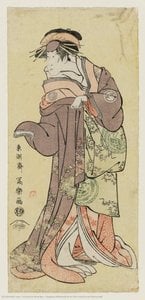
Sharaku: Tunnetuimmat 100 maalausta

Kabuki Actor Ōtani Oniji III as Yakko Edobei (1794) on Sharakuin kuuluisin maalaus, jota säilytetään Metropolitan Museum of Art -museossa kaupungissa New York. Bandō Hikosaburō III as Kudōzaemon Suketsune (1795) ja Iwai Hanshirō IV as O-Han of the Shinanoya (1795) ovat seuraavat kaksi maailman tunnetuinta teosta. Tässä ovat Sharaku teoksista 147 eniten keräilijöiden ja museokävijöiden katsomia 100 teosta, sisältäen teoksen vuosiluvun, museon sekä tarinan jokaisesta teoksesta.

Sijoitus perustuu suosiotulokseemme, joka yhdistää kunkin teoksen hakuja, vierailuja ja tilauksia. Päivitetty lokakuu 2026. Jokainen tämän sivun mestariteos on tilattavissa museolaatuisena, käsinmaalattuna öljyreproduktiona tai taideprinttinä valitsemassasi koossa.

Sharaku muotokuva
Sharaku
Taidesuuntaus
Ukiyo-e
Teokset valikoimassamme
147
Tunnetuimmat
Kabuki Actor Ōtani Oniji III as Yakko Edobei (1794)
Eniten teoksia kohteessa
Metropolitan Museum of Art

Top 10: Sharaku'n tunnetuimmat maalaukset

Kabuki Actor Ōtani Oniji III as Yakko Edobei (1794) tekijä Sharaku
1

Kabuki Actor Ōtani Oniji III as Yakko Edobei

1794 · Woodblock Print · Metropolitan Museum of Art, New York

In the fleeting moments of the Edo period, few artists captured the raw, unbridled energy of human emotion as piercingly as Tōshūsai Sharaku. His masterpiece, Kabuki Actor Ōtani Oniji III as Yakko Edobei, serves as a breathtaking window into the heart of Kabuki theater, frozen in time since 1794. This woodblock print does not merely depict a performer; it captures a psychological crescendo. The actor, portrayed with startling realism, is…

Bandō Hikosaburō III as Kudōzaemon Suketsune (1795) tekijä Sharaku
2

Bandō Hikosaburō III as Kudōzaemon Suketsune

1795 · Woodblock Print

In the fleeting, vibrant world of the Edo period, few images capture the raw, theatrical intensity of the stage quite like Tōshūsai Sharaku’s 1795 masterpiece, Bandō Hikosaburō III as Kudōzaemon Suketsune. This monochrome woodblock print is not merely a portrait; it is a psychological study of a moment frozen in time. The subject, the celebrated Kabuki actor Bandō Hikosaburō III, is captured mid-performance, embodying the formidable character of Kudōzaemon Suketsune.…

Iwai Hanshirō IV as O-Han of the Shinanoya (1795) tekijä Sharaku
3

Iwai Hanshirō IV as O-Han of the Shinanoya

1795 · Woodblock Print

In the fleeting, vibrant world of Edo-period Japan, few artists captured the raw, theatrical essence of human emotion as piercingly as Tōshūsai Sharaku. His masterpiece, Iwai Hanshirō IV as O-Hano of the Shinanoya, serves as a breathtaking window into the Kabuki stage of 1795. This woodblock print does not merely depict an actor in costume; it captures a moment of profound character study. The subject, portrayed with a striking three-quarter…

Nakajima Wadaemon I as Tanbaya Hachiemon (1794) tekijä Sharaku
4

Nakajima Wadaemon I as Tanbaya Hachiemon

1794 · Woodblock Print

In the fleeting moments of the Edo period, few artists captured the raw, unvarnished essence of human emotion as strikingly as Tōshūsai Sharaku. His masterpiece, Nakajima Wadaemon I as Tanbaya Hachiemon, serves as a profound window into the theatrical soul of 1794 Japan. This woodblock print does not merely depict an actor; it captures a psychological state. The subject, portrayed with Sharaku’s signature intensity, sits in a moment of palpable…

Iwai Hanshirō IV as Kōtō no Naishi (1795) tekijä Sharaku
5

Iwai Hanshirō IV as Kōtō no Naishi

1795 · Woodblock Print

In the fleeting history of Japanese ukiyo-e, few names command as much intrigue and reverence as Tōshūsai Sharaku. His brief, explosive appearance on the art scene—lasting a mere ten months between 1794 and 1795—left behind a legacy that continues to haunt and fascinate the modern collector. This particular masterpiece, Iwai Hanshirō IV as Kōtō no Naishi, serves as a profound testament to Sharaku’s unparalleled ability to capture the raw, psychological…

Morita Kan'ya VIII as Genkaibō Ajari (1794) tekijä Sharaku
8

Morita Kan'ya VIII as Genkaibō Ajari

1794 · Woodblock Print

In the fleeting moments of the Edo period, few artists captured the raw, electric energy of the Kabuki stage as profoundly as Tōshūsai Sharaku. His masterpiece, Morita Kan'ya VIII as Genkaibō Ajari, serves as a breathtaking window into a vanished era of Japanese theatrical splendor. This woodblock print is not merely a portrait; it is a captured heartbeat, a frozen instant of high drama where the boundary between performer and…

Matsumoto Koshiro IV as the Fish Peddler Gorobei tekijä Sharaku
9

Matsumoto Koshiro IV as the Fish Peddler Gorobei

Woodblock Print · Metropolitan Museum of Art, New York

To stand before a portrait in the style of Tōshūsai Sharaku is to confront not merely an image, but a moment suspended between life and memory. This depiction of Matsumoto Koshiro IV as the fish peddler Gorobei captures the very essence of the Edo period's vibrant, yet often melancholic, undercurrents. The print possesses an almost startling immediacy; it feels less like an artistic rendering and more like a captured breath…

Nakamura Nakazō II, also called Sakaiya Shūkaku (1794) tekijä Sharaku
10

Nakamura Nakazō II, also called Sakaiya Shūkaku

1794 · Woodblock Print

This woodblock print presents a portrait of Nakamura Nakazō II, also called Sakaiya Shūkaku. The subject was a prominent Japanese kabuki actor, captured during a period of significant theatrical activity in Edo. The work is attributed to the artist Toshusai Sharaku, a figure whose brief and intense presence in the ukiyo-e genre remains a subject of much interest. This specific piece dates to 1794.

Loput Sharaku -sijoituksista, 11–100

The Actor Sawamura Sojuro III (1795) tekijä Sharaku
#16

The Actor Sawamura Sojuro III

1795 · Metropolitan Museum of Art

In the fleeting history of Japanese Ukiyo-e, few names evoke as much mystery and intense fascination as Tōshūsai Sharaku. His brief, explosive appearance on the art scene—lasting a…

Hanki se kotiisi →
Ebisu (1795) tekijä Sharaku
#21

Ebisu

1795

In the fleeting, brilliant ten-month career of Tōshūsai Sharaku, few works capture the vibrant pulse of Japanese folklore as effectively as his 1795 masterpiece, Ebisu. This woodblock print…

Hanki se kotiisi →

Sharaku -taiteilijan maalaukset aikakausittain

Aiheet, joita Sharaku maalasi eniten

Nämä mestariteokset käsittelevät neljää yleisintä aihetta, joista jokaisesta on tässä hienoin esimerkki.

Mistä löytää Sharaku's maalauksia

Tämän sivun teoksista eniten sisältävät 5 museota.

Museo Kaupunki Sharaku teokset Tämän listan maalaukset
Metropolitan Museum of Art, New YorkMetropolitan Museum of Art New York 36 Kabuki Actor Ōtani Oniji III as Yakko Edobei, Matsumoto Koshiro IV as the Fish Peddler Gorobei, Bandō Mitsugorō II as Ishii Genzō in the Play "Hana Ayame Bunroku Soga"
Brooklyn Museum, BrooklynBrooklyn Museum Brooklyn 3 Segawa Kikujuro Iii as Oshizu, Wife of Tanabe Bunzo, Kubuki Actor Ichikawa Ebizō as Takemura Sadanoshin, Daizo the Substitute
Art Institute of Chicago, ChicagoArt Institute of Chicago Chicago 1 Otafuku Throwing Black Beans to Chase Away the Demons on New Year's Eve
Tokyo National Museum, TokioTokyo National Museum Tokio 1 Kabuki Actor Ōtani Tokuji as Monogusa Tarō
Toledo Museum of Art, ToledoToledo Museum of Art Toledo 1 Onoe Matsusuke as Ashikaga TukaujiPublished by Tsutaya Juzaburo

Sharaku vuosien varrella: jokaisen vuoden mestariteokset

Vuosien 1794 ja 1795 välillä, yhteensä 2 vuoden ajan, taiteilija Sharaku maalasi jokaisen tämän sivun päivätyksellä varustetun teoksen: tässä ne ovat, vuosi vuodelta.

  1. 1794
    Kabuki Actor Ōtani Oniji III as Yakko Edobei (1794) tekijä Sharaku
    #1 / 100

    Kabuki Actor Ōtani Oniji III as Yakko Edobei

    Metropolitan Museum of Art

    In the fleeting moments of the Edo period, few artists captured the raw, unbridled energy of human emotion as piercingly as Tōshūsai Sharaku. His masterpiece, Kabuki Actor Ōtani…

  2. 1794
    Nakajima Wadaemon I as Tanbaya Hachiemon (1794) tekijä Sharaku
    Nro 4 / 100

    Nakajima Wadaemon I as Tanbaya Hachiemon

    In the fleeting moments of the Edo period, few artists captured the raw, unvarnished essence of human emotion as strikingly as Tōshūsai Sharaku. His masterpiece, Nakajima Wadaemon I…

  3. 1794
  4. 1794
    Morita Kan'ya VIII as Genkaibō Ajari (1794) tekijä Sharaku
    #8 / 100

    Morita Kan'ya VIII as Genkaibō Ajari

    In the fleeting moments of the Edo period, few artists captured the raw, electric energy of the Kabuki stage as profoundly as Tōshūsai Sharaku. His masterpiece, Morita Kan'ya…

  5. 1794
    Nakamura Nakazō II, also called Sakaiya Shūkaku (1794) tekijä Sharaku
    Nro 10 / 100

    Nakamura Nakazō II, also called Sakaiya Shūkaku

    This woodblock print presents a portrait of Nakamura Nakazō II, also called Sakaiya Shūkaku. The subject was a prominent Japanese kabuki actor, captured during a period of significant…

  6. 1794
  7. 1794
  8. 1794
    Nakajima Wadaemon I as Migawari no Jizō (1794) tekijä Sharaku
    Nro 20 / 100

    Nakajima Wadaemon I as Migawari no Jizō

    This striking woodblock print, created by the enigmatic artist Tōshūsai Sharaku in 1794, offers a captivating portrait of Nakajima Wadaemon I embodying the role of Migawari no Jizō.…

  9. 1794
  10. 1794
  11. 1794
  12. 1794
  13. 1795
    Bandō Hikosaburō III as Kudōzaemon Suketsune (1795) tekijä Sharaku
    #2 / 100

    Bandō Hikosaburō III as Kudōzaemon Suketsune

    In the fleeting, vibrant world of the Edo period, few images capture the raw, theatrical intensity of the stage quite like Tōshūsai Sharaku’s 1795 masterpiece, Bandō Hikosaburō III…

  14. 1795
    Iwai Hanshirō IV as O-Han of the Shinanoya (1795) tekijä Sharaku
    Nro 3 / 100

    Iwai Hanshirō IV as O-Han of the Shinanoya

    In the fleeting, vibrant world of Edo-period Japan, few artists captured the raw, theatrical essence of human emotion as piercingly as Tōshūsai Sharaku. His masterpiece, Iwai Hanshirō IV…

  15. 1795
    Iwai Hanshirō IV as Kōtō no Naishi (1795) tekijä Sharaku
    #5 / 100

    Iwai Hanshirō IV as Kōtō no Naishi

    In the fleeting history of Japanese ukiyo-e, few names command as much intrigue and reverence as Tōshūsai Sharaku. His brief, explosive appearance on the art scene—lasting a mere…

  16. 1795
  17. 1795
  18. 1795
  19. 1795
    The Actor Sawamura Sojuro III (1795) tekijä Sharaku
    Sija 16 / 100

    The Actor Sawamura Sojuro III

    Metropolitan Museum of Art

    In the fleeting history of Japanese Ukiyo-e, few names evoke as much mystery and intense fascination as Tōshūsai Sharaku. His brief, explosive appearance on the art scene—lasting a…

  20. 1795
  21. 1795
    Segawa Kikunojo III in an Unidentified Role (1795) tekijä Sharaku
    Nro 18 / 100

    Segawa Kikunojo III in an Unidentified Role

    Metropolitan Museum of Art

    In the fleeting moments of the Edo period, few names ignite as much curiosity as Tōshūsai Sharaku. His brief, explosive career—lasting a mere ten months between 1794 and…

  22. 1795
    Ebisu (1795) tekijä Sharaku
    Sija 21 / 100

    Ebisu

    In the fleeting, brilliant ten-month career of Tōshūsai Sharaku, few works capture the vibrant pulse of Japanese folklore as effectively as his 1795 masterpiece, Ebisu. This woodblock print…

  23. 1795
  24. 1795
  25. 1795

Sharaku -taiteilijan maalaukset: usein kysytyt kysymykset

Mikä on tunnetuin Sharaku -maalaus?Näytä vastaus

Kabuki Actor Ōtani Oniji III as Yakko Edobei (1794), Metropolitan Museum of Art, New York. Seuraavina ovat Bandō Hikosaburō III as Kudōzaemon Suketsune (1795) ja Iwai Hanshirō IV as O-Han of the Shinanoya (1795).

Mitkä ovat Sharaku 10 kuuluisinta maalausta?Näytä vastaus

Kabuki Actor Ōtani Oniji III as Yakko Edobei, Bandō Hikosaburō III as Kudōzaemon Suketsune, Iwai Hanshirō IV as O-Han of the Shinanoya, Nakajima Wadaemon I as Tanbaya Hachiemon, Iwai Hanshirō IV as Kōtō no Naishi, Bandō Hikosaburō III as Godai Saburō Chikatada, Osagawa Tsuneyo II as Okinu, wife of Chōemon, Morita Kan'ya VIII as Genkaibō Ajari, Matsumoto Koshiro IV as the Fish Peddler Gorobei ja Nakamura Nakazō II, also called Sakaiya Shūkaku. Yllä oleva sijoitus kertoo kunkin teoksen vuosiluvun ja museon.

Kuinka monta Sharaku -taideteosta on olemassa?Näytä vastaus

Luettelossamme on 147 teosta taiteilijalta Sharaku, aikaväliltä 1794–1795.

Mistä voin nähdä tunnetuimmat Sharaku maalaukset?Näytä vastaus

Suurin osa niistä sijaitsee kohteessa Metropolitan Museum of Art (New York), Brooklyn Museum (Brooklyn) ja Art Institute of Chicago (Chicago). Yllä oleva taulukko listaa museot yksitellen.

Mihin aikakauteen Sharaku maalasi tunnetuimmat teoksensa?Näytä vastaus

Ajanjaksona 1794: 49 sivun 100 teoksista on peräisin tuolta ajalta, mukaan lukien Kabuki Actor Ōtani Oniji III as Yakko Edobei.

Mikä on Sharaku tunnetuimmista teoksista varhaisin ja mikä uusin?Näytä vastaus

Tämän sivun vanhin on Kabuki Actor Ōtani Oniji III as Yakko Edobei (1794) ja uusin Bandō Hikosaburō III as Kudōzaemon Suketsune (1795).

Mitä aiheita Sharaku maalasi?Näytä vastaus

Kabuki actor (17), Woodblock print (17) ja Portrait (11), 100 teoksen joukossa tällä sivulla.

Mihin Sharaku maalasi ja millä välineillä?Näytä vastaus

Woodblock Print: 29 / 100 teosta tällä sivulla.

Mihin taidesuuntaukseen Sharaku kuuluu?Näytä vastaus

kuten tämän sivun maalaukset osoittavat, Ukiyo-e.

Mitä Sharaku maalauksia Metropolitan Museum of Art -museossa on?Näytä vastaus

Kabuki Actor Ōtani Oniji III as Yakko Edobei, Matsumoto Koshiro IV as the Fish Peddler Gorobei ja Bandō Mitsugorō II as Ishii Genzō in the Play "Hana Ayame Bunroku Soga" ovat yksi 19 teoksesta tällä sivulla, jotka kuuluvat Metropolitan Museum of Art, New York kokoelmaan.

Mistä voin ostaa Sharaku -taideteoksen reproduktion?Näytä vastaus

Kyllä. Jokainen tämän sivun maalauksista voidaan tilata museolaatuisena, käsinmaalattuna öljyreprospektina tai taidepainoksena valitsemassasi koossa suoraan maalauksen omalta sivulta.

Sharaku: elämäkerta

The Enigmatic Presence of Sharaku

Sharaku was a Japanese ukiyo-e print designer active between 1794 and 1795. His prolific output focused primarily on yakusha-e, which are portraits of kabuki actors. These works often emphasized the dynamism and energy of the subjects, frequently utilizing a realism that highlighted unflattering details such as wrinkles or large noses. His compositions often featured a focus on facial expressions, sometimes presenting a single figure or contrasting different types of faces.

The artist's career was brief, spanning approximately ten months. His work is categorized into four distinct periods:

Artistic Style and Legacy

Sharaku's technique involved the use of woodblock prints, sometimes employing extravagant methods such as the dusting of mica in the backgrounds to create a glittering effect. His portraits are noted for their ability to capture the psychology of a character through heightened theatrical gestures and expressive, almost caricature-like exaggerations.

Despite the mystery surrounding his true identity, his work has been recognized for its mastery of the medium. His reputation rests largely on his earlier prints, while his later output is often considered to have a declining artistry. His subjects included kabuki actors, sumo wrestlers, and warriors.

Kaikki 147 teosta taiteilijalta Sharaku →