Man Ray, 1890 – 1976

The 100 Most Famous Paintings by Man Ray

The painting that made Man Ray famous is La Galerie Surréaliste, rue Jacques Callot; it hangs in the Oscar Niemeyerin museo, Curitiba. Pisces (1938) and Rayograph (The Kiss) (1922) follow it in the hearts of collectors and museum visitors. Of the 142 works by Man Ray in our catalogue, these 100 are the most admired, each presented with its date, its museum and what sets it apart.

Sijoitus perustuu suosiotulokseemme, joka yhdistää kunkin teoksen hakuja, vierailuja ja tilauksia. Päivitetty lokakuu 2026.

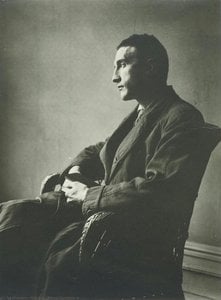
Man Ray muotokuva
Man Ray · 1890 – 1976
Syntynyt · kuollut
1890 – 1976, Philadelphia
Taidesuuntaus
Surrealismi
Teokset valikoimassamme
142
Tunnetuimmat
La Galerie Surréaliste, rue Jacques Callot
Eniten teoksia kohteessa
Oscar Niemeyerin museo

Man Ray: the ten masterpieces

La Galerie Surréaliste, rue Jacques Callot tekijä Man Ray
1

La Galerie Surréaliste, rue Jacques Callot

Acrylic On Canvas · Oscar Niemeyerin museo, Curitiba

La Galerie Surréaliste et l'Étoile Scellée : Un Voyage au Cœur de la Créativité Dadaiste La Galerie Surréaliste, située rue Jacques Callot à Paris, fut bien plus qu’une simple adresse artistique ; elle incarnait les aspirations radicales d’une génération marquée par les bouleversements du début du XXe siècle. Fondée en 1926 et dirigée avec passion par Marcel Duchamp et Sophie Babet, cette galerie devint un véritable laboratoire d'expérimentation esthétique et…

Pisces (1938) tekijä Man Ray
2

Pisces

1938 · Oil

Introduction to Man Ray and Surrealism Man Ray, born Emmanuel Radnitzky in 1890, was an American visual artist who spent most of his career in France. He was a significant contributor to the Dada and Surrealist movements, although his ties to each were informal. Man Ray produced major works in a variety of media but considered himself a painter above all. Surrealism is an art movement that emerged in the…

Rayograph (The Kiss) (1922) tekijä Man Ray
3

Rayograph (The Kiss)

1922 · Black and White Photography · MoMA - Museum of Modern Art, New York

A Dance Between Light and Shadow: Exploring Man Ray’s “The Kiss” Man Ray's "The Kiss," created in 1922 during the heady days of Dada and Surrealism, transcends mere photographic representation; it embodies a radical reimagining of artistic process and perception. This striking photogram—a technique pioneered by Ray himself—captures an intimate moment frozen in time, transforming commonplace objects into symbols of desire and connection. Unlike traditional painting, where artists meticulously render…

Solarisation (1931) tekijä Man Ray
4

Solarisation

1931 · Black and White Photography

In this 1931 black and white photograph, titled Solarisation, Man Ray presents us with a quiet, intimate moment of repose. The subject is a man lying down, his head resting upon his arm in a state of sleep or deep rest. There is a profound sense of stillness here, a pause in time captured through the lens of a man who sought to redefine how we perceive the physical form.

The Pavillion of Elegance tekijä Man Ray
5

The Pavillion of Elegance

Black and White Photography · Oscar Niemeyerin museo, Curitiba

To gaze upon this image is to step directly into the shimmering, slightly unsettling dreamscape of 1925 Paris. It captures not merely a moment in time, but an entire cultural sensibility—the breathless anticipation surrounding modern fashion and the burgeoning power of the photographic gaze. The subject, a woman draped in what appears to be an ocean green Georgette crepe, moves with an almost choreographed grace down a sun-dappled thoroughfare or…

Tristan Tzara and Jean Cocteau tekijä Man Ray
6

Tristan Tzara and Jean Cocteau

Black and White Photography · Oscar Niemeyerin museo, Curitiba

This evocative black and white photograph transports us directly into the vibrant, often bewildering intellectual ferment of the early 20th century. It captures a moment steeped in the spirit of Dadaism and the burgeoning currents of Surrealism—movements that dared to dismantle the very definition of reality. The composition itself feels less like a mere documentation and more like a carefully staged dream sequence, inviting the viewer to question what they…

Nusch eluard with mirror (1935) tekijä Man Ray
7

Nusch eluard with mirror

1935 · Black and White Photography · Kobe Fashion Museum, Kyoto

In the hauntingly beautiful monochrome of "Nusch Eluard with Mirror," captured in 1935, we are invited into a private, ephemeral moment that transcends the boundaries of traditional portraiture. The photograph features Nusch Eluard, a woman who was not only a muse but a profound presence in the Surrealist circle, draped in a delicate veil that clings to her form like a soft shadow. As she holds a mirror before her…

Indestructible Object (or Object to Be Destroyed) (1923) tekijä Man Ray
8

Indestructible Object (or Object to Be Destroyed)

1923 · Photography · MoMA - Museum of Modern Art, New York

In the annals of modern art, few images possess the unsettling, magnetic pull of Man Ray’s 1923 masterpiece, Indestructible Object (often known as Object to Be Destroyed). To gaze upon this work is to step directly into the fractured psyche of the Surrealist movement, where the boundaries between the living and the mechanical begin to dissolve. The composition presents a disconcerting tableau: a stark, wooden structure that serves as a…

Veiled Erotica tekijä Man Ray
9

Veiled Erotica

Black and White Photography · Oscar Niemeyerin museo, Curitiba

Born in Philadelphia to Russian Jewish immigrant parents, Emmanuel Radnitzky—known universally as Man Ray—was a restless spirit who defied easy categorization. His formative years coincided with the tumultuous period of Dadaism, born from disillusionment with World War I’s horrors and fueled by an uncompromising critique of bourgeois values. Marcel Duchamp's provocative embrace of “ready-made” objects – like *The Gift* – served as a catalyst for Dada artists to dismantle accepted…

(Untitled) tekijä Man Ray
10

(Untitled)

Black and White Photography · Oscar Niemeyerin museo, Curitiba

In the quiet, evocative realm of Man Ray’s photography, we encounter a profound dialogue between the mundane and the metaphysical. This stark black and white composition, often associated with the enigmatic spirit of “The Gift,” transcends mere documentation to become a window into the avant-garde mind. At first glance, the viewer is presented with an abstract arrangement of draped fabric—perhaps a heavy wool—rendered in exquisite detail against a textured surface.…

More Man Ray masterpieces, 11 to 100

The Enigma of Isidore Ducasse (1920) tekijä Man Ray
#11

The Enigma of Isidore Ducasse

1920 · National Gallery of Australia

The Enigma of Isidore Ducasse is an assemblage created by the artist Man Ray. This work originated in 1920 and was later remade in 1972. The object consists…

Nusch with Mirror tekijä Man Ray
#12

Nusch with Mirror

Oscar Niemeyerin museo

In the hauntingly beautiful photograph Nusch with Mirror, the boundaries between reality and illusion dissolve into a singular, breathtaking moment of modernist introspection. Captured by the legendary American…

Dada Portrait tekijä Man Ray
#13

Dada Portrait

Oscar Niemeyerin museo

In the realm of early twentieth-century avant-garde, few names resonate with as much transformative power as Man Ray. His 1923 masterpiece, Dada Portrait, stands as a profound testament…

Natalie Paley Wearing a Sequined Gown by Lelong tekijä Man Ray
#14

Natalie Paley Wearing a Sequined Gown by Lelong

Oscar Niemeyerin museo

Ultimately, “Natalie Paley Wearing a Sequined Gown by Lelong” stands as an enduring emblem of artistic experimentation—a captivating portrait that exemplifies Man Ray’s visionary genius and cements his…

Marcel Duchamp tekijä Man Ray
#15

Marcel Duchamp

Oscar Niemeyerin museo

The photograph by Man Ray of Marcel Duchamp, captured in 1920-21, isn't merely a portrait; it’s a carefully constructed tableau of intellectualism and quiet contemplation. More than just…

Rayograph - 1925 (1925) tekijä Man Ray
#17

Rayograph - 1925

1925 · Museum Boijmans Van Beuningen

Rayograph - 1925 is a Dadaist photogram photographic print created by the artist Man Ray in 1925. This work belongs to the Dadaist movement, a period characterized by…

Café Man Ray tekijä Man Ray
#18

Café Man Ray

Oscar Niemeyerin museo

Café Man Ray: A Surrealist Reverie Revisited The American artist Man Ray (1890-1976) fundamentally reshaped the perception of photography, elevating it from mere documentation to an expressive art…

Dust Breeding (detail) tekijä Man Ray
#19

Dust Breeding (detail)

Oscar Niemeyerin museo

In the hauntingly beautiful detail of Man Ray’s 1920 masterpiece, Dust Breeding, we are invited into a world where the boundaries between reality and dream dissolve into a…

Noire et Blanche tekijä Man Ray
#23

Noire et Blanche

Oscar Niemeyerin museo

Man Ray’s evocative photograph, Noire et Blanche, immediately draws the viewer into a realm where identity blurs and cultural narratives collide. This piece is more than a mere…

Georges Braque tekijä Man Ray
#24

Georges Braque

Oscar Niemeyerin museo

This striking black and white photograph transports us into a moment suspended between the familiar and the avant-garde. At its heart stands a commanding figure, whose direct gaze…

The couple (1914) tekijä Man Ray
#25

The couple

1914 · Sezon Museum of Modern Art

Born Emmanuel Radnitzky in 1890 in Philadelphia, Man Ray was a leading artist of 20th century America. Man Ray awakened to the European avant-garde art at Armory Show…

Pablo Picasso at the Count Étienne de Beaumont’s Ball tekijä Man Ray
#26

Pablo Picasso at the Count Étienne de Beaumont’s Ball

Oscar Niemeyerin museo

Man Ray's captivating photograph, "Pablo Picasso at the Count Étienne de Beaumont’s Ball," isn’t merely a snapshot; it’s a meticulously constructed tableau vivant, a frozen moment brimming with…

Gertrude Stein tekijä Man Ray
#27

Gertrude Stein

Oscar Niemeyerin museo

In the quiet, monochromatic depths of Man Ray’s portrait of Gertrude Stein, we encounter more than just a photographic likeness; we enter a profound dialogue between light and…

Count Étienne de Beaumont tekijä Man Ray
#28

Count Étienne de Beaumont

Oscar Niemeyerin museo

Man Ray’s portrait of Count Étienne de Beaumont isn't merely a likeness; it’s a carefully constructed tableau vivant, a frozen moment capturing the essence of 1920s Parisian high…

ABC tekijä Man Ray
#29

ABC

Oscar Niemeyerin museo

Man Ray's “ABC,” created in 1947, isn’t merely a photograph; it’s an invitation to deconstruct visual language and embrace the inherent ambiguity of perception. Born Emmanuel Radnitzky, later…

Square tekijä Man Ray
#30

Square

Oscar Niemeyerin museo

The Enigma of the Spiral In the quiet intensity of Man Ray’s Square, one is immediately drawn into a rhythmic, swirling dance of typography and form. Created during…

Magnolia tekijä Man Ray
#32

Magnolia

Oscar Niemeyerin museo

In the quiet intersection of reality and dreamscape lies Man Ray’s Magnolia, a breathtaking monochrome study that transcends the boundaries of traditional photography. At first glance, the viewer…

(Untitled) tekijä Man Ray
#33

(Untitled)

Oscar Niemeyerin museo

In the quiet, evocative realm of Man Ray’s “Untitled,” we encounter a profound dialogue between the mundane and the metaphysical. At first glance, the viewer is presented with…

Nimetön (D2X7S9) (1916) tekijä Man Ray
#35

Nimetön (D2X7S9)

1916 · Metropolitan Museum of Art

Man Rayn ”Ylösnostettu” – Surrealistisen Avantgarde Taiteen Kauneus ja Mysteeri Man Rayn ”Ylösnostettu” on yksi surrealismin keskeisistä teoksista, joka vangitsee aikansa tunteen vallitsevasta kulttuurista ja filosofiasta. Maalaus vuodelta…

Self-Portrait tekijä Man Ray
#37

Self-Portrait

Oscar Niemeyerin museo

Man Ray's "Self-Portrait," painted in 1927, isn’t merely a depiction of an individual; it’s a carefully constructed meditation on identity, the gaze, and the very act of representation.…

Glass Tears tekijä Man Ray
#38

Glass Tears

Oscar Niemeyerin museo

Man Ray's "Glass Tears," created between 1930 and 1932, isn’t merely a photograph; it’s a distilled emotion captured in stark black and white. The image, a close-up of…

Butterflies tekijä Man Ray
#39

Butterflies

Oscar Niemeyerin museo

Man Ray’s “Butterflies,” created between 1930 and 1935, isn't merely a photograph; it’s a shimmering portal into the heart of Surrealism. This arresting image, captured during a pivotal…

Serious Man, or The Serious One tekijä Man Ray
#40

Serious Man, or The Serious One

Oscar Niemeyerin museo

Serious Man, or The Serious One The American artist Man Ray (1890-1976) fundamentally reshaped photography’s role—shifting it from mere documentation of reality into an expressive art form itself.…

Kiki in Mechanical Ballet, by Fernand Léger tekijä Man Ray
#44

Kiki in Mechanical Ballet, by Fernand Léger

Oscar Niemeyerin museo

Fernand Léger’s “Kiki in Mechanical Ballet,” painted in 1924, isn't merely a depiction of a woman dancing; it’s an immersive plunge into the heart of early 20th-century anxieties…

Lee Miller tekijä Man Ray
#46

Lee Miller

Oscar Niemeyerin museo

In this mesmerizing black and white photograph, the boundaries between reality and dreamscape dissolve, inviting the viewer into the intimate world of Man Ray and his muse, Lee…

Dora Maar tekijä Man Ray
#47

Dora Maar

Oscar Niemeyerin museo

Man Ray’s Dora Maar: A Portrait of Surrealist Intensity Dora Maar, Picasso's muse and enigmatic collaborator, occupies a singular place in the canon of 20th-century art. Man Ray’s…

Yves Tanguy tekijä Man Ray
#49

Yves Tanguy

Oscar Niemeyerin museo

Yves Tanguy: A Surrealist Landscape of Inner Consciousness Yves Tanguy’s “The J. Paul Getty Museum Collection” isn't merely a depiction of an artist; it’s a portal into the…

Untitled (Aztec figurine of the goddess Tlazoteotl) (1932) tekijä Man Ray
#50

Untitled (Aztec figurine of the goddess Tlazoteotl)

1932 · MoMA - Museum of Modern Art

To gaze upon this photograph is to encounter a profound dialogue across millennia—a conversation between the vibrant spiritual life of ancient Mesoamerica and the experimental, shadow-drenched vision of…

Reflections tekijä Man Ray
#51

Reflections

Oscar Niemeyerin museo

Man Ray’s “Reflections,” painted in 1931, stands as a testament to the burgeoning surrealist movement’s fascination with exploring subconscious landscapes and challenging conventional perceptions of reality. Created during…

Arnold Schönberg tekijä Man Ray
#54

Arnold Schönberg

Oscar Niemeyerin museo

Man Ray's 1924 photograph of Arnold Schoenberg isn’t merely a likeness; it’s a carefully constructed tableau, a visual embodiment of the composer’s complex and revolutionary spirit. Captured during…

Kiki tekijä Man Ray
#55

Kiki

Oscar Niemeyerin museo

Man Ray's Kiki de Montparnasse: A Portrait of Liberation The photograph by Man Ray, titled “Kiki de Montparnasse,” transcends mere documentation; it’s an emblem of the exuberant spirit…

Flying Dutchman (1920) tekijä Man Ray
#73

Flying Dutchman

1920 · Metropolitan Museum of Art

In the realm of early twentieth-century modernism, few works capture the ephemeral boundary between reality and imagination as hauntingly as Man Ray’s Flying Dutchman. Created in 1920, this…

Landscape (Paysage Fauve) (1913) tekijä Man Ray
#75

Landscape (Paysage Fauve)

1913 · Smithsonian American Art Museum

We are looking at Landscape (Paysage Fauve), a painting by Man Ray. Created in 1913, this work captures the artist during a formative period of his early career.…

Me, She (1934) tekijä Man Ray
#76

Me, She

1934

A Surreal Encounter: Exploring Man Ray's "Me, She" Man Ray’s “Me, She,” created in 1934, is a captivating example of surrealist photography that continues to intrigue and inspire.…

The Coat Stand (1920) tekijä Man Ray
#77

The Coat Stand

1920

A Surreal Encounter: Deconstructing Identity in Man Ray's "The Coat Stand" Man Ray’s “The Coat Stand” (1920) is a striking black and white photograph that encapsulates the spirit…

Juan Gris tekijä Man Ray
#78

Juan Gris

Oscar Niemeyerin museo

Juan Gris: A Geometric Vision of Surrealism Juan Gris (José Victoriano González-Pérez), born in Madrid in 1887, stands as an enigmatic figure within the vibrant tapestry of early…

Percolator (1917) tekijä Man Ray
#79

Percolator

1917 · Art Institute of Chicago

The work, titled Percolator, is an oil on board painting dating from 1917. It presents a non-representational arrangement of geometric and organic shapes. A vertical, pole-like element occupies…

Departure of Summer (1914) tekijä Man Ray
#80

Departure of Summer

1914 · Art Institute of Chicago

The canvas holds the tension of a moment frozen in 1914. In this oil on canvas work, titled Departure of Summer, the artist Man Ray explores a world…

The Mime (1916) tekijä Man Ray
#87

The Mime

1916 · Metropolitan Museum of Art

Man Ray's paintings by period

The subjects Man Ray painted most

The four subjects that return most often among these masterpieces, with the finest example of each.

Where to see Man Ray's paintings

Tämän sivun teoksista eniten sisältävät 8 museota.

Museo Kaupunki Man Ray teokset Tämän listan maalaukset
Oscar Niemeyerin museo, CuritibaOscar Niemeyerin museo Curitiba 40 La Galerie Surréaliste, rue Jacques Callot, The Pavillion of Elegance, Tristan Tzara and Jean Cocteau
MoMA - Museum of Modern Art, New YorkMoMA - Museum of Modern Art New York 3 Rayograph (The Kiss), Indestructible Object (or Object to Be Destroyed), Untitled (Aztec figurine of the goddess Tlazoteotl)
Metropolitan Museum of Art, New YorkMetropolitan Museum of Art New York 3 Nimetön (D2X7S9), Flying Dutchman, The Mime
Museum Boijmans Van Beuningen, RotterdamMuseum Boijmans Van Beuningen Rotterdam 2 Rayograph - 1925, The Riddle of Isidore Ducasse
Smithsonian American Art Museum, Washington, D.C.Smithsonian American Art Museum Washington, D.C. 2 Tableau (Untitled), Landscape (Paysage Fauve)
Art Institute of Chicago, ChicagoArt Institute of Chicago Chicago 2 Percolator, Departure of Summer
Israelin museo, JerusalemIsraelin museo Jerusalem 4 The Village
Sezon Museum of Modern Art, KaruizawaSezon Museum of Modern Art Karuizawa 2 The couple

Man Ray, decade by decade: the defining painting of each

  1. 1900s
  2. 1910s
    The couple (1914) tekijä Man Ray
    #25 of 100

    The couple

    Ikä 20–29 · Sezon Museum of Modern Art

    Born Emmanuel Radnitzky in 1890 in Philadelphia, Man Ray was a leading artist of 20th century America. Man Ray awakened to the European avant-garde art at Armory Show…

  3. 1920s
    Rayograph (The Kiss) (1922) tekijä Man Ray
    #3 of 100

    Rayograph (The Kiss)

    Ikä 30–39 · MoMA - Museum of Modern Art

    A Dance Between Light and Shadow: Exploring Man Ray’s “The Kiss” Man Ray's "The Kiss," created in 1922 during the heady days of Dada and Surrealism, transcends mere…

  4. 1930s
    Pisces (1938) tekijä Man Ray
    Rank 2 / 100

    Pisces

    Ikä 40–49

    Introduction to Man Ray and Surrealism Man Ray, born Emmanuel Radnitzky in 1890, was an American visual artist who spent most of his career in France. He was…

  5. 1940s
  6. 1960s
  7. 1970s
    Cadeau (1972) tekijä Man Ray
    No. 48 of 100

    Cadeau

    Ikä 80–86

Man Ray's masterpieces: questions and answers

Which painting is Man Ray best known for?Show the answer

La Galerie Surréaliste, rue Jacques Callot, Oscar Niemeyerin museo, Curitiba. Next come Pisces (1938) and Rayograph (The Kiss) (1922).

What are Man Ray's ten greatest paintings?Show the answer

La Galerie Surréaliste, rue Jacques Callot, Pisces, Rayograph (The Kiss), Solarisation, The Pavillion of Elegance, Tristan Tzara and Jean Cocteau, Nusch eluard with mirror, Indestructible Object (or Object to Be Destroyed), Veiled Erotica ja (Untitled). The ranking above gives the year and the museum of each.

How many works did Man Ray paint?Show the answer

Our catalogue lists 142 works by Man Ray, dated from 1908 to 1972.

In which museums can I see Man Ray's masterpieces?Show the answer

Most of them are in Oscar Niemeyerin museo (Curitiba), MoMA - Museum of Modern Art (New York) ja Metropolitan Museum of Art (New York). The table above lists the museums one by one.

When did Man Ray paint the masterpieces?Show the answer

In 1910s: 19 of the 100 works on this page date from then, among them The couple.

What are the first and last famous paintings of Man Ray?Show the answer

The earliest on this page is Untitled (1908), the latest Cadeau (1972).

What were Man Ray's favourite subjects?Show the answer

Photography (27), Black and white (10) ja Woman (7), among the 100 works on this page.

Which technique did Man Ray favour?Show the answer

Black and White Photography: 17 of the 100 works on this page.

What art movement is Man Ray part of?Show the answer

Surrealismi ja Dadaism, as the paintings on this page show.

Which masterpieces by Man Ray hang at the Oscar Niemeyerin museo?Show the answer

La Galerie Surréaliste, rue Jacques Callot, The Pavillion of Elegance ja Tristan Tzara and Jean Cocteau are among the 35 works on this page held by the Oscar Niemeyerin museo, Curitiba.

The life of Man Ray

Man Ray: Valokuvaajan ja Taiteilijan Uskomaton Matka

Emmanuel Radnitzky, tunnettu maailmalla nimellä Man Ray, oli kiehtova ja monipuolinen taiteilija, joka haastoi kaiken helposti määriteltävän. Syntynyt vuonna 1890 Philadelphiaan Venäjän juutalaisen maahanmuuttajaperheen poikana, hänen elämänsätaiteellinen matkansa alusta kokeilevaan valokuvaajaan ja elokuvaohjaajaan kuvastaa varhaisen 2000-luvun radikaalia taiteellista ilmapiiriä. Nimen "Manny" Radnitzky muuttuminen salaperäiseksi "Man Rayksi" kertoo jo itsessään taiteilijan päättäväisyydestä luoda uusi identiteetti, joka oli vapaa konventioiden kahleista. Perheen muutto New York Cityyn osoittautui ratkaisevaksi, sillä se altisti hänet nousseelle modernismille ja herätti elinikäisen ihastuksen kokeiluihin. Varhaiset vaikutteet sisälsivät Euroopan avantgarde-taidetta Alfred Stieglitzin 291-galleriassa esitellynä, sekä New Yorkin kaupungin raakaa realismia – yhdistelmä, joka hienovaraisesti heijastui myöhemmässä työssään. Vaikka Ray oli aluksi omistautunut maalaustyölle, valokuvaus muuttui lopulta hänen voimakkaimmaksi välineekseen havaintojen ja todellisuuden rajojen tutkimiseen. Hän ei ainoastaan tallentanut kuvia; hän loi uusia tapoja *nähdä*. Varhaiset taiteelliset pyrkimykset olivat merkittyjä halulla perinteisiä tyylejä vastaan, vaikutteena sekä Euroopan modernismi että New York Cityn elämän raaka energia. Ferrer Centre, jonka anarcho-liberaaliset ideat ja vapaan ilmaisun korostus edistivät ympäristöä, jossa kokeilu ei ollut vain kannustettavaa vaan myös odotettavaa.

Dada, Surrealismi ja Mahdollisuuksien Tavoittelu

Man Rayn taiteellinen polku sai dramaattisen käänteen Marcel Duchampin tapaamisessa New Yorkissa vuonna 1915. Tämä kohtaaminen herätti molempien miehiä jakamaan kiinnostuksen "valmiiden teosten" eli tavallisten, valmistettujen esineiden taiteelliseksi nostamiseen. Tämä kapinallinen henki ajoi Rayn Dada-liikkeeseen, joka oli sotien jälkeisen ajan anti-taideprotesti. Liike syntyi ensimmäisen maailmansodan pettymyksen seurauksena. Ray osallistui aktiivisesti Dada-liikkeen edistämiseen New Yorkissa järjestämällä näyttelyitä ja julkaisemalla sarjakuviin, jotka olivat täynnä ironiaa ja kritiikkiä. Hän oli myös mukana perustamassa Société Anonyme -järjestöä yhdessä ystävänsä Marcel Duchampin ja Walter Arensbergin kanssa, joka oli ensimmäinen museo, joka omisti itsensä modernin taiteen esittämiseen Amerikassa. Tämä yritys kuitenkin epäonnistui yleisön kiinnostuksen puutteen vuoksi. Ray muutti Pariisiin vuonna 1921, ja hänestä tuli tärkeä hahmo sekä Dada- että Surrealistiryhmissä. Hän ei koskaan täysin liittynyt mihinkään jäykkyyteen, mutta omaksui Surrealismin pyrkimyksen alitajunnan, unien ja irrationaalisuuden tutkimiseen. Hänen työnsä kypsymisen aikana hänestä tuli tunnettu surrealististen valokuvaajien ryhmän jäsenenä, kuten Man Ray, André Kertész, ja Dora Maar.

Rayographit ja Valon Alkemio

Man Ray on parhaiten tunnettu "rayographin" keksinnöstä, kameralattomasta valokuvaustekniikasta, johon hän sattumanvaraisesti törmäsi. Nämä kuvat – esineiden suora asettaminen herkkää paperia vasten ja niiden valaiseminen – johtivat eteerisiin, haamumaisiin komposiitioihin, jotka rikkoivat perinteisen valokuvan edustuksen. Rayograph ei ollut pelkästään vaihtoehtoinen menetelmä; se oli filosofinen lausunto valokuvauden itsensä luonteesta. Poistamalla kameran linssin hän poisti objektiivisuuden illuusion ja paljasti välimedallon subjektiivisuudelle. Nämä eivät olleet *asioiden* esityksiä, vaan suoria jälkeläisiä niistä, jotka olivat täynnä mysteeriä ja toisenlaista maailmaa. Ray ei ollut kiinnostunut kuvaamaan todellisuutta *niin kuin se on*, vaan *niin kuin se tuntuu*. Tämä alitajunnan omaksuminen mahdollisti hänen siirtyvänsä pelkästään esittämisestä kohti subjektiivisten tilojen ja tunteiden tutkimista taiteessaan. Hän ei ainoastaan tallentanut kuvia, vaan myös loi niistä uusia merkityksiä. Hänen varhaiset valokuvansa olivat usein surrealistisia ja kokeellisia, ja ne heijastivat hänen kiinnostustaan ​​unelmallisiin ja epätodellisiin tiloihin.

Elokuva ja Kestävä Perintö

Man Rayn taiteellinen uteliaisuus ulottui myös elokuvien maailmaan. Hänen kokeelliset elokuvansa, kuten *Le Retour à la Raison* (1923) ja *L’Étoile de Mer* (1928), olivat tunnettuja surrealistisista kuvituksistaan, epätavallisista leikkaustekniikoistaan ​​ja tarinankerronnan konventioiden hylkäämisestä. Nämä eivät olleet tarinoita perinteisessä mielessä; ne olivat visuaalisia runoja, muotojen, rytmin ja alitajunnan tutkimuksia. Hän kokeili innovatiivisia tekniikoita, kuten stop-motion -animaatiota ja päällekkäisyyksiä luodakseen hämmentäviä ja unelmaisia ​​efektejä. Vaikka hänen elokuvatyönsä oli suhteellisen pieni määrältään, se vaikutti merkittävästi myöhemmän sukupolven avantgarde-elokuvaohjaajien työhön.

Yksityiselämä ja Perintö

Man Ray kuoli Pariisissa vuonna 1976, mutta hänen taiteellinen perintönsä elää edelleen. Hänen kokeilunhalunsa, konventioiden hylkäämisensä ja luovuuden vapaan ilmaisun tavoittelunsa ovat inspiroineet monia taiteilijoita ja yleisöjä. Hän oli todellinen pioneeri, joka muutti peruuttamattomasti käsitystämme taiteesta ja todellisuudesta. Hänen vaikutuksensa ulottuu laajalle, ja se näkyy nykypäivän valokuvauksessa ja elokuvassa, muodissa ja suunnittelussa.

Lisätietoja

  • Valokuvaus: Man Rayn tekniikat, erityisesti rayographit ja aurinkosolari, tutkitaan edelleen nykypäivän valokuvaajien toimesta.
  • Surrealismi: Hänen panoksensa vahvisti liikkeen visuaalista kieltä ja inspiroi taiteilijoita eri aloilla.
  • Avantgarde-elokuva: Hänen uraauurtava työnsä elokuvassa loi pohjan myöhemmän sukupolven avantgarde-elokuvaohjaajien työlle.
  • Muotivalokuvaus: Rayn innovatiivinen lähestymistapansa muotikuviin ja komposiitioihin vaikutti nykyaikaisen muotivalokuvauksen kehitykseen.
Man Rayn vaikutus ulottuu hänen elinkauteensa, ja se resonoituu edelleen taiteilijoiden ja yleisöjen kanssa tänään. Hänen kokeilunhalunsa, konventioiden hylkäyksensä ja luovuuden vapaan ilmaisun tavoittelunsa ovat voimakkaita inspiraatioita kaikille, jotka pyrkivät laajentamaan luovan ilmais

Kaikki 142 teosta taiteilijalta Man Ray →