Georges Braque, 1882 – 1963

Georges Braque: The 100 Most Famous Paintings

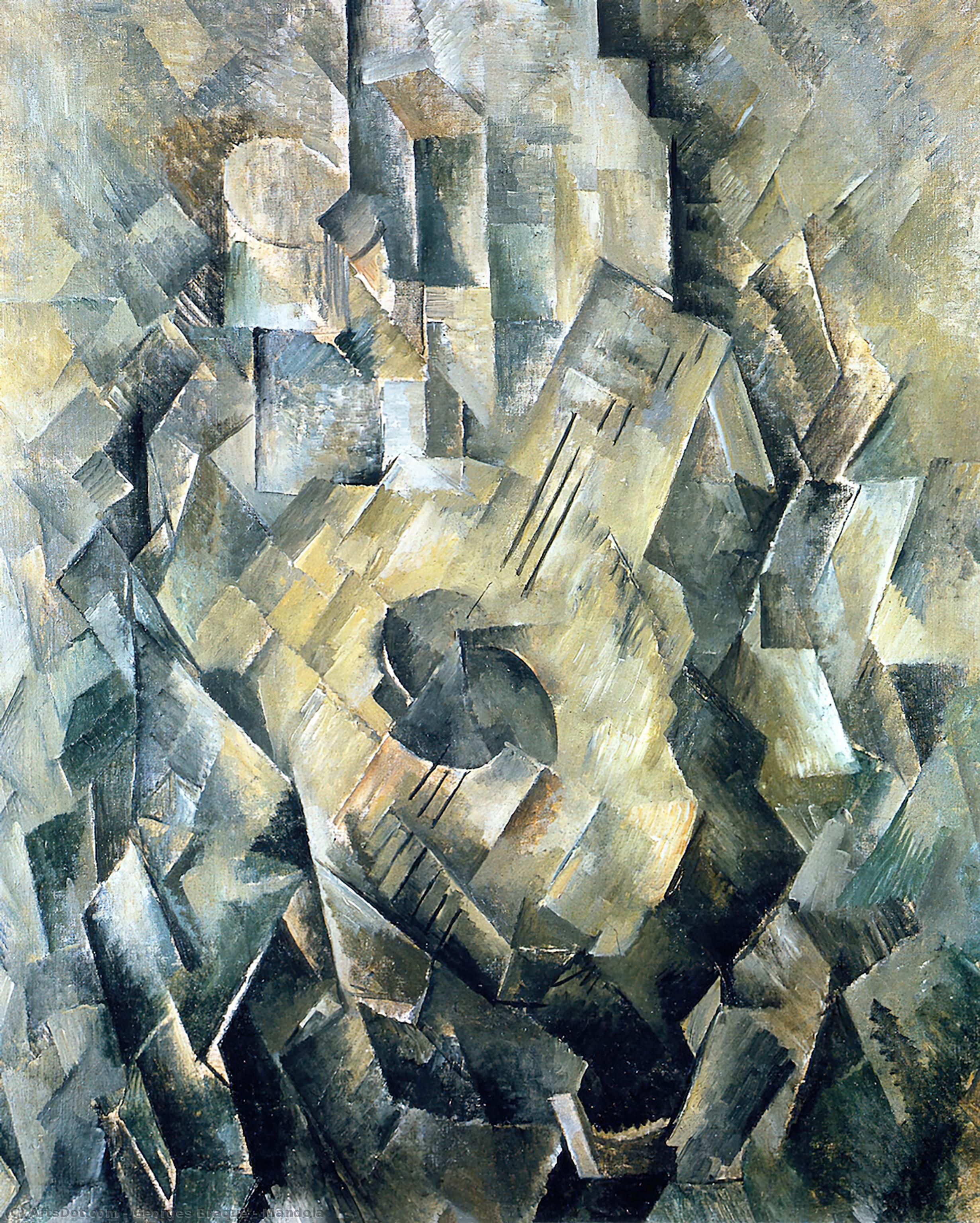
Mandola (1910) is the most famous painting by Georges Braque, held by the Tate Gallery in Lontoo. Mies kitaralla (1914) and Talot L'estaquessa are the next two works the world knows best. From the 700 works of Georges Braque in our catalogue, here are the 100 that collectors and museum visitors look at most, with the year, the museum and the story of each.

Sijoitus perustuu suosiotulokseemme, joka yhdistää kunkin teoksen hakuja, vierailuja ja tilauksia. Päivitetty lokakuu 2026.

Georges Braque muotokuva
Georges Braque · 1882 – 1963
Syntynyt · kuollut
1882 – 1963, Argenteuil
Taidesuuntaus
Kubismi
Teokset valikoimassamme
700
Tunnetuimmat
Mandola (1910)
Eniten teoksia kohteessa
The Phillips Collection

Top 10: Georges Braque's best-known paintings

Mandola (1910) tekijä Georges Braque
1

Mandola

1910 · Öljyväri kankaalle · Tate Gallery, Lontoo

Georges Braque: Mandola – A Cornerstone of Analytical Cubism Georges Braque’s “Mandola,” painted in 1910, represents far more than just a depiction of a lute; it embodies the very essence of Analytical Cubism—a groundbreaking artistic movement that irrevocably altered perceptions of form and space. This oil on canvas (71 x 56 cm) is housed within Tate Modern’s collection, offering visitors an unparalleled opportunity to experience this seminal work firsthand. But…

Mies kitaralla (1914) tekijä Georges Braque
2

Mies kitaralla

1914 · Öljyväri kankaalle

Georges Braquen vuonna 1914 maalattu "Mies kitaralla" ei ole pelkästään musiikin ystävän kuvaus, vaan syvä sukellus muotoon, tilaan ja havaitsemiseen. Tämä teos on Cubismin analyyttisen vaiheen keskeinen esimerkki, mullistava taidemovementti, joka uudensi esitystapaa varhaisessa 20-luvulla. Braque ei ainoastaan hajoa perinteistä muotokuvaa, vaan dekonstruoi ihmishahmon ja hänen instrumenttinsa monimutkaiseksi geometristen pintojen vuorovaikutukseksi. Teos on kuin älyllinen arvoitus, joka kutsuu katsojaa pohtimaan todellisuuden luonnetta uudella tavalla. "Mies kitaralla" on arvostettu taideteos kokoelmissa…

Talot L'estaquessa tekijä Georges Braque
3

Talot L'estaquessa

Öljyväri kankaalle

Georges Braquen ”Talojen L’Estaque” – Proto-Kuubistisen Taiteen Syväluotaus Georges Braquen vuonna 1908 maalattu ”Talojen L’Estaque” on kiehtova ja syvällinen teos, joka edustaa proto-kuubistisen taiteen varhaista vaihetta. Tämä maiskutekniikka vangitsee Välimeren rannikkokaupungin L’Estaque tunnelman, erityisesti sen tunnusomaiset talot ja luontoympäristön. Kompositio on dynaaminen ja hajallaan oleva, jossa päällekkäiset geometriset muodot haastavat perinteisen perspektiivin, mutta säilyttävät samalla syvyyden ja ulottuvuuden tunteen. Braque ei ainoastaan kuvaa maisemaa, vaan myös pureutuu sen olemassaolon rakenteisiin,…

Harbour in Normandy (1909) tekijä Georges Braque
4

Harbour in Normandy

1909 · Öljyväri kankaalle · Art Institute of Chicago, Chicago

Georges Braque's "Harbor in Normandy" stands as an undeniable cornerstone of early Cubist art, embodying the movement’s revolutionary approach to visual representation. Painted in 1909, this artwork transcends mere depiction; it invites contemplation and challenges conventional perceptions of space and form—a testament to Braque’s groundbreaking artistic vision.

Nainen Lukemassa (1911) tekijä Georges Braque
5

Nainen Lukemassa

1911 · Öljyväri kankaalle

Kubistisen innovaation mestariteos Georges Braquen ”Nainen lukemassa” (1911) on lumoava esimerkki varhaisesta kubismista, vallankumouksellisesta suuntauksesta, joka muutti taidemaailman pysyvästi. Tämä monimutkainen sommitelma esittelee Braquen mestaruutta muodossa ja perspektiivissä, kutsuen katsojan tutkimaan modernin elämän fragmentoitunutta kauneutta. Aihe ja sommitelma Teos kuvaa lukemiseen syventynyttä naista, vaikka hänen hahmonsa on abstrahoitu monimutkaiseksi geometristen muotojen ja päällekkäisten tasojen verkostoksi. Tämä tietoinen fragmentointi haastaa perinteisen esitystavan ja heijastaa Braquen kiehtovuutta useista eri näkökulmista. Yksittäisen keskipisteen…

Viulu ja paletti (1910) tekijä Georges Braque
6

Viulu ja paletti

1910 · Öljyväri kankaalle · Solomon R. Guggenheimin museo, New York

Aiheen ja sommittelun tutkiminen Tämä lumoava teos esittää dynaamisen asetelman, jossa todennäköisesti nähdään musiikki-instrumentteja, kuten viulu ja paletti, järjestettynä fragmentoituneeseen ja abstraktiin tapaan. Sommittelu kutsuu katsojaa tutkimaan muotojen kerroksellista vuorovaikutusta, jossa tutut esineet on purettu geometrisiksi pinnoiksi. Aihepiiri juhlistaa taiteellista ja musiikillista luomista symboloiden harmoniaa, luovuutta ja taiteellisten elementtien keskinäistä yhteyttä. Teoksen kiehtova asettelu kannustaa pohdiskelevaan lähestymistapaan paljastaen arkipäiväisten esineiden kauneuden modernistisen linssin läpi. Tyyli ja tekniikka: Kubismin mestariteos Vuonna…

Musikko (1918) tekijä Georges Braque
7

Musikko

1918 · Öljyväri kankaalle

Dynaaminen sommitelma ja aihepiiri Tämä lumoava teos vangitsee mestarillisesti musiikillisen ilmaisun olemuksen eloisan, abstraktin linssin läpi. Teoksen ytimessä sommitelma vihjaa musiikillisista elementeistä täytetystä kohtauksesta, jossa erityisesti kitara kietoutuu fragmentoituneeseen, kuubistisvaikutteiseen hahmoon. Teos kutsuhta katsojia tutkimaan sen monimutkaisten järjestelyjen sisään upotettuja emotionaalisia ja symbolisia kerroksia, herättäen rytmin, harmonian ja luovan energian tunteen. Sen rohkea musiikkiaiheinen kuvaus tekee siitä täydellisen keskipisteen taiteen ystäville, jotka arvostavat äänen ja visuaalisen taiteen kohtaamista. Innovatiivinen tyyli…

Duetto (Le Duo) (1937) tekijä Georges Braque
8

Duetto (Le Duo)

1937 · Öljyväri kankaalle · Centre Pompidou, Pariisi

Geometrian ja sulavuuden sinfonia Vuoden 1937 hiljaisuudessa Georges Braque tallensi muutakin kuin vain musiikillisen hetken; hän tavoitti harmonisen vuoropuhelun itse olemuksen. The Duet (Le Duo) kutsuu katsojan intiimiin pyhättöön, jossa kaksi hahmoa kietoutuvat pianon rytmiseen sykkeeseen. Ensi silmäyksellä kohtaus vaikuttaa hellältä kuvaukselta kumppanuudesta, mutta pinnan alla piilee kubistisen liikkeen syvä älyllinen ankaruus. Braque purkaa fyysistä maailmaa huolellisesti pilkkomalla kohteet ja niiden ympäristön monimutkaiseksi fragmentoituneiden tasojen kokonaisuudeksi. Tämä tekniikka ei ainoastaan…

Nainen kitaran kanssa (1913) tekijä Georges Braque
9

Nainen kitaran kanssa

1913 · Akryyli kankaalle

A Revolutionary Fusion: Exploring Braque’s *Woman with a Guitar* (1913) Georges Braque's *Woman with a Guitar*, painted in 1913, stands as a pivotal work bridging the vibrant energy of Fauvism and the groundbreaking innovations of Cubism. This isn’t merely a depiction of a musician; it’s a radical deconstruction of form and perception that irrevocably altered the course of modern art. The painting exemplifies Braque's unique ability to synthesize artistic influences,…

Heracles tekijä Georges Braque
10

Heracles

Lithograph

The Deconstruction of Heroism In the dawn of the twentieth century, Georges Braque embarked on a visual revolution that would forever alter the trajectory of modern art. His work, Heracles, stands as a profound testament to this era of radical reimagining. Executed around 1910, this monochrome lithograph does not merely recount the legendary exploits of the Greek hero; instead, it embodies the very essence of Cubism’s departure from traditional representation.…

The rest of the Georges Braque ranking, 11 to 100

Talot L'Estaquessa, Kunstmuseum Bern (1908) tekijä Georges Braque
#11

Talot L'Estaquessa, Kunstmuseum Bern

1908

Provençen hiljaisilla kukkuloilla, missä Välimeren tuuli kohtaa L’Estaquen karun maaston, Georges Braque vangitsi muutakin kuin pelkän maiseman; hän vangitsi hetken, jolloin perinteisen taiteen peili särkyi. Vuonna 1908 maalattu…

Violin and candlestick (1910) tekijä Georges Braque
#12

Violin and candlestick

1910

Georges Braque's "Violin and Candlestick," painted in 1910, isn’t merely a depiction of objects; it’s an architectural exploration of perception itself. This pivotal work, rendered in the heart…

Lahti, Les Lecques (1906) tekijä Georges Braque
#13

Lahti, Les Lecques

1906 · Centre Pompidou

Modernin taiteen historiassa harvat hetket vangitsevat tyylillisen vallankumrouksen raa'an ja hillittömän energian yhtä voimakkaasti kuin Georges Braquen The Gulf, Les Lecques. Vuonna 1906 valmistunut tämä mestariteos toimii henkeäsalpaavana…

Guitar and Sheet Music (1919) tekijä Georges Braque
#14

Guitar and Sheet Music

1919

In the quiet revolution of early 20th-century modernism, few works capture the delicate tension between structure and soul as poignantly as Georges Braque’s “Guitar and Sheet Music.” Painted…

Viaduct at L_Estaque (1908) tekijä Georges Braque
#15

Viaduct at L_Estaque

1908

In the sun-drenched landscapes of southern France, a revolution was quietly brewing, captured forever in the vibrant strokes of Georges Braque’s Viaduct at L’Estaque. Painted during a pivotal…

Mies kitaran kanssa (1911) tekijä Georges Braque
#16

Mies kitaran kanssa

1911 · MoMA - Museum of Modern Art

Vuonna 1914 valmistunut Georges Braquen ”Mies kitaran kanssa” seisoo analyyttisen kubismin kulmakivenä – liikkeenä, joka muutti peruuttamattomasti taidehistorian kulun. Tämä maalaus on paljon enemmän kuin pelkkä yksittäisen muusikon…

Still-life with Guitar (Still-life with Mandolin) (1912) tekijä Georges Braque
#17

Still-life with Guitar (Still-life with Mandolin)

1912 · Museo del Novecento

Georges Braque's "Still Life with Guitar (Still-life with Mandolin)," painted in 1912, is more than just a depiction of musical instruments; it’s a pivotal snapshot of the burgeoning…

Still life with harp and violin (1911) tekijä Georges Braque
#18

Still life with harp and violin

1911

To gaze upon Georges Braque’s Still Life with Harp and Violin is to witness the very moment the mirror of traditional art was shattered and reassembled into something…

Fox tekijä Georges Braque
#19

Fox

In the quiet, monochromatic depths of Georges Braque’s Fox, we encounter a profound moment in the evolution of modern vision. Created in 1911 and published the following year,…

Violin and pitcher, Kunstmuseum Basel (1910) tekijä Georges Braque
#20

Violin and pitcher, Kunstmuseum Basel

1910

In the quiet halls of the Kunstmuseum Basel, a profound dialogue between light and shadow unfolds within Georges Braque’s 1910 masterpiece, Violin and Pitcher. To gaze upon this…

The Clarinet Valse (1912) tekijä Georges Braque
#21

The Clarinet Valse

1912

To gaze upon Georges Braque’s 1912 masterpiece, The Clarinet Valse, is to step into a world where the boundaries between sound and sight begin to dissolve. This is…

Öljyväritys harppu ja viulu (1912) tekijä Georges Braque
#22

Öljyväritys harppu ja viulu

1912

Modernin elämän fragmentoitunut visio Georges Braquen vuonna 1912 maalaama Öljyväritys harppu ja viulu on keskeinen teos, joka ilmentää analyyttisen kubismin huippukautta. Kyseessä ei ole perinteinen asetelma, jonka tavoitteena…

Suuri alaston (1908) tekijä Georges Braque
#23

Suuri alaston

1908

Kikailu varhaismodernin sensuellisuuden: Georges Braquen "Suuri alaston" (1908) Georges Braquen kiehtova maalaus, luotu vuonna 1908, tarjoaa lumoavan ikkunan 1900-luvun alun taiteelliselle myllerrykselle. Vaikka teosta on alun perin luokiteltu…

Still-Life Le Jour (1929) tekijä Georges Braque
#24

Still-Life Le Jour

1929

Georges Braque’s “Still Life Le Jour,” painted in 1929, stands as a cornerstone of Fauvist art—a movement that irrevocably altered the course of twentieth-century painting. More than just…

Metronomi (1909) tekijä Georges Braque
#25

Metronomi

1909 · Statens Museum for Kunst

Metronomi lepää yläkulmassa, okran ja sienna-sävyn pyramidisena painona. Sen puinen runko on hajotettu trapetsimaisiin särmiin, jotka limittyvät mandolan reunojen kanssa. Paksu, kaareva X merkitsee kelausavainta; se on raskas…

Bottle, Glass, and Newspaper (1914) tekijä Georges Braque
#26

Bottle, Glass, and Newspaper

1914

In Georges Braque’s 1914 masterpiece, Bottle, Glass, and Newspaper, the boundaries between reality and representation dissolve into a captivating visual conversation. This work is not merely a depiction…

Plums, Pears, Nuts and Knife (1926) tekijä Georges Braque
#27

Plums, Pears, Nuts and Knife

1926 · The Phillips Collection

In this 1926 oil on canvas, we find a composition that feels remarkably intimate, as if we have just stepped into a private moment of stillness. The subject…

L'Estaque (1906) tekijä Georges Braque
#28

L'Estaque

1906

In the sun-drenched landscape of 1906, Georges Braque captured something far more profound than a mere Mediterranean vista; he captured the very moment art began to break free…

Bottle and Fishes (1910) tekijä Georges Braque
#29

Bottle and Fishes

1910

In the quiet revolution of early twentieth-century modernism, few works capture the intellectual tension between reality and perception as poignantly as Georges Braque’s “Bottle and Fishes.” Executed around…

Still Life with Guitar (1935) tekijä Georges Braque
#30

Still Life with Guitar

1935

In the quietude of 1935, Georges Braque captured a moment of profound stillness that transcends the simple arrangement of domestic objects. Still Life with Guitar is not merely…

Still Life with Grapes (1918) tekijä Georges Braque
#31

Still Life with Grapes

1918

A Fragmented Reflection of Modernity In 1918, as the world emerged from the profound shadows of the Great War, Georges Braque was busy redefining the very essence of…

Kaksi lintua (1955) tekijä Georges Braque
#32

Kaksi lintua

1955 · Tel Aviv Museum of Art

Georges Braquen ”Kaksi lintua”, joka valmistui vuonna 1955, ei ole pelkkä kuvaus lintujen muodoista; se on tiivistetty olemus 1900-luvun alkupuolen ja puolivälin Ranskassa kytenneestä taiteellisesta vallankumouksesta. Braque syntyi…

Fruitdish and Glass (1912) tekijä Georges Braque
#33

Fruitdish and Glass

1912

Georges Braque’s Fruitdish and Glass stands as a pivotal work in the history of art, marking a significant milestone in the development of Cubism. Created in 1912, this…

Still Life: The Table (1928) tekijä Georges Braque
#34

Still Life: The Table

1928

Georges Braque’s “Still Life: The Table,” painted in 1928, isn't merely a depiction of objects; it’s an invitation into a carefully constructed world of fragmented perception and deliberate…

Portrait of a Woman (1911) tekijä Georges Braque
#35

Portrait of a Woman

1911

In the annals of modern art, few moments are as transformative as the birth of Cubism, and few works capture this seismic shift with such intimate grace as…

Still Life with a Guitar (1919) tekijä Georges Braque
#36

Still Life with a Guitar

1919

Georges Braque's "Still Life with a Guitar," painted in 1919, isn’t merely a depiction of objects; it’s a profound exploration of perception and the very nature of representation.…

Hedelmäkulho, klubikuninkaallinen (1913) tekijä Georges Braque
#37

Hedelmäkulho, klubikuninkaallinen

1913

Kubistinen asetelma: Todellisuuden dekonstruointia Braquen teoksessa ”Hedelmäkulho, Kuutakkari” Georges Braquen ”Hedelmäkulho, Kuutakkari”, maalattu vuonna 1913, on analyyttisen kubismin mestariteos – vallankumouksellinen tyyli, joka murskasi perinteiset taidekonventiot ja uudelleen…

Leaves in color of light (1953) tekijä Georges Braque
#38

Leaves in color of light

1953

A Symphony of Verdant Light To gaze upon Georges Braque’s Leaves, Color, Light is to step into a quiet sanctuary of color and form. Created during the artist's…

Portuguese (1911) tekijä Georges Braque
#39

Portuguese

1911

In the quiet, fractured landscape of 1911, Georges Braque achieved something far more profound than a mere depiction of a musician; he captured the very vibration of sound…

Persephone tekijä Georges Braque
#40

Persephone

The Fragmented Echo of Myth In the quiet, striking depths of Georges Braque’s Persephone, we encounter more than just a depiction of a Greek deity; we witness the…

Landscape tekijä Georges Braque
#41

Landscape

A Pivotal Moment in Modernity In 1906, the tranquil hills of L’Estaque became the stage for a quiet revolution that would forever alter the trajectory of Western art.…

At Sunset, Bird XVI (1958) tekijä Georges Braque
#42

At Sunset, Bird XVI

1958

In the quiet, evocative depths of Georges Braque’s "At Sunset, Bird XVI," we encounter a moment where the boundaries between the physical world and abstract emotion begin to…

Liljojen lasi tekijä Georges Braque
#43

Liljojen lasi

Las Lilas de Cristal: Una Meditación Cubista Sobre Naturaleza Muerta Georges Braque’s “Las Lilas de Cristal,” pintado en 1912, no es simplemente una representación de un jarrón y…

Nature Morte (1926) tekijä Georges Braque
#44

Nature Morte

1926 · Art Gallery of Hamilton

Georges Braque’s “Nature Morte,” painted in 1926, stands as a cornerstone of Cubist exploration and a testament to the artist's profound engagement with visual perception. More than just…

Dead nature tekijä Georges Braque
#45

Dead nature

To gaze upon Georges Braque’s “Dead Nature” is to witness a profound moment of stillness within the turbulent currents of modern art history. Created in 1930, this work…

Still Life on a Table Gillette (1914) tekijä Georges Braque
#48

Still Life on a Table Gillette

1914

Georges Braque’s Still Life on a Table Gillette: A Fragmented Reflection of Modern Consciousness Still Life on a Table Gillette by Georges Braque stands as a cornerstone of…

Portrait of a woman 1 tekijä Georges Braque
#49

Portrait of a woman 1

To stand before Georges Braque’s "Portrait of a Woman 1" is to witness the very moment the mirror of traditional art was shattered and reassembled into something far…

Big Nude (1908) tekijä Georges Braque
#50

Big Nude

1908

In the annals of modern art, few moments are as transformative as the birth of Cubism, and few works capture this seismic shift as viscerally as Georges Braque’s…

Still Life with a Violin (1911) tekijä Georges Braque
#51

Still Life with a Violin

1911

To gaze upon Georges Braque’s “Still Life with a Violin,” painted in the transformative year of 1911, is to witness the very moment the mirror of traditional art…

Factory of Rio Tinto in the L'estanque tekijä Georges Braque
#52

Factory of Rio Tinto in the L'estanque

To gaze upon Georges Braque’s Factory of Rio Tinto in the L'estanque is to witness the very moment the mirror of traditional art was shattered and reassembled into…

Ceiling: The Birds (1953) tekijä Georges Braque
#53

Ceiling: The Birds

1953

High above the floor of the Salle Henri II in the Louvre, a monumental vision unfolds within an oval frame. The air feels thick with the weight of…

Seated woman 1 tekijä Georges Braque
#54

Seated woman 1

The studio overlooks the Normandy coast, yet the view is broken into shards. A woman sits at her easel, her form caught in a web of grey planes…

Guitar ''Program statue d'epouvante'' (1913) tekijä Georges Braque
#55

Guitar ''Program statue d'epouvante''

1913

A Cubist Still Life: Deconstructing Form in Braque’s ‘Guitar ''Program statue d'epouvante''’ Georges Braque’s *Guitar ''Program statue d'epouvante''* (1913) is a pivotal example of Analytical Cubism, showcasing the…

Sitruunoita, persikoita ja kompoti (1927) tekijä Georges Braque
#56

Sitruunoita, persikoita ja kompoti

1927 · The Phillips Collection

Valo tarttuu hedelmäkulhon reunaan paljastaen maailman, jossa esineet elävät hiljaisessa fragmentaatiossa. Tässä vuoden 1927 sommitelmassa sitruunat, persikat ja kompoti lepäävät tilassa, joka kieltäytyy pysymästä paikallaan. Katseelle ei ole…

Ceiling: The Birds (1953) tekijä Georges Braque
#58

Ceiling: The Birds

1953

To stand beneath this oval expanse is to witness a moment where the heavy weight of architecture dissolves into something far more fluid. Created between 1952 and 1953,…

Luonnos Louvren kattoon tekijä Georges Braque
#59

Luonnos Louvren kattoon

Georges Braquen ”Luonnos Louvren kattoon” on lumoava tutkimusmatka lintujen muotoihin ja taivaalliseen ihmeeseen. Teos ylittää pelkän esittävän taiteen rajan ja muuttuu syvälliseksi pohdiskeluksi tilasta, valosta ja luonnon oman…

Churth at Carrieres Saint-Denis (1909) tekijä Georges Braque
#60

Churth at Carrieres Saint-Denis

1909

The painting is a depiction of a village with buildings and stairs. The scene features a muted palette dominated by earthy tones—greens, yellows, and browns—creating an atmosphere of…

The Round Table (1929) tekijä Georges Braque
#61

The Round Table

1929

Georges Braque’s “The Round Table”: A Dialogue Between Tradition and Innovation Subject Matter and Composition: Cubist Style and Technique: Historical Context – The Birth of Cubism: Symbolic Resonance…

Glass, Pipe and Playing Cards (1918) tekijä Georges Braque
#62

Glass, Pipe and Playing Cards

1918 · Des Moines Art Center

A Study in Fragmented Reality Glass, Pipe and Playing Cards presents us with a quiet, intellectual puzzle. At first glance, one might see only the remnants of a…

Landscape at L'Estaque (1907) tekijä Georges Braque
#63

Landscape at L'Estaque

1907

In the annals of modern art, few moments capture the raw, unbridled energy of a revolution quite like Georges Braque’s Landscape at L'Estaque. Painted in 1907, this oil…

Yellow Seacoast tekijä Georges Braque
#64

Yellow Seacoast

In the quiet evolution of modern art, few works capture the delicate balance between structural revolution and serene observation as masterfully as Georges Braque’s Yellow Seacoast. This evocative…

Pedestal Table (1913) tekijä Georges Braque
#66

Pedestal Table

1913

The painting Pedestal Table is a collage that presents a seemingly chaotic arrangement of various objects. Within the composition, a vase is positioned in the middle of the…

Still Life with Grapes and Clarinet (1927) tekijä Georges Braque
#67

Still Life with Grapes and Clarinet

1927 · The Phillips Collection

The eye wanders across a surface where wood grain and marble appear to ripple through layers of oil paint. A clarinet rests within this arrangement, its dark, slender…

Woman with a Mandolin (1910) tekijä Georges Braque
#68

Woman with a Mandolin

1910

In the quiet revolution of early twentieth-century modernism, few works capture the seismic shift in human perception as profoundly as Georges Braque’s Woman with a Mandolin. Created in…

Kortit ja nopat (1914) tekijä Georges Braque
#69

Kortit ja nopat

1914 · Museo Nacional Centro de Arte Reina Sofía

Georges Braquen öljymaalaus kankaalla, Kortit ja nopat, esittää sommitelman, joka on vangittu ovaalin muotoon tummaa, suorakaiteen muotoista taustaa vasten, jota leimaavat pystysuorat juovat. Maalauksen pinta on järjestetty sarjan…

White Bird tekijä Georges Braque
#70

White Bird

In the vast landscape of early twentieth-century modernism, few works possess the quiet, arresting power of Georges Braque’s “White Bird.” To gaze upon this piece is to witness…

Port of La Ciotat (1907) tekijä Georges Braque
#71

Port of La Ciotat

1907

A Harbor in Fragments The water at La Ciotat holds a heavy, fractured light. In this 1907 scene, sailboats and yachts drift through a landscape broken into geometric…

Tithonos tekijä Georges Braque
#72

Tithonos

In the quiet evolution of modernism, few moments are as profound as the emergence of Analytical Cubism, and few works capture this seismic shift with such poetic restraint…

Bottle (1914) tekijä Georges Braque
#73

Bottle

1914

In this 1914 work, we find ourselves looking at a scene that has been carefully dismantled and reassembled. The composition centers on a bowl and various bottles, yet…

Still Life with a Pair of Banderillas (1911) tekijä Georges Braque
#74

Still Life with a Pair of Banderillas

1911

In this 1911 oil on canvas, the surface is occupied by a collection of everyday items arranged upon a dining table and near a chair. Two banderillas, used…

A Table Grise tekijä Georges Braque
#75

A Table Grise

A Window Into Cubist Still Life: Georges Braque’s “A Table Grise” Georges Braque's "A Table Grise" (1930) isn’t merely a depiction of an arrangement; it’s a carefully constructed…

Violin and Glass (1913) tekijä Georges Braque
#76

Violin and Glass

1913 · Kunstmuseum Basel

In this 1913 composition, we find ourselves observing a quiet arrangement of everyday objects that have been carefully deconstructed. A violin rests upon a wooden bow, positioned near…

Nature Morte a la Guitare (1938) tekijä Georges Braque
#77

Nature Morte a la Guitare

1938

The scene unfolds through a fractured lens, where the boundaries between objects and space dissolve into a rhythmic dance of planes. A guitar neck and body emerge from…

Saint-Pol Roux tekijä Georges Braque
#78

Saint-Pol Roux

The composition is defined by a stark, graphic tension between deep black silhouettes and a cream-colored ground. A profile face, rendered as a solid dark form, is integrated…

The Violin Valse (1913) tekijä Georges Braque
#79

The Violin Valse

1913

Created in 1913, The Violin Valse is a still life painting that utilizes charcoal, oil, and canvas. The artwork features the contour of a violin, including its f-holes…

Viaduct At L'estaque. Le Viadue De L'estaque tekijä Georges Braque
#80

Viaduct At L'estaque. Le Viadue De L'estaque

Georges Braque’s “Viaduct At L’Estaque,” painted in 1907, stands as a pivotal moment in the burgeoning Cubist movement—a bold assertion of artistic innovation that simultaneously honors and departs…

untitled tekijä Georges Braque
#81

untitled

In the quiet revolution that redefined the boundaries of modern vision, Georges Braque’s “untitled (7718)” emerges as a profound meditation on the nature of sight itself. This seminal…

untitled (928) tekijä Georges Braque
#83

untitled (928)

In the realm of modern art, few moments are as profoundly transformative as the birth of Cubism, and Georges Braque’s “untitled (928)” stands as a breathtaking testament to…

The Painter and His Model (1939) tekijä Georges Braque
#84

The Painter and His Model

1939

In the quiet, contemplative atmosphere of 1939, Georges Braque captured more than just a moment in time; he captured the very essence of perception itself. The Painter and…

embattled head tekijä Georges Braque
#85

embattled head

In the quiet intensity of Georges Braque’s embattled head, we encounter a profound meditation on the human condition, captured through the radical lens of Cubist innovation. Executed in…

Pitchet, Glass And Lemons tekijä Georges Braque
#86

Pitchet, Glass And Lemons

Georges Braque’s 1942 painting, “Pitchet, Glass and Lemons,” isn’t merely a depiction of everyday objects; it’s a profound exploration of perception itself. Born in Argenteuil, France, in 1882,…

untitled (3508) tekijä Georges Braque
#87

untitled (3508)

The painting features a guitarist playing an instrument set against a red background. The scene depicts a crowd, with several individuals visible throughout the composition.

L'Estaque (1906) tekijä Georges Braque
#88

L'Estaque

1906

In the quiet landscape of 1906, a profound transformation was taking place within the confines of a canvas. Georges Braque’s L'Estaque is far more than a mere depiction…

Terrace Of Hotel Mistral tekijä Georges Braque
#89

Terrace Of Hotel Mistral

The painting Terrace Of Hotel Mistral captures a sunlit scene featuring a group of trees positioned in front of the hotel. Some trees appear closer to the foreground,…

Still Life with Ace of Hearts (1914) tekijä Georges Braque
#90

Still Life with Ace of Hearts

1914

To stand before Georges Braque’s Still Life with Ace of Hearts is to step directly into the crucible of early 20th-century modernism. This painting, executed in 1914, is…

The large trees tekijä Georges Braque
#91

The large trees

In the quiet, sun-dappled groves of the French countryside, Georges Braque captured something far more profound than a mere landscape; he captured the very pulse of nature. “The…

The Chariot II tekijä Georges Braque
#92

The Chariot II

In The Chariot II, we encounter a profound exploration of movement and structural deconstruction, a piece that serves as a window into the radical shifts of early twentieth-century…

Head Of A Woman tekijä Georges Braque
#93

Head Of A Woman

A Fragmented Gaze: Exploring Braque’s “Head of a Woman” Georges Braque’s “Head of a Woman” is a compelling example of Analytical Cubism, a revolutionary style he pioneered alongside…

The Studio (III) (1949) tekijä Georges Braque
#94

The Studio (III)

1949

The painting The Studio (III), executed by Georges Braque in 1949, presents a room viewed through a fractured lens. The composition is built from geometric planes, primarily rectangular…

Landscape at L'Estaque (1906) tekijä Georges Braque
#95

Landscape at L'Estaque

1906

In the quiet coastal reaches of Provence, where the Mediterranean sun warms the earth, Georges Braque captured a moment that would forever alter the trajectory of Western art.…

The Bottle of Rum (1914) tekijä Georges Braque
#96

The Bottle of Rum

1914

In the quiet, revolutionary atmosphere of 1914, Georges Braque captured more than just a still life; he captured the very fracturing of modern perception. The Bottle of Rum…

The Birds (1953) tekijä Georges Braque
#97

The Birds

1953

Georges Braque’s “The Birds”: A Symphony of Geometric Abstraction “The Birds,” completed in 1953, stands as a testament to Georges Braque's unwavering commitment to Cubist principles even amidst…

untitled (9288) tekijä Georges Braque
#98

untitled (9288)

Georges Braque’s “untitled (9288)” stands as a testament to the transformative power of artistic experimentation during the early years of the 20th century. Executed in 1974, this photolithograph…

Girl with a Cross (1911) tekijä Georges Braque
#99

Girl with a Cross

1911 · Kimbell Art Museum

In the quiet, fractured landscape of Georges Braque’s 1911 masterpiece, Girl with a Cross, the viewer is invited into a world where reality is not merely observed, but…

Guitar and Still Life on a Guéridon (1922) tekijä Georges Braque
#100

Guitar and Still Life on a Guéridon

1922

A Moment Frozen in Time: Georges Braque’s “Guitar and Still Life on a Guéridon” Georges Braque's "Guitar and Still Life on a Guéridon" isn’t merely a depiction of…

Georges Braque's paintings by period

Cubist Synthesis

1911 – 1914 · 4 teosta tässä luettelossa

The subjects Georges Braque painted most

The four subjects that return most often among these masterpieces, with the finest example of each.

Where to see Georges Braque's paintings

Tämän sivun teoksista eniten sisältävät 8 museota.

Museo Kaupunki Georges Braque teokset Tämän listan maalaukset
The Phillips Collection, Washington, D.C.The Phillips Collection Washington, D.C. 11 Plums, Pears, Nuts and Knife, Sitruunoita, persikoita ja kompoti, Still Life with Grapes and Clarinet
Centre Pompidou, PariisiCentre Pompidou Pariisi 4 Duetto (Le Duo), Lahti, Les Lecques, Little Bay at La Ciotat (also known as Cove at La Ciotat)
Art Institute of Chicago, ChicagoArt Institute of Chicago Chicago 5 Harbour in Normandy, Still Life with Glass, Dice, Newspaper and Playing Card
Statens Museum for Kunst, KööpenhaminaStatens Museum for Kunst Kööpenhamina 8 Metronomi
Kunstmuseum Basel, BaselKunstmuseum Basel Basel 5 Violin and Glass
Kunstsammlung Nordrhein-Westfalen, DüsseldorfKunstsammlung Nordrhein-Westfalen Düsseldorf 2 Still life with fruit bowl, bottle and mandolin (Nature morte au compotier, bouteille et mandoline)
Tate Gallery, LontooTate Gallery Lontoo 1 Mandola
Solomon R. Guggenheimin museo, New YorkSolomon R. Guggenheimin museo New York 1 Viulu ja paletti

Georges Braque through the decades: one masterpiece for each

  1. 1900s
    Harbour in Normandy (1909) tekijä Georges Braque
    Rank 4 / 100

    Harbour in Normandy

    Ikä 18–27 · Art Institute of Chicago

    Georges Braque's "Harbor in Normandy" stands as an undeniable cornerstone of early Cubist art, embodying the movement’s revolutionary approach to visual representation. Painted in 1909, this artwork transcends…

  2. 1910s
    Mandola (1910) tekijä Georges Braque
    No. 1 of 100

    Mandola

    Ikä 28–37 · Tate Gallery

    Georges Braque: Mandola – A Cornerstone of Analytical Cubism Georges Braque’s “Mandola,” painted in 1910, represents far more than just a depiction of a lute; it embodies the…

  3. 1920s
    Still-Life Le Jour (1929) tekijä Georges Braque
    No. 24 of 100

    Still-Life Le Jour

    Ikä 38–47

    Georges Braque’s “Still Life Le Jour,” painted in 1929, stands as a cornerstone of Fauvist art—a movement that irrevocably altered the course of twentieth-century painting. More than just…

  4. 1930s
    Duetto (Le Duo) (1937) tekijä Georges Braque
    No. 8 of 100

    Duetto (Le Duo)

    Ikä 48–57 · Centre Pompidou

    Geometrian ja sulavuuden sinfonia Vuoden 1937 hiljaisuudessa Georges Braque tallensi muutakin kuin vain musiikillisen hetken; hän tavoitti harmonisen vuoropuhelun itse olemuksen. The Duet (Le Duo) kutsuu katsojan intiimiin…

  5. 1940s
    The Studio (III) (1949) tekijä Georges Braque
    #94 of 100

    The Studio (III)

    Ikä 58–67

    The painting The Studio (III), executed by Georges Braque in 1949, presents a room viewed through a fractured lens. The composition is built from geometric planes, primarily rectangular…

  6. 1950s
    Kaksi lintua (1955) tekijä Georges Braque
    Rank 32 / 100

    Kaksi lintua

    Ikä 68–77 · Tel Aviv Museum of Art

    Georges Braquen ”Kaksi lintua”, joka valmistui vuonna 1955, ei ole pelkkä kuvaus lintujen muodoista; se on tiivistetty olemus 1900-luvun alkupuolen ja puolivälin Ranskassa kytenneestä taiteellisesta vallankumouksesta. Braque syntyi…

Georges Braque's paintings: frequently asked questions

What is the most famous Georges Braque painting?Show the answer

Mandola (1910), Tate Gallery, Lontoo. Next come Mies kitaralla (1914) and Talot L'estaquessa.

At what age did Georges Braque paint Mandola?Show the answer

28 years old: Mandola dates from 1910 and Georges Braque was born in 1882.

Which are the 10 most famous Georges Braque paintings?Show the answer

Mandola, Mies kitaralla, Talot L'estaquessa, Harbour in Normandy, Nainen Lukemassa, Viulu ja paletti, Musikko, Duetto (Le Duo), Nainen kitaran kanssa ja Heracles. The ranking above gives the year and the museum of each.

How many paintings by Georges Braque are there?Show the answer

Our catalogue lists 700 works by Georges Braque, dated from 1906 to 1958.

Where can I see the most famous Georges Braque paintings?Show the answer

Most of them are in The Phillips Collection (Washington, D.C.), Centre Pompidou (Pariisi) ja Art Institute of Chicago (Chicago). The table above lists the museums one by one.

In which period did Georges Braque paint the best-known works?Show the answer

In 1910s: 37 of the 100 works on this page date from then, among them Mandola.

What is the earliest famous Georges Braque painting, and the latest?Show the answer

The earliest on this page is Lahti, Les Lecques (1906), the latest At Sunset, Bird XVI (1958).

What subjects did Georges Braque paint?Show the answer

Geometric forms (21), Geometric (13) ja Geometric shapes (12), among the 100 works on this page.

What did Georges Braque paint on, and with what?Show the answer

Oil On Canvas: 49 of the 100 works on this page.

Which movement does Georges Braque's art belong to?Show the answer

Kubismi, as the paintings on this page show.

What Georges Braque paintings does the The Phillips Collection hold?Show the answer

Plums, Pears, Nuts and Knife, Sitruunoita, persikoita ja kompoti ja Still Life with Grapes and Clarinet are among the 3 works on this page held by the The Phillips Collection, Washington, D.C..

Georges Braque: biography

Nuoruus, perhe ja taiteellinen koulutus

Georges Braque syntyi vuonna 1882 Argenteuilissa, Ranskassa. Hänen varhaislapsuutensa kietoutui Le Havren kaupunkiin, kotiin, jota määrittivät koristelun ja värin käytännönläheisyys. Kasvaessaan talonmaalareiden ja sisustajien perheessä hän uppoutui ammattinsa aineellisiin todellisuuksiin jo hyvin nuorena. Tämä kasvuympäristö loi teknisen käsityötaidon pohjan, joka muovasi myöhemmin hänen tapaansa kohdata kangas ja taiteellinen ilmeneminen.

Ennen hienotaiteen polulle suunnata hän seurasi sukulaistensa vakiintunutta polkua opettelemalla ammattinsa kautta talonmaalari ja sisustaja. Tämä fyysisen työn aika antoi hänelle syvällisen ymmärryksen materiaaleista ja pintojen fyysisistä ominaisuuksista. Tällainen käytännönläheinen koulutus tarjosi vankan näkökulman siihen, miten pigmentit vuorovaikuttavat erilaisten tekstuurien kanssa – aistimuksesta, joka tulisi lopulta leimaamaan hänen myöhempiä kokeilujaan materiaalin tuntuun.

Siirtymä ammatillisesta tekemisestä muodolliseen opiskeluun vei hänet Pariisiin vuonna 1902. Siellä hän jatkoi opintojaan Académie Humbertissa, pyrkien hioimaan luontaisia taipumuksiaan akateemisen kurinalaisuuden avulla. Tämä muodollisen opetuksen vaihe tarjosi tarvittavan rakenteen hänen kehittyvälle visiolleen, yhdistäen maalin käytännön levittämisen ja sommittelun älyllisen tavoittelun toisiinsa.

Fauvismin syleily ja Cézannen vaikutus

Georges Braquen uran varhaiset vuodet muovautuivat impressionismin ja postimpressionismin pitkäkestoisista varjoista. Hänen alkuaikaiset tutkimuksensa pyrkivät vangitsemaan valon ja ilmakehän katoavia ominaisuuksia, mutta samalla hänen sisällään alkoi kasvaa syvempi rakenteellinen nälkä. Vuoteen 1905 mennessä hän kääntyi fauvismin periaatteiden puoleen, omaksuen intensiivisemmän ja epäluonnollisemman värinkäytön tunteen välittämiseksi. Tätä kautta leimasi siirtymä pelkästä havainnoinnista kohti ekspressiivistä ilmaisua, sillä hän alkoi asettaa paletin voimakkaan väripaletin merkityksen kohteiden kirjaimellisen esittämisen edelle.

Tämä uudenlainen värikäs vapaus löysi tarvittavan ankkurinsa Paul Cézannen teoksista. Georges Braque huomasi tulleensa vetäytyneeksi Cézannen tapaan, jossa käytettiin vankkoja rakenteita ja harkittua väriä visuaalisen kentän järjestämiseen. Juuri fauvistisen värin ja Cézanne-tyylisen geometrian risteyskohta määritteli hänen siirtymänsä radikaalimpaan tapaan nähdä maailma. Hän pyrki sovittamaan väriensä emotionaalisen intensiteetin arkkitehtoniseen pysyvyyteen.

Tämän synteesin tulokset ovat nähtävissä hänen vuoden 1908 teoksessaan Houses at L'Estaque. Tässä teoksessa maisema ei ole enää kokoelma pehmeitä vaikutelmia, vaan sarja värikkäitä, kallellaan olevia tasoja ja geometrisia muotoja. Cézannen vaikutus on täällä kiistaton, kun maasto pelkistetään sen olennaisiin tilavuuksiin. Hän alkoi purkaa maiseman perinteistä perspektiiviä ja korvasi sen fragmentoituneella, rakenteellisella todellisuudella, joka asetti maailman taustalla olevan muodon etusijalle.

Kubismin synty ja kehitys

Vuosien 1907 ja 1914 välisenä aikana Pariisi toimi syvällisen visuaalisen uudelleenjärjestelyn näyttämönä, jonka keskiössä olivat Georges Braque ja Pablo Picasso. Heidän välisensä yhteistyö vei taiteen fauvismin emotionaalisen intensiteetin yläpuolelle, siirtyen kohti muodon älyllisempää ja syvällisempää tutkimista. Tästä syntyi analyyttinen kubismi, menetelmä, joka purki esineet fragmentoituneiksi geometrisiksi muodoiksi. Sen sijaan, että taiteilijat olisivat yrittäneet jäljitellä kolmiulotteisen tilan illuusiota, he pyrkivät esittämään kohteen kokonaisvaltaisuuden tuomalla esiin useita eri näkökulmia samanaikaisesti. Tämä lähestymistapa riisui pois perinteisen perspektiivin ja korvasi sen monimutkaisella tasojen ja viivojen vuoropuhelulla.

Noin vuonna 1912 liike koki merkittävän murroksen siirtyessään synteettiseen kubismiin. Tämä vaihe siirtyi muotojen purkamisesta kohti uusien kuvien rakentamista, jossa hyödynnettiin erilaisia elementtejä. Georges Braque oli tässä murroksessa keskeinen uudistaja; hän loi ensimmäisen papier collé -tekniikan kiinnittämällä tapettia piirustukseen. Fyysisten materiaalien liimaaminen kankaalle haastoi taiteen perinteiset rajat ja vakiinnutti maalauksen autonomisena objektina, eikä pelkkänä ikkunana toiseen maailmaan. Hänen aikakauden tuotantonsa keskittyi syvällisesti esittämisen ja käytettyjen materiaalien käsin kosketeltavan todellisuuden väliseen suhteeseen.

Tekniikka ja taiteellinen innovaatio

Georges Braque’n lähestymistapa kankaaseen oli luonteeltaan levoton ja täynnä uteliaisuutta materiaalien fyysisiä ominaisuuksia kohtaan. Hän rikkoi öljymaalausta perinteiset rajat tuomalla teoksiinsa elementtejä, jotka haastoivat syvyysvaikutelman illuusion. Sisällyttämällä teoksiinsa todellisen maailman materiaaleja, kuten sanomalehtileikkeitä, tapettia ja kangasta, hän särki kuva-alan yksiselitteisen perspektiivin. Tämä kokeilunhalu johti papier collé -tekniikan kehittymiseen, jossa paperin liimaaminen mahdollisti arjen tekstuurien tuomisen suoraan osaksi sommitelmaa. Hän pyrki kurokseen maalatun kuvan ja käsin kosketeltavan esineen välille.

Hänen tekninen repertuaarinsa oli luonteeltaan taktiilinen, lähes veistoksellinen. Hän sekoitti usein pigmenttejä hiekkaan muuttaakseen pinnan tekstuuria, luoden rakeisuutta, joka vangitsi valon ennalta arvaamattomilla tavoilla. Manipuloidakseen entisestään katsojan havaintoa tilasta ja materiaalisesta olemuksesta, hän kokeili puun syiden ja marmorin visuaalisten kuvioiden jäljittelemistä. Kyse ei ollut pelkästään koristeellisesta valinnasta, vaan tavasta tutkia, miten erilaiset pinnat vuorovaikuttavat valon ja muodon kanssa. Hän käytti teoksissaan myös sapluunalla tehtyjä kirjaimia, mikä lisäsi sommitelmaan graafista ulottuvuutta ja auttoi ankkuroimaan teoksen moderniin, luettavaan todellisuuteen.

  • Fruit Dish and Glass (1912)
  • Violin and Pipe (1912)
  • Clarinet and Bottle of Rum on the Mantlepiece (1912)

Sota ja tyylillinen kehitys

Vuoden 1914 ensimmäisen maailmansodan puhkeaminen toi äkillisen ja väkivaltaisen katkoksen kubismin liikkeen älylliseen kurinalaisuuteen. Georges Braque kutsuttiin sotapalvelukseen, ajaksi, joka muutti perustavanlaatuisesti sekä hänen fyysistä hyvinvointiaan että luovaa temperamentiaan. Vuonna 1915 hän sai vakavan päävamman juoksuhaudoissa, vamma, joka johti tilapäiseen sokeuteen ja vaati trepanaation näön palauttamiseksi. Tämä kohtaaminen pimeyden kanssa pakotti muutoksen hänen havaintokykyssään. Ne jäykät, analyyttiset rakenteet, jotka olivat määritelleet hänen aikaisempia vuosiaan, alkoivat pehmentyä, ja niiden tilalle tuli henkilökohtaisempi ja lyyrinen lähestymistapa hänen aiheisiinsa.

Sodasta palattuaan tiukat geometriset rajoitteet, jotka olivat leimanneet hänen aiempaa yhteistyötään Picasson kanssa, eivät olleet enää hänen ainoa huolensa. Hänen tyylinsä kehittyi sisältämään klassisen sommittelun elementtejä, tavoitellen tasapainon ja harmonian tunnetta, joka tuntui olevan vahvasti ankkuroituna fyysiseen maailmaan. Hän siirtyi pois puhtaasti älyllisestä muodon purkamisesta ja omaksui vivahteikkaamman ja pohdiskelevamman tavan nähdä. Hänen työnsä ei enää keskittynyt niinkään tilan fragmentoitumiseen, vaan pikemminkin itse esineiden hiljaiseen ja seesteiseen tunnelmaan.

  • Still Life with Playing Cards (1919)

Keskeiset teokset ja merkittävät saavutukset

Georges Braque’n uran kulkua leimaavat tietyt kompositiot, jotka viestivät hänen ajattelutapansa ja tekniikkansa jatkuvasta muutoksesta. Vuonna 1908 syntyi Houses at L'Estaque, teos, joka hyödynsi värikkäitä, kallellaan olevia tasoja ja geometrisia muotoja heijastaen samalla irtautumista perinteisestä perspektiivistä. Tämä kokeilun aika jatkui vuoteen 1910 asti teoksella Violin and Palette, jossa käytettiin paperia ja mixed media -tekniikoita tutkimaan, miten väri ja muoto kietoutuvat toisiinsa. Vuoteen 1911 mennessä hänen keskittymisensä siirtyi tilan purkamiseen teoksessa Man with a Guitar, joka on täydellinen esimerkki analyyttisestä lähestymistavasta, jonka hän kehitti aikalaistensa rinnalla.

Menetelmien kehittyessä uusien materiaalien tuominen taiteeseen muutti hänen kangastensa tekstuuria. Vuoden 1912 teos Fruit Dish and Glass osoitti siirtymän tyyliin, jossa tunnistettava aihe palasiteltiin ja tuotiin takaisin esiin kollaasitekniikan avulla. Vaikka sota toi mukanaan suuria mullistuksia, hänen tuotantonsa säilytti yhteyden aiempiin tutkimuksiin. Vuonna 1918 luotu The Musician heijastaa henkilökohtaista murrosvaihetta, kun taas hänen paljon myöhempi, vuoden 1955 maalauksensa Two Birds, kertoo jatkuvasta kiinnostuksesta valittujen aiheidensa perusominaisuuksia kohtaan.

Perintö ja kestävä vaikutus

Kun Georges Braque kuoli 31. elokuuta 1963, hän oli muuttanut peruuttamattomasti käsitystämme siitä, miten havaitsemme ja esitämme maailman. Kubismin liikkeen toisena perustajana hän oli ollut keskeisessä roolissa purkamaan perinteiseen perspektiiviin nojaavaa pitkään vallinnutta valtavirtaa ja korvaamaan sen fragmentoituneella, moniulotteisella todellisuudella. Hänen työnsä ei tyytynyt pelkkään luonnon jäljittämiseen, vaan se pyrki tavoittamaan esineiden olemuksen kurinalaisen muodon ja tilan tutkimuksen kautta. Tämä siirtymä pakotti visuaalisen kielen kokemaan pysyvän muutoksen koko kaksikymmenennen vuosisadan ajan.

Hänen vaikutuksensa taiteilijasukupolviin, jotka seurasivat häntä, on mittaamaton. Esittelemällä papier collé -tekniikan ja integroimalla arkipäiväisiä materiaaleja kompositioihinsa, hän siltoitti kuilun kankaan ja käsinkosketeltavan maailman välillä. Tämä innovaatio haastoi rajat sille, mitä maalaus voi olla, raivaten tien tuleville tutkimusmatkoille tekstuurin ja materiaallisuuden parissa. Vaikka hänen tyylinsä kehittyi myöhemmillä vuosikymmenillään kohti lyrisempiä ja seesteisempiä teemoja, kubististen perusteidensa rakenteellinen eheys säilyi läsnä läpi koko hänen tuotantonsa.

  • Houses at L'Estaque
  • Man with a Guitar
  • Fruit Dish and Glass
  • Violin and Pipe

Kaikki 700 teosta taiteilijalta Georges Braque →