Antoon van Dyck, 1599 – 1641

Antoon van Dyck: The 100 Most Famous Paintings

Charles I kolmessa asennossa (1636) is the most famous painting by Antoon van Dyck, held by the Royal Collection in Lontoo. Family Portrait (1621) and Portrait of Isabella Clara Eugenia as Widow (1628) are the next two works the world knows best. From the 1,620 works of Antoon van Dyck in our catalogue, here are the 100 that collectors and museum visitors look at most, with the year, the museum and the story of each.

Sijoitus perustuu suosiotulokseemme, joka yhdistää kunkin teoksen hakuja, vierailuja ja tilauksia. Päivitetty lokakuu 2026. Every masterpiece on this page can be ordered as a museum-quality, hand-painted oil reproduction or a fine art print, at the size you choose.

Antoon van Dyck muotokuva
Antoon van Dyck · 1599 – 1641
Syntynyt · kuollut
1599 – 1641, Antwerpen
Taidesuuntaus
Baroque realism
Teokset valikoimassamme
1 620
Tunnetuimmat
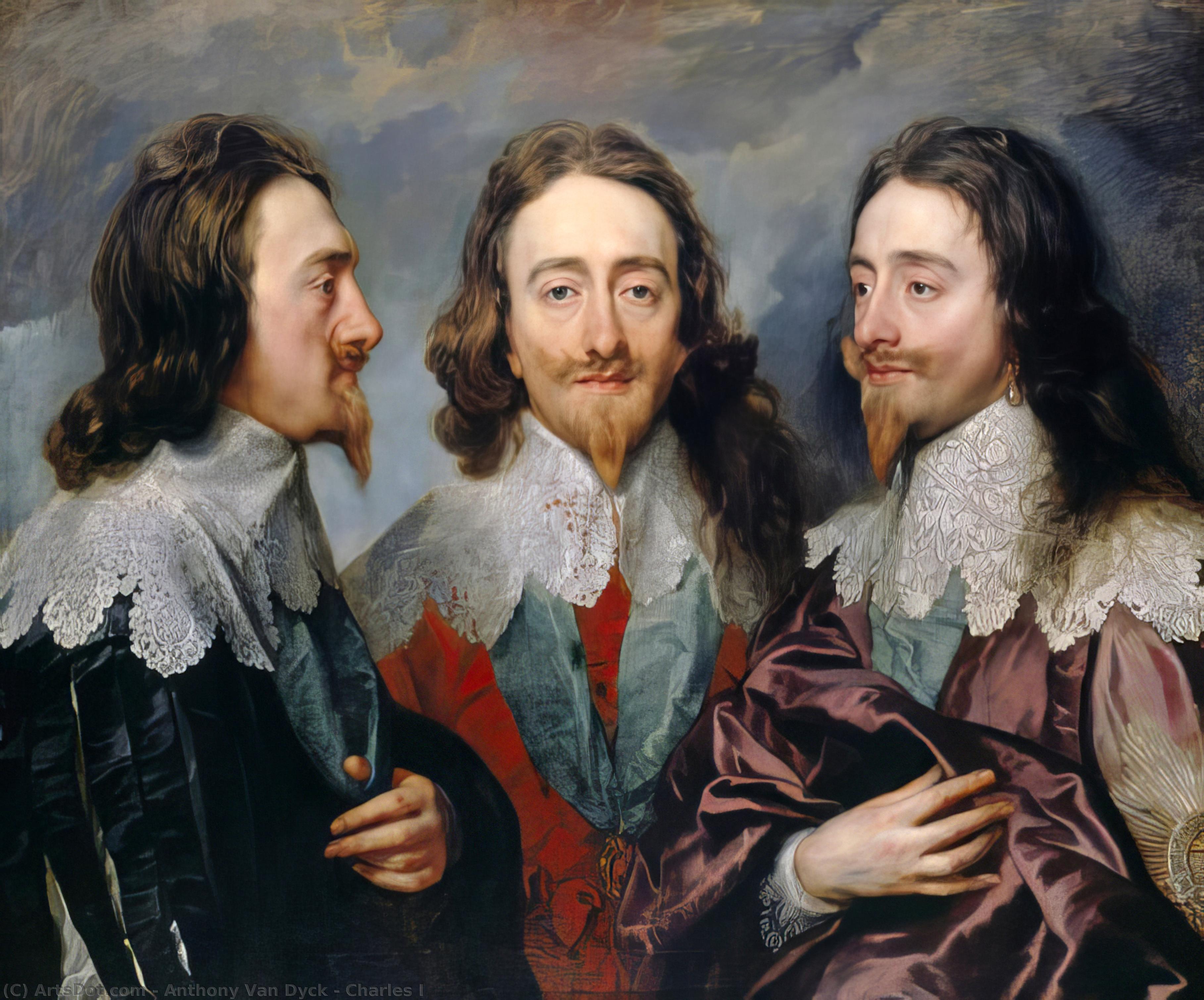
Charles I kolmessa asennossa (1636)
Eniten teoksia kohteessa
Bavarian State Painting Collections

Top 10: Antoon van Dyck's best-known paintings

Charles I kolmessa asennossa (1636) tekijä Antoon van Dyck
1

Charles I kolmessa asennossa

1636 · Öljyväri kankaalle · Royal Collection, Lontoo

Anthony van Dyckin maalittaja "Charles I kolmessa asennossa" on enemmän kuin pelkkä kuninkaan muotokuva; se on aikakauden, vallan ja yksilöllisyyden syväluotaava tutkimus. Maalaus, jonka luominen alkoi 1635-1636, on mestariteos, joka vangitsee englantilaisen kuningas Charles I:n monimutkaisuuden kolmen eri näkökulman kautta – täydellinen profiili, suora katse ja puoliväli. Tämä ei ole vain kuvaus, vaan kuninkaan persoonallisuuden ja valtakunnan symboliikkaa yhdistävä taiteellinen kokonaisuus.

Family Portrait (1621) tekijä Antoon van Dyck
2

Family Portrait

1621 · Oil On Canvas · Hermitage-museo, Pietari

To gaze upon this magnificent family portrait is to step directly into the opulent drawing rooms of the early seventeenth century. It captures not merely three figures—a distinguished man, an elegant woman, and a cherished child—but an entire tableau of familial pride and societal standing. The composition itself speaks volumes; every fold of fabric, every carefully placed hand, contributes to a narrative of enduring connection. The rich, dramatic red background…

Portrait of Isabella Clara Eugenia as Widow (1628) tekijä Antoon van Dyck
3

Portrait of Isabella Clara Eugenia as Widow

1628 · Oil On Canvas · Museo de Arte de Ponce, Ponce

Sir Anthony van Dyck’s “Portrait of Isabella Clara Eugenia as Widow” is more than just a depiction of a noblewoman; it's a carefully constructed tableau of power, grief, and the enduring legacy of a formidable ruler. Painted in 1628, this oil-on-canvas work transports us to the heart of the Spanish Netherlands during a period of significant political and personal upheaval. Isabella Clara Eugenia, daughter of Philip II of Spain, served…

Jacqueline van Caestre (1622) tekijä Antoon van Dyck
4

Jacqueline van Caestre

1622 · Oil On Panel · Royal Łazienki Museum, Varsova

The portrait of Jacqueline van Caestre, painted in 1622 by the masterful Sir Anthony van Dyck, is more than a mere likeness; it’s a carefully constructed tableau of wealth, status, and burgeoning domesticity. Within its richly layered composition lies a captivating story of a noblewoman navigating the complexities of marriage and courtly life in 17th-century Antwerp. Van Dyck, already establishing his signature style—characterized by an almost sensual realism and a…

Susanna and the Elders (1622) tekijä Antoon van Dyck
5

Susanna and the Elders

1622 · Öljyväri kankaalle · Alte Pinakothek, München

In the grand tapestry of the Flemish Baroque, few works capture the visceral intersection of vulnerability and voyeurism as profoundly as Sir Anthony van Dyck’s Susanna and the Elders. Painted around 1622, this monumental canvas is far more than a mere biblical illustration; it is a psychological drama frozen in time. The scene centers on Susanna, a figure of profound grace and purity, caught in a moment of harrowing intrusion.…

Genoese Noblewoman (1622) tekijä Antoon van Dyck
6

Genoese Noblewoman

1622 · Oil On Canvas · The Frick Collection, New York

Anthony van Dyck's "Genoese Noblewoman," painted circa 1625-1627, isn’t merely a portrait; it’s a meticulously crafted window into the opulent world of early 17th-century Genoa. This captivating work, now residing within The Frick Collection in New York City, offers a rare glimpse into the refined tastes and social dynamics of a wealthy Italian city-state – a vibrant hub of commerce, art, and cultural exchange during a period of immense artistic…

Henrietta Maria (1635) tekijä Antoon van Dyck
7

Henrietta Maria

1635 · Oil On Canvas

The gaze of Henrietta Maria meets the viewer through this commanding portrait by Anthony van Dyck. Executed in 1636, the work captures Henrietta Maria of France in a moment of poised royal dignity. She exists here as the Queen of England, a position she holds through her marriage to King Charles I. The painting functions as a visual declaration of her status and her presence within the English court.

Portrait of Queen Henrietta-Maria (1638) tekijä Antoon van Dyck
8

Portrait of Queen Henrietta-Maria

1638 · Oil On Canvas · Hermitage-museo, Pietari

To stand before this portrait is to encounter the quiet gravity of the seventeenth-century English court. The Queen stands slightly off-center, her figure anchored by the heavy weight of crimson drapery and a draped table. There is a certain stillness here, a moment caught between the political tensions of 1638 and the personal dignity of the sitter. Van Dyck uses light to sculpt her form, pulling her face and chest…

The healing of the paralytic (1620) tekijä Antoon van Dyck
9

The healing of the paralytic

1620 · Oil On Canvas · Bavarian State Painting Collections, München

In this oil painting, titled The healing of the paralytic, Anthony van Dyck explores a moment of profound spiritual intervention. The work, which dates to about 1618-20, captures the immediate aftermath of a miracle. We find ourselves witnessing the precise instant of transition between infirmity and restoration. The subject matter is drawn from the New Testament, specifically the narratives found in Matthew 9:1-8 or John 5:1-15.

Portrait of Alexandre della Faille (1589-1653) (1632) tekijä Antoon van Dyck
10

Portrait of Alexandre della Faille (1589-1653)

1632 · Oil On Canvas · Kuninkaalliset Taidemuseot Brysselissä, Bryssel

A dignified three-quarter length portrait, this work captures a middle-aged man positioned centrally against a dark, atmospheric background. The subject, Alexandre della Faille, is rendered with a sense of quiet authority and formal composure. A voluminous white ruff collar acts as the primary focal point, its crisp texture contrasting sharply against the heavy, dark fabric of his cloak. Light enters from the upper left, casting soft shadows across the right…

The rest of the Antoon van Dyck ranking, 11 to 100

The Pietà (1629) tekijä Antoon van Dyck
#12

The Pietà

1629 · Museo del Prado

Step closer to observe the weight of this scene. In this 1629 composition, we find the Virgin Mary cradling the limp, pale body of Christ. The arrangement is…

Order a reproduction →
The Lomellini Family (1627) tekijä Antoon van Dyck
#16

The Lomellini Family

1627

To stand before 'The Lomellini Family' is to step directly into the gilded drawing rooms of 17th-century Genoese aristocracy. Anthony van Dyck, a painter whose elegance seemed to…

Order a reproduction →
Moses and the Brazen Serpent (1530) tekijä Antoon van Dyck
#19

Moses and the Brazen Serpent

1530

Moses and the Brazen Serpent by Anthony van Dyck captures a moment of divine intervention from the Book of Numbers. The oil painting on canvas depicts the biblical…

Samson and Delilah (1630) tekijä Antoon van Dyck
#24

Samson and Delilah

1630 · Kunsthistorisches Museum

In the grand tapestry of the Flemish Baroque, few moments capture the tension between divine strength and human frailty as poignantly as Sir Anthony van Dyck’s Samson and…

Bring it home →
Charles I (1600-49) on Horseback (1635) tekijä Antoon van Dyck
#26

Charles I (1600-49) on Horseback

1635 · Hampton Court Palace

The scene unfolds with the commanding presence of Charles I (1600-49) on Horseback, a work by the artist Anthony van Dyck. Created in 1635, the portrait captures the…

Bring it home →
Cupid and Psyche (1640) tekijä Antoon van Dyck
#27

Cupid and Psyche

1640 · Royal Collection

Anthony van Dyck's "Cupid and Psyche," painted in 1640, is more than just a depiction of a mythological romance; it’s a distillation of the Baroque spirit – a…

Bring it home →
Queen Henrietta Maria of England (1620) tekijä Antoon van Dyck
#28

Queen Henrietta Maria of England

1620 · Bavarian State Painting Collections

In this three-quarter length portrait, Anthony van Dyck positions Queen Henrietta Maria of England slightly off-center. This subtle shift creates a quiet tension within the frame. A luminous…

Bring it home →
Queen Henrietta Maria of England (1639) tekijä Antoon van Dyck
#30

Queen Henrietta Maria of England

1639 · Statens Museum for Kunst

Queen Henrietta Maria of England, painted by Anthony van Dyck, captures the queen consort of Charles I. Dated 1636, the portrait presents the woman who was born in…

Bring it home →
Saint Sebastian and the Angel (1631) tekijä Antoon van Dyck
#31

Saint Sebastian and the Angel

1631 · Galleria Sabauda

A diagonal line cuts through the composition, pulling the eye from the descending angel down to the slumped, pale form of Saint Sebastian. The saint’s skin is luminous,…

Bring it home →
Portrait of a painter (1640) tekijä Antoon van Dyck
#32

Portrait of a painter

1640 · Kunstmuseum Basel

We are looking at Portrait of a painter, a work by Sir Anthony van Dyck. Created about 1640, this piece presents a man whose identity is tied closely…

Bring it home →
St Jerome (1620) tekijä Antoon van Dyck
#35

St Jerome

1620 · Nationalmuseum

The composition centers on the muscular, elderly figure of St. Jerome, positioned in a wilderness setting. His torso is partially exposed, draped in a voluminous red cloth that…

Order a reproduction →
Venetia, Lady Digby (1634) tekijä Antoon van Dyck
#36

Venetia, Lady Digby

1634

To stand before this magnificent portrait is to step directly into the dramatic heart of the seventeenth century. Sir Anthony van Dyck’s depiction of Venetia, Lady Digby is…

Order a reproduction →
Crucifixion (1622) tekijä Antoon van Dyck
#38

Crucifixion

1622 · San Zaccaria

Sir Anthony van Dyck's 1622 depiction of the Crucifixion is not merely a representation of a biblical event; it’s a visceral exploration of human suffering and spiritual anguish,…

Commission a hand-painted copy →
Ottaviano Canevari (1627) tekijä Antoon van Dyck
#40

Ottaviano Canevari

1627 · The Frick Collection

Sir Anthony van Dyck’s 1627 portrait of Ottaviano Canevari is more than simply a likeness; it's a carefully constructed tableau of intellect, status, and the quiet dignity of…

Bring it home →
Lamentation of Christ (1620) tekijä Antoon van Dyck
#41

Lamentation of Christ

1620 · Bavarian State Painting Collections

In this 1620 work, we find ourselves drawn into a tight, pyramidal arrangement of figures that centers entirely on the lifeless body of Christ. A heavy, sacred silence…

Commission a hand-painted copy →
Saint Sebastian (1620) tekijä Antoon van Dyck
#44

Saint Sebastian

1620 · Bavarian State Painting Collections

The oil on canvas known as Saint Sebastian is an artwork by Anthony van Dyck. Created about 1620, the painting captures a moment of martyrdom. The figure is…

Order a reproduction →
Sir Kenelm Digby (1640) tekijä Antoon van Dyck
#47

Sir Kenelm Digby

1640 · National Portrait Gallery

To gaze upon this portrait of Sir Kenelm Digby is to step directly into the opulent, charged atmosphere of the early seventeenth century English court. The subject, depicted…

Commission a hand-painted copy →
Portrait of an Old Man (1618) tekijä Antoon van Dyck
#49

Portrait of an Old Man

1618 · Liechtenstein Museum

Sir Anthony van Dyck's "Portrait of an Old Man," painted circa 1618, is more than a simple likeness; it’s a profound meditation on time, wisdom, and the quiet…

Order a reproduction →
Portrait of a Man (1922) tekijä Antoon van Dyck
#50

Portrait of a Man

1922 · Bavarian State Painting Collections

This work is a Portrait of a Man by the Flemish Baroque artist Anthony van Dyck. Dated 1922, the painting presents a formal, full-length composition. The subject is…

Order a reproduction →
Charles I in Three Positions (1636) tekijä Antoon van Dyck
#51

Charles I in Three Positions

1636 · Royal Collection

In the grand tapestry of Baroque portraiture, few works command the room with as much quiet authority as Sir Anthony van Dyck’s “Charles I in Three Positions.” Completed…

Order a reproduction →
Portrait of a Genovese Gentleman (1621) tekijä Antoon van Dyck
#53

Portrait of a Genovese Gentleman

1621 · Gemäldegalerie

To stand before this portrait is to step directly into the opulent, sophisticated world of early 17th-century European aristocracy. Sir Anthony van Dyck, the Flemish master whose brushstrokes…

Order a reproduction →
Portrait of a Man (1618) tekijä Antoon van Dyck
#58

Portrait of a Man

1618 · Liechtenstein Museum

Sir Anthony van Dyck's “Portrait of a Man,” painted circa 1618-1619, is not merely a likeness; it’s a carefully constructed meditation on presence and authority. This small yet…

Commission a hand-painted copy →
Marie de Raet (1631) tekijä Antoon van Dyck
#59

Marie de Raet

1631 · Wallace Collection

To stand before Marie de Raet is to be enveloped in the profound stillness of the early seventeenth century. This magnificent portrait by Sir Anthony van Dyck, dating…

Bring it home →
The Virgin and Child (1631) tekijä Antoon van Dyck
#63

The Virgin and Child

1631 · Buckingham Palace

In this Baroque oil painting, the Virgin Mary is positioned at the center of a pyramidal structure, cradling the Christ Child. She wears a rose-colored tunic beneath a…

Order a reproduction →
Lord George Stuart (1638) tekijä Antoon van Dyck
#64

Lord George Stuart

1638 · National Portrait Gallery

To gaze upon this portrait of Lord George Stuart is to step directly into the opulent, yet deeply thoughtful, world of early seventeenth-century English aristocracy. Sir Anthony van…

Order a reproduction →
Queen Henrietta Maria (1760) tekijä Antoon van Dyck
#66

Queen Henrietta Maria

1760 · Birmingham Museum and Art Gallery

In this oil on canvas work from 1636, Sir Anthony van Dyck presents Queen Henrietta Maria. The portrait captures the queen, who lived from 1609 to 1669, with…

Order a reproduction →
The Polish Rider (1620) tekijä Antoon van Dyck
#69

The Polish Rider

1620 · Bavarian State Painting Collections

The composition is dominated by the diagonal movement of the horse and rider. This movement creates a sense of forward momentum across the canvas. The subject is a…

Order a reproduction →
Kuningatar Henrietta Maria (1636) tekijä Antoon van Dyck
#73

Kuningatar Henrietta Maria

1636 · Metropolitan Museum of Art

Anthony van Dyckin vuonna 1636 maalaama ”Kuningatar Henrietta Maria” on paljon enemmän kuin pelkkä muotokuva; se on huolellisesti valmisteltu vallan, uskon ja 1600-luvun Europpaa määrittäneen monimutkaisen diplomaattisen tanssin…

Order a reproduction →
Lady Dacre (1633) tekijä Antoon van Dyck
#74

Lady Dacre

1633 · Denver Art Museum

Sir Anthony van Dyck’s “Lady Dacre” is not merely a portrait; it's a carefully constructed tableau of Renaissance elegance, imbued with subtle symbolism and the quiet dignity of…

Commission a hand-painted copy →
Charles i - (16) tekijä Antoon van Dyck
#76

Charles i - (16)

In this work, titled Charles i - (16), Anthony van Dyck presents a formal bust-length depiction of the monarch. The subject is Charles I, who held the titles…

Bring it home →
Deux têtes d (1650) tekijä Antoon van Dyck
#77

Deux têtes d

1650 · Musée des Beaux-Arts de Lyon

Sir Anthony van Dyck's "Deux têtes d" – literally, “Two Heads” – is not merely a painting; it’s an arresting tableau of psychological depth and subtle drama. Completed…

Bring it home →
Christ carrying the Cross tekijä Antoon van Dyck
#83

Christ carrying the Cross

Musei di Strada Nuova

In Christ carrying the Cross by Anthony van Dyck, the viewer is met with a tightly cropped, bust-length portrait. The composition focuses entirely on the upper torso and…

Bring it home →
Ecce Homo (1626) tekijä Antoon van Dyck
#85

Ecce Homo

1626 · The Barber Institute of Fine Arts

Sir Anthony van Dyck’s “Ecce Homo,” painted circa 1625-1626, is not merely a depiction of Christ before Pilate; it's an intensely human portrayal of sorrow, humility, and the…

Bring it home →
Margareta Snyders (1620) tekijä Antoon van Dyck
#86

Margareta Snyders

1620

To gaze upon Anthony Van Dyck's portrait of Margareta Snyders is to step directly into the opulent, emotionally charged world of the early seventeenth century. This painting, executed…

Bring it home →
Margareta de Vos (1620) tekijä Antoon van Dyck
#87

Margareta de Vos

1620 · The Frick Collection

Sir Anthony van Dyck’s “Margareta de Vos,” painted in 1620, is more than just a portrait; it's a meticulously crafted tableau of wealth, status, and subtle artistry. This…

Order a reproduction →
Portrait of a Man (1618) tekijä Antoon van Dyck
#90

Portrait of a Man

1618 · Liechtenstein Museum

In this formal portrait from 1618, Sir Anthony van Dyck presents a man positioned slightly off-center, facing forward to engage the viewer directly. The composition is characterized by…

Bring it home →
Portrait of James Hamilton (1630) tekijä Antoon van Dyck
#92

Portrait of James Hamilton

1630 · Liechtenstein Museum

A Noble Presence: Unveiling Anthony van Dyck’s Portrait of James Hamilton The image before you captures not merely a likeness, but the very essence of 17th-century power and…

Bring it home →
Kuningas Kaarle I hevosen selässä (1635) tekijä Antoon van Dyck
#93

Kuningas Kaarle I hevosen selässä

1635 · National Gallery

Anthony van Dyckin maalauksessa "Charles I hevosen selässä" (n. 1635) näemme paljon enemmän kuin pelkän kuninkaan kuvan. Kyseessä on mestariteos, joka vangitsee aikansa valtapolitiikan, kuninkaallisen statuksen ja taiteellisen…

Bring it home →
The Lomellini Family (1626) tekijä Antoon van Dyck
#96

The Lomellini Family

1626 · National Gallery of Scotland

To stand before Sir Anthony van Dyck’s “The Lomellini Family” is to step directly into the gilded drawing rooms of seventeenth-century Genoa, where the air feels heavy with…

Commission a hand-painted copy →
Samson ja Dalila (1620) tekijä Antoon van Dyck
#97

Samson ja Dalila

1620

Tämä voimakas mestariteos kuvaa elävästi raamatullista Samsonin ja Delilahin tarinaa vangiten käännekohdan, joka on täynnä jännitystä, petosta ja emotionaalista intensiteettiä. Kohtauksessa Delilah esiintyy katkeruuden ja päättäväisyyden sekoituksena, kun…

Order a reproduction →
Abraham and Isaac (1617) tekijä Antoon van Dyck
#98

Abraham and Isaac

1617 · Národní galerie Praha

Sir Anthony van Dyck's “Abraham and Isaac,” painted in 1617, is more than just a biblical scene; it’s a profound meditation on faith, obedience, and the agonizing weight…

Commission a hand-painted copy →
Portrait of Anna van Craesbecke (1635) tekijä Antoon van Dyck
#99

Portrait of Anna van Craesbecke

1635 · Staatliche Museen

Sir Anthony van Dyck’s “Portrait of Anna van Craesbecke,” painted in 1635, is more than just a likeness; it's a meticulously crafted tableau of aristocratic life and the…

Bring it home →
A wooded ridge (1630) tekijä Antoon van Dyck
#100

A wooded ridge

1630 · Art Gallery of South Australia

Sir Anthony van Dyck's "A Wooded Ridge," painted around 1630, isn’t merely a landscape; it’s an invitation into a hushed and contemplative realm. This evocative piece, rendered in…

Bring it home →

Antoon van Dyck's paintings by period

The subjects Antoon van Dyck painted most

The four subjects that return most often among these masterpieces, with the finest example of each.

Where to see Antoon van Dyck's paintings

Tämän sivun teoksista eniten sisältävät 8 museota.

Museo Kaupunki Antoon van Dyck teokset Tämän listan maalaukset
Bavarian State Painting Collections, MünchenBavarian State Painting Collections München 57 The healing of the paralytic, Equestrian Portrait of Charles I of England, Queen Henrietta Maria of England
Hermitage-museo, PietariHermitage-museo Pietari 25 Family Portrait, Portrait of Queen Henrietta-Maria, Portrait of Charles I, King of the Great Britain (1600-1649)
Royal Collection, LontooRoyal Collection Lontoo 29 Charles I kolmessa asennossa, Cupid and Psyche, Charles I in Three Positions
Liechtenstein Museum, WienLiechtenstein Museum Wien 23 Portrait of an Old Man, Portrait of a Man, Portrait of a Man
The Frick Collection, New YorkThe Frick Collection New York 8 Genoese Noblewoman, Ottaviano Canevari, Margareta de Vos
Wallace Collection, LontooWallace Collection Lontoo 9 Queen Henrietta Maria, Marie de Raet
National Portrait Gallery, LontooNational Portrait Gallery Lontoo 6 Sir Kenelm Digby, Lord George Stuart
Scottish National Portrait Gallery, EdinburghScottish National Portrait Gallery Edinburgh 5 Thomas Hamilton, 2nd Earl of Haddington, 1600 - 1640, Alexander Henderson (c.1583–1646), Presbyterian Divine and Diplomatist

Antoon van Dyck through the decades: one masterpiece for each

  1. 1610s
    The Martyrdom of Saint Sebastian (1616) tekijä Antoon van Dyck
    #45 of 100

    The Martyrdom of Saint Sebastian

    Ikä 11–20 · Bavarian State Painting Collections

    The Martyrdom of Saint Sebastian emerges from the shadows of the Baroque era, a religious work that captures a moment of profound transition. In this painting by Sir…

  2. 1620s
    Family Portrait (1621) tekijä Antoon van Dyck
    #2 of 100

    Family Portrait

    Ikä 21–30 · Hermitage-museo

    To gaze upon this magnificent family portrait is to step directly into the opulent drawing rooms of the early seventeenth century. It captures not merely three figures—a distinguished…

  3. 1630s
    Charles I kolmessa asennossa (1636) tekijä Antoon van Dyck
    Rank 1 / 100

    Charles I kolmessa asennossa

    Ikä 31–40 · Royal Collection

    Anthony van Dyckin maalittaja "Charles I kolmessa asennossa" on enemmän kuin pelkkä kuninkaan muotokuva; se on aikakauden, vallan ja yksilöllisyyden syväluotaava tutkimus. Maalaus, jonka luominen alkoi 1635-1636, on…

  4. 1640s
    Queen Henrietta Maria (1640) tekijä Antoon van Dyck
    No. 17 of 100

    Queen Henrietta Maria

    Ikä 41–42 · Wallace Collection

    The Queen sits in a moment of quiet poise, her figure angled slightly away from the viewer to create a sense of graceful movement. She is draped in…

Antoon van Dyck's paintings: frequently asked questions

What is the most famous Antoon van Dyck painting?Show the answer

Charles I kolmessa asennossa (1636), Royal Collection, Lontoo. Next come Family Portrait (1621) and Portrait of Isabella Clara Eugenia as Widow (1628).

At what age did Antoon van Dyck paint Charles I kolmessa asennossa?Show the answer

37 years old: Charles I kolmessa asennossa dates from 1636 and Antoon van Dyck was born in 1599.

Which are the 10 most famous Antoon van Dyck paintings?Show the answer

Charles I kolmessa asennossa, Family Portrait, Portrait of Isabella Clara Eugenia as Widow, Jacqueline van Caestre, Susanna and the Elders, Genoese Noblewoman, Henrietta Maria, Portrait of Queen Henrietta-Maria, The healing of the paralytic ja Portrait of Alexandre della Faille (1589-1653). The ranking above gives the year and the museum of each.

How many paintings by Antoon van Dyck are there?Show the answer

Our catalogue lists 1,620 works by Antoon van Dyck, dated from 1616 to 1641.

Where can I see the most famous Antoon van Dyck paintings?Show the answer

Most of them are in Bavarian State Painting Collections (München), Hermitage-museo (Pietari) ja Royal Collection (Lontoo). The table above lists the museums one by one.

In which period did Antoon van Dyck paint the best-known works?Show the answer

In 1630s: 44 of the 100 works on this page date from then, among them Charles I kolmessa asennossa.

What is the earliest famous Antoon van Dyck painting, and the latest?Show the answer

The earliest on this page is The Martyrdom of Saint Sebastian (1616), the latest Portrait of Prince Charles Louis, Elector Palatine (1641).

What subjects did Antoon van Dyck paint?Show the answer

Man (22), Portraiture (21) ja Portrait (17), among the 100 works on this page.

What did Antoon van Dyck paint on, and with what?Show the answer

Oil On Canvas: 75 of the 100 works on this page.

Which movement does Antoon van Dyck's art belong to?Show the answer

Baroque realism, as the paintings on this page show.

What Antoon van Dyck paintings does the Bavarian State Painting Collections hold?Show the answer

The healing of the paralytic, Equestrian Portrait of Charles I of England ja Queen Henrietta Maria of England are among the 10 works on this page held by the Bavarian State Painting Collections, München.

Where can I buy a Antoon van Dyck reproduction?Show the answer

Yes. Every painting on this page can be ordered as a museum-quality, hand-painted oil reproduction or a fine art print, in the size you choose, from the painting's own page.

Antoon van Dyck: biography

Varhaisluonnos, perhe ja taiteellinen kasvatus

Antwerpenissa 22. maaliskuuta 1599 syntynyt Sir Anthony Van Dyck astui maailmaan, jota hallitsivat kaupankäynti ja käsityöläisperinteet. Hän oli seitsemäs kaksitoista lapsesta, jotka Maria Cupers ja silkkikauppias Francoïs "Frans" van Dijck olivat saaneet. Tämä vauraassa taloudessa koettu kasvu loi vakaan pohjan lapselle, joka osoitti jo varhain poikkeuksellista ja ennenaikaista lahjakkuutta visuaalisiin taiteisiin. Jo kymmenvuotiaana hänen virallinen koulutuksensa maalaustaiteen parissa alkoi Hendrick van Balen vanhemman johdolla.

Hänen kehitystään leimasi nopea nousu flaamilaisen taidemaailman perinteisten rakenteiden läpi. Hän ei viipynyt pitkään pelkän oppilaan asemassa; tekninen taituruutensa mahdollisti siirtymisen kohti itsenäisyyttä hämmästyttävällä nopeudella. 18. lokakuuta 1617 hän saavutti merkittävän virstanpylvään pääsemällä Antwerpenin Pyhän Luukan veljekseen vapaaksi mestariksi. Tämä varhainen ammatillinen tunnustus ennusti lahjakkuuden saapumista, joka siirtyisi pian pian syntymäkaupunkinsa rajojen ulkopuolelle.

Peter Paul Rubensin vaikutus

Sir Anthony Van Dyckin uran suunta sai perustavanlaatuisen muotonsa hänen viettäessään aikaa Peter Paul Rubensin työpajassa. Kyseessä ei ollut pelkkä oppisopimus; nuori taiteilija nousi mestarinsa pääavustajaksi, tehtäväksi, joka vaati sekä teknistä tarkkuutta että kykyä omaksua monimutkainen visuaalinen kieli. Rubens itse tunnisti suojattinsa poikkeuksellisen lahjakkuuden ja kuvaili nuorta miestä yhdeksi parhaista oppilaistaan. Tämä mentorointi tarjosi Van Dyckille suoran yhteyden 1600-luvun johtaviin taiteellisiin virtauksiin, antaen hänelle mahdollisuuden seurata läheltä suurten kompositiokuvien syntyä ja tuottavan taidepajan hallintaa.

Rubensin vaikutus nuoreen taiteilijaan välittyi yhteisen keskittymisen kautta ilmeeseen, eleisiin ja muotoon. Vaikka Van Dyck kehitti myöhemmin hienostuneemman ja tyynemmän tyylin, hänen varhaiset vuotensa kuluivat mentorinsa energiaa ja tarkkaavaisuutta jäljittelemällä. Hän oppi kääntämään elämän elinvoiman öljyväreiksi ja pigmenteiksi – taidoksi, joka mahdollisti myöhemmin siirtymisen Rubensin tyylin voimakkaasta energiasta kohti jotain hienovaraisempaa. Tässä työpajassa luodut tekniset perusteet antoivat hänelle tarvittavat työkalut nousuun Euroopan kuninkaallisiin hoveihin.

Taiteelliset matkat Italiassa ja Genovassa

Nuorena aikuisena Sir Anthony Van Dyck oli jo saavuttanut menestystä itsenäisenä taiteilijana, saavutus, joka antoi hänelle tarvittavan sysäyksen jättää Alankomaat taakseen. Vuosien 1621 ja 1627 loppupuolen välisenä aikana hän vaelsi läpi Italian, aikakausi, joka hioi hänen kykynsä navigoida Euroopan aateliston monimutkaisissa sosiaalisissa hierarkioissa. Tämä matkustelu ei ollut pelkkää vaeltelua, vaan pikemminkin strategista uppoutumista Välimeren eliitin visuaaliseen kieleen.

Hänen viettämänsä aika Genovassa osoittautui erityisen merkittäväksi. Hän löysi säännöllisen asiakaskunnan genovalaisista patriisista, joiden aristokraattinen arvokkuus vastasi hänen kehittyvää tyyliään. Hänen kuvauksensa näistä paikallisista perheistä otettiin vastaan suurella suosiolla kaupungissa, mikä vakiinnutti hänen asemansa taiteilijana, joka kykenee vangitsemaan korkeataiteen vaatiman erityisen arvokkuuden. Näissä muotokuvissa hän siirtyi pelkästä fyysisestä muistijäljestä kohti mallien sosiaalista asemaa ja luonnetta.

Palvelus Englannin hovissa

Sir Anthony Van Dyckin yhteys Englannin kruunuun alkoi jo kauan ennen hänen pysyvää asettumistaan Lontooseen. Vuonna 1620 hän astui kuningas Jaakko I:n palvelukseen, lyhyt mittainen sitoumus, joka edelsi hänen laajoja matkojaan Italian ja Espanjan Alankomaihin. Nämä vuodet, jotka olivat täynnä liikettä ja vaihtelevia tilaustöitä, valmistelivat häntä syvällisempää kohtaamista varten. Vuoteen 1632 mennessä hän oli palannut Englantiin ja asettunut hoviin, jossa hänen maineensa ensiluokkaisena muotokuvamaalarina vakiintuisi lopullisesti. Samana vuonna hänet nimettiin kuninkaallisten "päämaalariksi", asema, joka nosti hänet osaksi kuninkaallisen elämän sydäntä.

Hänen läsnäolonsa Lontoossa muutti monarkian visuaalista kieltä peruuttamattomasti. Hän siirtyi pois menneisyyden jäykästä ja muodollisesta muotokuvataiteesta ja valitsi sen sijaan tavan esittää kuningas ja aristokratia vaivattoman tyylikkyyden ja auktoriteetin vallassa. Kyky vangita mallien luonne antoi hänelle mahdollisuuden nousta Englannin johtavaksi hovitaiteilijaksi. Hän ei ainoastaan tallentanut kasvoja; hän rakensi vallan kuvaa, joka vaikutti Englannin hoviin sukupolvien ajan. Hänen työnsä tältä ajalta loi arvokkuuden ja tyynen hallinnan tunnun, joka määritteli koko aikakauden estetiikan.

Tekniikka ja taiteellinen tyyli

Sir Anthony Van Dyck hallitsi teknisen monipuolisuuden, joka antoi hänelle vapauden liikkua saumattomasti öljyvärin voimakkaan kerroksellisuuden ja etsauksen tarkkojen, terävien viivojen välillä. Taitavana luonnostelijana hän ymmärsi rakenteellisen perustavanlaatuisuuden merkityksen; hän tiesi, että vahva pohjatyö on välttämätön ennen värin levittämistä kankaalle. Hänen kompositiot perustuivat usein mestarilliseen muotojen asetteluun, jossa dramaattinen valon ja varjon leikki määritteli kohteidensa ääriviivat. Tämä chiaroscuro-tekniikan käyttö loi teoksiin syvyyttä ja volyymia, mikä korostui erityisesti hänen uskonnollisissa ja mytologisissa kohtauksissaan, joissa valo tuntui nousevan pimeydestä tuodakseen esiin tietyn eleen tai ilmeen hienovaraisuuden.

Hänen väripalettiaan leimasi syvän kylläiset sävyt sekä äärimmäinen tarkkuus tekstuurien yksityiskohdissa. Olipa kyseessä silkin hienostunut kiilto tai ihon hienovarainen huokoisuus, hän säilytti tyylikkyyden, joka vältti monia aikansa kollegoita vaivaavan raskauden. Tämä tarkkuus ei rajoittunut ainoastaan virallisiin tilaustöihin; hänen kykynsä vangita liikettä ja luonnetta mahdollisti menestyksen hyvin erilaisissa genreissä, mytologisten kertomusten loistokkuudesta muotokuvien intiimiin psykologiseen syvyyteen. Hänellä oli erityinen lahjakkuus käyttää valoa vihjaamaan mallinsa sosiaaliseen asemaan tai sisäiseen temperamenttiin, hyödyntäen usein näyttäviä eleitä ja huolellisesti valittuja taustoja kehystämään yksilön olemuksen.

Perintö ja kestävä vaikutus

Sir Anthony Van Dyckin kuolema Lontoossa 9. joulukuuta 1641 merkitsi loppua uralle, joka oli jo muokannut eurooppalaisten hovien visuaalista kieltä peruuttamattomasti. Peter Paul Rubensin perintöä seuraten hän nousi seitsemännen vuosisadan merkittävimmäksi flaamilaiseksi maalariksi. Hänen läsnäolonsa Englannin hovissa loi muotokuvataiteen standardin, joka määritteli taiteen suunnan seuraavien 150 vuoden ajan. Hänellä oli ainutlaatuinen kyky määritellä kohteidensa sosiaalinen asema ja luonne hienostuneen tekniikan avulla, josta tuli mittapuu tuleville sukupolville taiteilijoita.

Hänen vaikutuksensa ulottui kauas Englannin rajojen ulkopuolelle. Koko aikakauden ajan hänen teoksensa harjoittivat syvää vaikutusvaltaa koko Euroopassa syntyvään taiteeseen. Tätä laajuutta ruokki hänen monipuolisuutensa; hän liikkui vaivatta uskonnollisten narratiivien vaatimusten ja aristokratian hienostuneiden tarpeiden välillä. Hän ei ainoastaan tallentanut kasvoja, vaan hän rakensi auktoriteetin ja sivistyneen eleganssin kuvan, josta tuli suosituin estetiikka niille, jotka pyrkivät viestimään valtaa ja statusta.

  • Charles I in Three Positions (1636)
  • The Balbi Children
  • Self-Portrait (1622)

Kaikki 1620 teosta taiteilijalta Antoon van Dyck →