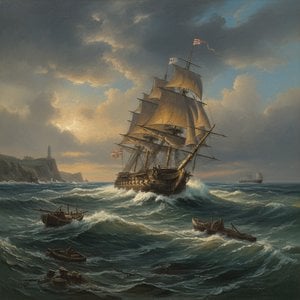
Thomas Heath Robinson: A Pioneer of Colour Illustration
Thomas Heath Robinson (1869–1954) stands as a pivotal figure in the history of British illustration, particularly renowned for his groundbreaking adoption and masterful execution of colour printing techniques. Born in London to Thomas Robinson Sr., a solicitor, and Eliza Jane (née Smith), he possessed an innate artistic talent nurtured by early exposure to sketching and drawing—skills that would ultimately define his illustrious career spanning over six decades. His formative years were marked by studies at Slade School of Fine Art, where he honed his observational skills and established a foundation for his distinctive style.
Robinson’s artistic sensibilities were profoundly shaped by the Pre-Raphaelites—a movement that championed idealized beauty and meticulous detail—whose aesthetic principles resonated deeply within him. This fascination with Victorian ideals of elegance and refinement permeated his entire oeuvre, informing both his compositional choices and his expressive use of colour. He sought to capture the sublime grandeur of the English landscape alongside the nuanced complexities of human emotion, mirroring the spirit of the Pre-Rafaelites’ artistic vision.
Early in his professional life, Robinson began collaborating with periodicals like *Family Magazine*, swiftly gaining recognition for his elegant line drawings and soon venturing into full colour printing. This bold decision was revolutionary at the time, establishing him as one of the first British illustrators to embrace chromolithography—a technique that would fundamentally transform the art of illustration. Unlike traditional etching or engraving methods which relied on tonal variations achieved through incising lines into metal plates, chromolithography utilized multiple layers of coloured stone lithographic plates—each meticulously prepared with pigments bound to binders—to produce vibrant hues and intricate patterns. This demanded exceptional precision and patience from the artist, necessitating painstaking corrections and adjustments throughout the printing process. Robinson’s mastery of this craft is evident in his depictions of Wordsworth's *Picturesque Rambles*, where he achieved astonishing levels of colour fidelity and textural richness—a testament to his artistic vision and technical prowess.
His commitment to chromolithography wasn’t merely a matter of technological innovation; it represented a fundamental shift in artistic practice. He meticulously studied the methods employed by masters like Rembrandt van Rijn, absorbing their techniques for capturing light and shadow with unparalleled realism. This influence is palpable in his portraits of members of the Grantham family—particularly Lord Grantham—where he skillfully rendered facial expressions and subtle gestures with remarkable sensitivity—a hallmark of his artistic style. Robinson’s illustrations for Dickens' *Oliver Twist* further showcased his versatility, capturing the bleakness of Victorian London with evocative tonal harmonies and expressive linework.
Robinson’s legacy extends far beyond his technical achievements; he fundamentally altered the landscape of illustration, paving the way for a new era of colour printing and influencing generations of artists. His pioneering spirit challenged conventional artistic norms and championed innovation—a testament to his enduring influence on British art history. Furthermore, his work serves as an invaluable window into Victorian society, reflecting its aesthetic ideals, social values, and cultural preoccupations. Through his evocative depictions of the English countryside and aristocratic families, Robinson immortalized a bygone era—solidifying his place among the foremost figures in the annals of British illustration.
Among his celebrated illustrations are depictions of landscapes from Wordsworth’s *Picturesque Rambles*, portraits of members of the Grantham family (including Lord Grantham), and scenes from Dickens' *Oliver Twist*—works that exemplify Robinson’s artistic versatility and enduring appeal. His meticulous attention to detail and expressive use of tonal harmonies conveyed mood and atmosphere with remarkable subtlety, mirroring the spirit of Pre-Raphaelite art. He continued to refine his technique throughout his career, mastering chromolithography and experimenting with new printing methods—a testament to his unwavering dedication to artistic excellence.
Robinson’s contribution to British art history is undeniable; he transformed illustration into a medium for conveying emotion and capturing beauty with unprecedented vibrancy—a legacy that continues to inspire contemporary illustrators today. His work stands as an enduring symbol of Victorian artistry, embodying the ideals of elegance, refinement, and meticulous observation—a testament to his artistic genius and lasting impact on British culture.