Lambert Glandorf: A Visionary Painter of Tallinn’s Legacy
Lambert Glandorf (born circa 1530, Germany) stands as a singular figure in Renaissance art—a painter whose fame rests primarily on a single masterpiece: the monumental epitaph he created for the Tallinn Brotherhood of Blackheads. This evocative depiction of Tallinn's Old Town, completed in 1561, transcends mere topographical representation; it embodies a profound symbolic engagement with history and faith, cementing Glandorf’s place as one of Estonia’s most important artistic voices.- Early Life & Artistic Training: Precise biographical details surrounding Glandorf's formative years remain elusive. Records indicate he was born in Lübeck, Germany—a thriving maritime city at the time—likely inheriting a tradition of craftsmanship and artistic patronage prevalent within its Hanseatic League orbit. While formal documentation is scarce, scholars believe he honed his skills under the tutelage of prominent Lübeck artists, absorbing influences from both Gothic and Early Renaissance styles.
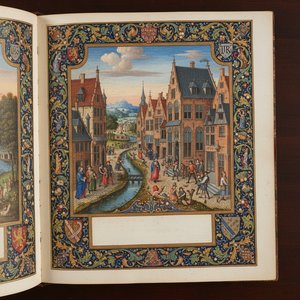
- The Tallinn Epitaph: The epitaph itself constitutes Glandorf’s crowning achievement. Commissioned to commemorate the tragic deaths of ten Blackheads during a siege by Ivan IV of Russia in 1560—a pivotal moment in Estonian history—the painting is far more than a memorial. It's a meticulously crafted panorama capturing Tallinn’s skyline at dusk, illuminated by candlelight and dominated by St Olaf’s Cathedral. The composition utilizes geometric precision combined with atmospheric perspective to convey not only the physical setting but also an emotional resonance reflecting the solemnity of remembrance.
- Style & Technique: Glandorf's artistic style is characterized by a masterful blend of Gothic and Renaissance elements. He employed oil paint on wood panel—a technique gaining popularity during his era—demonstrating considerable technical skill. The artist’s meticulous attention to detail, evident in the rendering of architectural features and drapery folds, reflects the humanist ideals championed by Renaissance thinkers. Furthermore, Glandorf skillfully utilized chiaroscuro—the dramatic interplay of light and shadow—to heighten emotional impact and imbue his painting with a sense of grandeur.
- Historical Significance & Legacy: The Tallinn Epitaph holds immense historical importance as it represents one of the earliest surviving views of Tallinn. It provides invaluable insight into the city’s architectural landscape during the Reformation period and serves as a testament to the Brotherhood's commitment to preserving their heritage. Beyond its visual splendor, the epitaph embodies the broader artistic spirit of the Renaissance—a preoccupation with realism, symbolism, and conveying profound spiritual truths. Glandorf’s work continues to inspire art historians and scholars alike, securing his reputation as a pivotal figure in Estonian art history.
- Further Research & Artistic Context: Despite the paucity of biographical information, ongoing research aims to illuminate Glandorf's artistic milieu. Comparative studies with other German Renaissance painters—particularly those active in Lübeck—reveal shared stylistic tendencies and intellectual currents. Examining Glandorf’s oeuvre alongside contemporary artworks underscores his contribution to the broader artistic dialogue of his time, solidifying his legacy as a visionary painter who captured the essence of Tallinn’s enduring spirit.