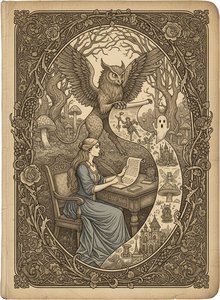
A Childhood Reverie: The Life and Art of Kate Greenaway
Kate Greenaway (17. maaliskuuta 1846 – 6. marraskuuta 1901) oli englantilainen lastenkirjailija ja kuvittaja. Greenawayn kuvitusten idylliset lapsihahmot saavuttivat omana aikanaan suuren suosion. Hahmojen kuvitteellinen, 1700-luvun tyylistä ideoita ammentava vaatetus sai 1800-luvun lopulla aikaan uuden lastenvaatumuodin. Vuonna 1955 Greenawayn kunniaksi perustettiin englanninkielisten lasten- ja nuortenkirjojen kuvittajille suunnattu kuvittajapalkinto Kate Greenaway -mitali. Greenaway syntyi Hoxtonissa, Lontoossa, ristimänimenään Catherine. Tätä nimeä hänestä ei kuitenkaan koskaan käytetty. Hänen isänsä John Greenaway oli painokuvien kaivertaja. Pian tyttärensä syntymän jälkeen hän sai tehtäväkseen kaivertaa Dickensin tarinoiden uuden laitoksen kuvitukset. Saadakseen työrauhan John Greenaway lähetti perheensä Lontoosta maaseudulle – joskin turhaan, sillä lopulta tilauksen tehnyt yritys päätyi konkurssiin ja hänen työnsä meni hukkaan. Joka tapauksessa Kate Greenaway vietti äitinsä ja sisarustensa kanssa kaksi vuotta lapsuudestaan sukulaisten luona Rollestonin kylässä Nottinghamshiressä. Rollestonin kylä maatöineen, hivenen vanhanaikaisine pukuineen ja vehreine luontoineen teki tyttöön suuren vaikutuksen ja vaikutti merkittävästi hänen myöhempään taiteeseensa.Forging a Unique Style: Influences and Artistic Development
Kate Greenaway’s artistic journey was not solely shaped by idyllic memories; it was also informed by rigorous academic training. She studied at several prominent art schools—the South Kensington School of Art, the Royal Female School of Art, and finally, the Slade School of Fine Art—where she honed her technical skills in graphic design and fine arts. However, Greenaway chafed against the strict emphasis on copying prevalent in these institutions. She sought to break free from rigid conventions, yearning for a more expressive and imaginative approach. This desire for artistic independence led her to explore alternative avenues, initially designing Christmas and Valentine’s cards—a burgeoning market at the time. A pivotal moment arrived with her collaboration with wood-block engraver Edmund Evans. Their partnership proved remarkably fruitful, resulting in publications that would redefine children's book illustration. Early influences included artists like John Leech, John Gilbert, and Kenny Meadows, whose work her father engraved, as well as the rich visual narratives found within illustrated editions of Shakespeare and fairy tales. But it was Greenaway’s ability to synthesize these influences with her own unique sensibility that truly set her apart.The “Kate Greenaway Style” and Lasting Achievements
The publication of Under the Window in 1879 marked a watershed moment, not only for Kate Greenaway but for the entire landscape of children’s literature. The book's immediate success established her signature style—a whimsical depiction of children adorned in elaborate 18th-century costumes, set against the backdrop of a charmingly idealized Queen Anne aesthetic. This “Kate Greenaway Style” quickly became immensely popular, imitated widely and influencing fashion, interior design, and decorative arts. Her illustrations weren’t merely pretty pictures; they were carefully constructed narratives that celebrated childhood play, domestic life, and beloved fairy tales with meticulous detail and a delicate watercolor technique. Following Under the Window, Greenaway continued to produce a prolific body of work throughout the 1880s and 1890s, including titles like A Posy Book, The Baby’s Book of Songs and Nursery Rhymes, and an alphabet book that further cemented her reputation. Her ability to capture a sense of innocence and nostalgia resonated deeply with Victorian audiences, offering a comforting escape from the realities of industrial life.A Legacy of Charm and Innovation
Kate Greenaway’s historical significance extends far beyond her artistic achievements. Her work reflected—and subtly challenged—the Victorian fascination with childhood innocence and idealized domesticity. While embracing traditional themes, she infused them with a sense of imaginative storytelling and expressive characterization that broke from strict realism. She revolutionized children's book illustration, establishing a new standard for artistic quality and narrative depth. Moreover, Greenaway’s success as a female artist in a male-dominated field paved the way for future generations of women illustrators and artists. Her illustrations continue to be celebrated today for their beauty, charm, and enduring appeal—a testament to her unique vision and lasting impact on Victorian aesthetics. She didn't just illustrate stories; she created worlds that invited readers to step into a realm of gentle fantasy and timeless grace.- Major Works: Under the Window, A Posy Book, The Baby’s Book of Songs and Nursery Rhymes.
- Key Characteristics: Depictions of children in 18th-century attire, Queen Anne style settings, delicate watercolor technique.
- Lasting Influence: Revolutionized children's book illustration, impacted fashion and design, inspired future generations of female artists.
Useful Links
- Kate Greenaway Collection: https://archives.lib.umn.edu/repositories/4/resources/2671
- Kate Greenaway -mitali: https://fi.wikipedia.org/wiki/Kate_Greenaway_-mitali
- Kate (nimi): https://fi.wikipedia.org/wiki/Kate_%28nimi%29
Kysymykset ja vastaukset
Mistä voin löytää tilastoja Kate Greenaway teoksista?
Tiedot Kate Greenaway:n teoksista löytyvät artistin Tilastot -sivulta.
Mitä värejä Kate Greenaway käytti useimmiten?
Kate Greenaway:n teosten värien käyttö tämä verkkosivusto-sivustolla on tarkasteltavissa artistin Paletin genomi -sivulla.
Missä ja minä vuonna Kate Greenaway on syntynyt?
Kate Greenaway syntyi Hoxtonssä vuonna 1846.