Józef Balzukiewicz: A Voice of Vilnius in Watercolor and Pastel
Born in Warsaw in 1867, Józef Balzukiewicz’s artistic journey unfolded across the vibrant landscapes and evolving cultural currents of Poland. Initially trained at the Wileńska Szkoła Rysunkowa iwana trutniewa (Wilno Drawing School of Ivan Trutnev) and later refined at the Cesarskiej Akademii Sztuk Pięknych (Imperial Academy of Fine Arts) in St. Petersburg, Balzukiewicz’s artistic development was shaped by both traditional Russian techniques and a burgeoning Polish national identity. His early exposure to the rigorous training of the Imperial Academy instilled a solid foundation in academic painting, while his time in Poland allowed him to explore themes deeply rooted in his homeland's history and spirit.
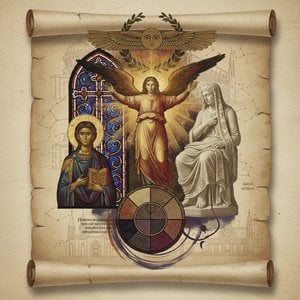
Balzukiewicz’s oeuvre is remarkably diverse, encompassing religious scenes, evocative landscapes, intimate portraits, and glimpses into everyday genre life. He skillfully employed a range of media – oil paint, meticulous ink drawings, delicate watercolors, and expressive pastels – each chosen to best convey the mood and subject matter of his work. This versatility speaks to an artist who wasn’t confined by stylistic boundaries but rather sought to capture the essence of his subjects with appropriate tools and techniques. His artistic style can be described as a blend of realism and impressionism, often imbued with a subtle melancholic quality.
A significant portion of Balzukiewicz's career was spent in Vilnius (Wilno), Lithuania, where he established himself as a respected artist and educator. He taught art classes at Czerepowiec, Russia, and later founded his own evening art school in Wilno, fostering the next generation of artists within the region. His involvement with the Wileńskie Towarzystwo Artystyczne (Wileński Artistic Society) provided him with a platform to exhibit his work and engage with other artistic circles. The society’s exhibitions offered valuable exposure and contributed to the recognition of Balzukiewicz's talent.
Key Works and Notable Paintings
Balzukiewicz’s legacy is particularly evident in his watercolor paintings, which offer intimate portraits of Vilnius life during the late 19th and early 20th centuries. “Subačiaus Street by the Missionaries’ Church in Vilnius” (1912) stands as a prime example of this style – a meticulously rendered scene capturing the bustling streetscape, the imposing church, and the everyday activities of its inhabitants. The painting is characterized by a remarkable attention to detail, a sense of retrospection, and a deep appreciation for historical accuracy. The use of muted colors and atmospheric perspective creates a powerful sense of place and time, transporting the viewer back to a bygone era.
Other notable works include numerous religious paintings depicting scenes from the Bible and depictions of saints, often imbued with a quiet piety and emotional resonance. His portraits captured the dignity and character of his subjects, ranging from distinguished gentlemen to humble villagers. Balzukiewicz’s landscapes, too, are noteworthy for their evocative quality, capturing the beauty of the Lithuanian countryside with a keen eye for light and shadow.
Influence and Historical Context
Balzukiewicz's work is deeply intertwined with the complex history of Poland and Lithuania during this period. The region had experienced periods of Russian rule and independence, and Balzukiewicz’s art reflects these shifting political realities. His paintings often subtly evoke a sense of national identity and pride, while also acknowledging the challenges faced by his people. The influence of both Russian academic traditions and Polish Romanticism can be discerned in his style, creating a unique artistic voice that is distinctly his own.
Furthermore, Balzukiewicz’s commitment to art education played a crucial role in shaping the artistic landscape of Vilnius. His evening art school provided opportunities for aspiring artists from diverse backgrounds to develop their skills and pursue their creative passions. His dedication to nurturing talent ensured that his legacy would continue long after his death in 1915.
Legacy and Recognition
Józef Balzukiewicz’s paintings are now housed in museums throughout Lithuania, including the National Museum of Art in Vilnius, and can also be found adorning churches within the city. His work offers a valuable window into the cultural and artistic life of Poland and Lithuania at the turn of the 20th century. Balzukiewicz's meticulous attention to detail, his evocative use of color, and his profound understanding of human experience continue to resonate with viewers today, solidifying his place as a significant figure in Polish art history.