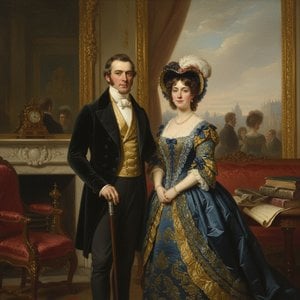
Joseph Gibbs: A Victorian Portraitist Capturing Delicate Beauty
Joseph Gibbs (1698 – 1788) remains a somewhat enigmatic figure in British art history, primarily recognized for his stunning portraits of young women—particularly Muriel Dorothy Windle. While overshadowed by contemporaries like Thomas Gainsborough and Joshua Reynolds, Gibbs’ meticulous observation and masterful technique secured him a place among the leading artists of the Georgian era. His work speaks volumes about the Victorian sensibility's fascination with innocence and idealized femininity.
Early Life & Training: Little is known definitively about Gibbs’ formative years. Records indicate he was born in Dedham, Essex, to a family involved in the textile trade. He apprenticed under John Sargent, a respected portrait painter, gaining invaluable experience in capturing likeness and conveying emotion through oil paint. This apprenticeship undoubtedly instilled in him the foundational skills necessary for achieving his remarkable artistic success.
Notable Commissions & Artistic Style: Gibbs achieved considerable renown during his lifetime, securing commissions from prominent families across England—a testament to his reputation as a skilled artist capable of delivering exceptional results. His distinctive style is characterized by its extraordinary realism—a hallmark of the Northern School of Painting—combined with a subtle atmospheric perspective that lends depth and luminosity to his canvases. Unlike Reynolds’ flamboyant brushstrokes, Gibbs prioritized smooth, blended surfaces meticulously rendering textures like hair, skin, and fabric. This deliberate approach ensured that each portrait conveyed not only physical appearance but also an intangible quality – a quiet grace and inner beauty that resonated deeply with viewers.
The Windle Portrait: Gibbs’ most celebrated work is undoubtedly the portrait of Muriel Dorothy Windle (1804 – 1875), commissioned by her father, Sir Henry Windle. This painting exemplifies Gibbs' artistic prowess. The delicate rendering of Muriel’s youthful face—her gaze serene and contemplative—is complemented by a beautifully detailed depiction of the surrounding woodland setting. Critics lauded Gibbs for capturing not just physical appearance but also an intangible quality of character – a quiet grace and inner beauty that resonated deeply with viewers, elevating portraiture beyond mere likeness into a profound exploration of human emotion. The meticulous attention to detail in Muriel’s expression and the atmospheric backdrop solidified Gibbs' place as one of the era’s foremost artists.
Influences & Legacy: Gibbs’ artistic vision was undoubtedly shaped by the prevailing aesthetic ideals of his time, mirroring Gainsborough’s commitment to naturalism. However, unlike Reynolds, he prioritized psychological insight alongside visual accuracy. This focus on capturing inner character—a crucial element absent in Reynolds' work—established Gibbs as a pioneer of Victorian portraiture. His legacy resides in his ability to transform the genre into an instrument for conveying profound emotional resonance and celebrating beauty—qualities that continue to inspire artists today.
Rediscovery & Appreciation: Gibbs’ oeuvre experienced a resurgence in interest during the late 19th century and early 20th century. Scholars recognized his contribution to British art history and championed his artistic achievements, acknowledging him as a significant figure within the Northern School of Painting. Today, Gibbs’ portraits are housed in museums across Europe and North America—testaments to their timeless appeal and enduring significance as masterpieces of Victorian realism. His work continues to be studied and admired for its masterful technique and evocative portrayal of human emotion.