


x
Born Moishe Chagall in Vitebsk, Belarus (then part of the Russian Empire) on July 7, 1887, Marc Chagall’s life was a vibrant tapestry woven with threads of Jewish heritage, artistic experimentation, and profound emotional expression. His early years were marked by poverty and upheaval – his family moved frequently, reflecting the shifting borders of Eastern Europe. This itinerant existence instilled in him a deep appreciation for movement and change, themes that would become central to his art. His father, a herring merchant, provided a modest but stable home, while his mother, Brurya, nurtured his love of storytelling and folklore – elements crucial to understanding the fantastical quality of his later works.
Chagall’s artistic journey began modestly, with lessons from a local painter, Jehuda Pen. However, it was his time in Saint Petersburg that truly ignited his creative fire. He enrolled in several academies, immersing himself in the study of anatomy and perspective, yet he quickly found these rigid structures stifling. It was during this period that he encountered the revolutionary ideas of the Parisian Avant-Garde – Fauvism with its bold colors and Cubism’s fragmented forms – profoundly influencing his artistic approach. He secured a grant to travel to Paris in 1911, an event that irrevocably altered the course of his career.
Paris became a crucible for experimentation. Chagall found himself amidst a constellation of artists: the Delaunay brothers, Léger, Soutine, Lipchitz, and writers like Apollinaire and Max Jacob. He embraced the dynamism of Montparnasse, absorbing influences from Futurism and exploring new techniques in printmaking and collage. His early Parisian works, such as “Maternity” (1914), demonstrate a shift towards brighter colors and simplified forms, reflecting his desire to capture emotion rather than strict realism. The war years brought hardship – Chagall’s family was separated, and he struggled financially, yet this period also fueled his artistic intensity.
Following the Russian Revolution of 1917, Chagall briefly embraced the ideals of social change, serving as a commissioner for fine arts in Vitebsk. However, his attempts to introduce modern art were met with resistance from conservative officials and Suprematist artists like Malevich, leading to his exile. He moved to Moscow in 1920, where he found work decorating the Jewish Theatre, a project that provided him with both financial stability and creative freedom. This period produced some of his most powerful works, characterized by bold colors, dynamic compositions, and recurring motifs – lovers dancing, biblical scenes, and symbolic figures representing his family and heritage.
In 1922, Chagall returned to Paris, seeking a more stable environment for himself and his family. He established a studio in Montparnasse, continuing to develop his distinctive style while also experimenting with new media. His work during this period explored themes of memory, loss, and the complexities of identity. The influence of Surrealism became increasingly apparent, as he began incorporating dreamlike imagery and symbolic narratives into his paintings. Major works from this era include “I and the Village” (1916-17) and "The Yellow Diary" series (1908-1914), which offer poignant glimpses into his personal life and artistic process.
Born in Llanelly, Wales, on February 27, 1887, James Dickson Innes was a remarkably talented landscape painter who captured the ethereal beauty of the Welsh countryside with an unparalleled sensitivity to light and color. His life, tragically cut short at the age of twenty-seven, remains shrouded in some mystery, yet his evocative paintings continue to resonate with viewers today.
Innes’s early years were spent in a modest farming community, surrounded by the natural beauty of the Brecon Beacons. He received a rudimentary education but developed a keen eye for observation and a deep appreciation for the rhythms of nature. His artistic inclinations were nurtured through family encouragement and exposure to local art circles. He studied at the Carmarthen School of Art and later at the Slade School of Art in London, where he honed his technical skills and broadened his artistic horizons.
Innes’s style was characterized by a luminous palette and an almost Impressionistic approach to capturing light and atmosphere. He eschewed academic conventions, opting instead for a direct and expressive manner that prioritized emotional impact over precise representation. His paintings are imbued with a sense of tranquility and wonder, inviting the viewer to lose themselves in the beauty of the Welsh landscape.
Despite his talent, Innes struggled financially throughout much of his career. He exhibited sporadically at the New English Art Club and other galleries, but he never achieved widespread recognition during his lifetime. His untimely death in August 1914, during World War I, robbed the art world of a promising artist with a unique vision.
Born Jean Georges Rouault on December 30, 1871, in Chatou, France, Georges Rouault’s life was marked by a profound sense of isolation and a deep engagement with the spiritual. He developed his artistic talent largely in solitude, producing intensely personal and emotionally charged works that explored themes of suffering, faith, and mortality.
Rouault's early career began as a commercial artist, working for various printing firms in Paris. However, he soon abandoned this lucrative path to pursue his own artistic vision. He was largely self-taught, relying on his innate talent and relentless experimentation to develop his distinctive style. His work is characterized by its somber palette, simplified forms, and expressive brushwork – a deliberate rejection of the vibrant colors and dynamic compositions favored by many of his contemporaries.
In 1914, Rouault began a close collaboration with Ambroise Vollard, an influential art dealer who provided him with financial support and access to the Parisian art world. Vollard’s patronage allowed Rouault to focus entirely on his art, producing a prolific body of work during this period. He created numerous prints, including illustrations for Alfred Jarry's *Ubu Roi*, which became a defining feature of his oeuvre.
During World War I, Rouault retreated from the public eye, dedicating himself to painting and printmaking in relative isolation. His works from this era are particularly poignant, reflecting the horrors of war and the fragility of human existence. He continued to explore themes of faith and suffering throughout his career, creating a series of paintings depicting biblical scenes and portraits of ordinary people.
Despite his artistic achievements, Rouault remained largely unknown during his lifetime. He died in 1937, leaving behind a vast and deeply moving body of work that has since been recognized as one of the most important contributions to modern art. His paintings offer a unique perspective on the human condition – a testament to the power of art to confront darkness and illuminate the mysteries of life.

Explore the life & art of Rafael de Penagos, a leading Spanish Art Deco illustrator. Discover his iconic 'Penagos Woman', commercial work, and lasting legacy. Learn about this pivotal figure in 20th-century Spanish art history.
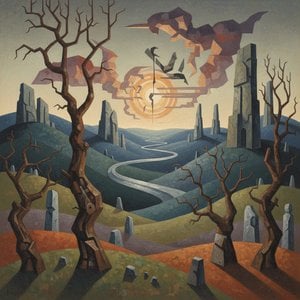
Explore the evocative landscapes & poignant war art of Paul Nash (1889-1946), a key figure in British Modernism. Discover his unique style and lasting impact on art history with WahooArt.

Explore the art & culture of 1876 – a pivotal year! Discover American Impressionism, Realism's rise, and influential artists like Chase, Corot, and Miller. Expert insights at WahooArt.


Pysy ajan tasalla uusimmista taideuutisista, eksklusiivisista tarjouksista ja sisustusideoista.
Kerro meille projektistasi, niin taideasiantuntijamme tarjoavat sinulle kolme henkilökohtaista taidesuositusta.
Anna meidän kuratoida 3 vaihtoehtoa juuri sinulle – Ilmaiseksi!


