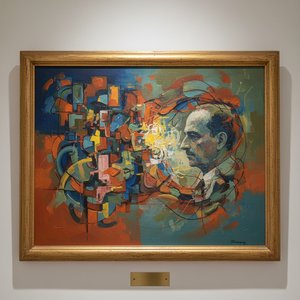
José María Aguirre Oraa: A Patriot Painter Bridging Baroque Legacy and Revolutionary Spirit
José María Aguirre Oraa (1783 – 1847) stands as a pivotal figure in Argentine art history, embodying both the grandeur of neo-baroque aesthetics and unwavering dedication to national independence. Born in Santa Fe, Argentina, he emerged from a milieu steeped in intellectual ferment—the burgeoning Enlightenment ideals colliding with the simmering discontent over colonial rule—a confluence that profoundly shaped his artistic vision and political convictions. This biography delves into Aguirre Oraa’s life journey, exploring his formative years, artistic evolution, involvement in pivotal historical events, and enduring legacy as an artist and patriot.
Early Life and Artistic Formation
Aguirre Oraa's upbringing instilled within him a deep appreciation for classical learning and humanist values. He pursued studies at the Universidad Nacional de Buenos Aires, immersing himself in philosophy, literature, and history—disciplines that would later inform his artistic sensibilities. However, it was not solely academic pursuits that nurtured his talent; he possessed an innate inclination towards visual arts, honing his skills through self-instruction and experimentation. Influenced by European baroque masters like Rubens and Rembrandt, Aguirre Oraa embraced the stylistic conventions of his time, prioritizing dramatic chiaroscuro, opulent ornamentation, and meticulous detail—techniques characteristic of a movement striving to recapture the emotional intensity and grandeur of the Renaissance.
The Revolutionary Artist: Engagement with Argentine Nationalism
Aguirre Oraa’s artistic career coincided with Argentina's tumultuous struggle for independence from Spain. Recognizing the importance of disseminating nationalist sentiment, he actively participated in literary circles and engaged in debates concerning the nation’s future trajectory. More importantly, he joined the May 1810 Revolution—a daring uprising against royal authority that established the Primera Junta—Argentina’s first constitutional government. This commitment to republican ideals fueled his artistic endeavors, inspiring him to depict scenes of heroism, patriotism, and resistance against oppression. His canvases became vehicles for conveying the spirit of liberation and commemorating pivotal moments in Argentine history.
Campaigns Against Paraguay and Uruguay: Artistic Expression Amidst Conflict
Aguirre Oraa’s patriotic fervor extended beyond Buenos Aires' borders. He tirelessly championed Argentina’s cause during subsequent military campaigns against Paraguay (1816-1825) and Uruguay (1827), serving as a lieutenant colonel in the Ejército Libertador Argentino. Amidst the exigencies of warfare, he continued to produce artwork—primarily religious paintings—demonstrating his unwavering faith and artistic prowess. His depictions of saints and biblical narratives resonated with the moral convictions of the era, reflecting the fervent desire for spiritual renewal amidst political upheaval. Notably, Aguirre Oraa’s influence extended beyond his own canvases; he mentored younger artists, fostering a stylistic tradition that prioritized dramatic composition and emotive rendering—traits evident in works by Candido López, particularly “Column of Argentine Forces Led by General Emilio.”
Notable Works and Artistic Legacy
Aguirre Oraa's artistic output encompasses a diverse range of subjects—religious iconography, portraits, landscapes—each imbued with meticulous attention to detail and expressive dynamism. His masterpiece, "Holy Friday," exemplifies his mastery of neo-baroque technique, capturing the solemn grandeur of the liturgical celebration while conveying profound spiritual contemplation. The painting’s masterful use of light and shadow underscores Aguirre Oraa's commitment to artistic realism—a stylistic hallmark that distinguishes him from more sentimental or decorative tendencies prevalent in contemporary art. His legacy persists today, enshrined in museums across Argentina—most notably the Municipal Museum of Art of La Plata—where visitors can admire his enduring contribution to Argentine visual culture.
Concluding Reflections
José María Aguirre Oraa’s life and artistic endeavors stand as a testament to the intersection of intellectual idealism and patriotic conviction. He navigated the complexities of his time with courage, integrity, and unwavering devotion to Argentina's aspirations for liberty—qualities that transcended stylistic boundaries and cemented his place among Argentina’s most distinguished artists. His paintings continue to inspire admiration for their artistic excellence and serve as poignant reminders of a pivotal chapter in Argentine history—a history shaped by the spirit of revolution and illuminated by the enduring beauty of neo-baroque art.