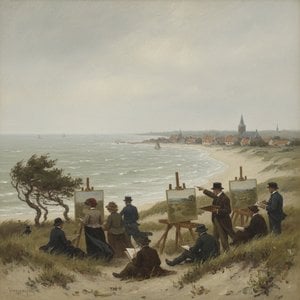
Jan Weissenbruch: Hollantilaisen tunnelmallisuuden mestari
Varhaiset vuodet ja taiteelliset ensiaskeleet
- Syntynyt: 19. kesäkuuta 1824, Haagi, Alankomaat.
- Jan Weissenbruch syntyi taiteelliseen perheeseen; hänen isänsä, Johannes Weissenbruch, oli maalari ja taidekeräilijä.
- Isän laajennettu kokoelma altisti hänet jo nuorena Andreas Schelfhoutin ja Bartholomeus van Hovehin kaltaisten mestareiden teoksille, mikä jätti syvän jäljen hänen taiteelliseen näkemyksensä.
- Hän aloitti piirustustunnit Johannes Low’n johdolla kuudentoistavuotiaana ja osallistui myöhemmin iltakursseille Haagien taideakatemiassa vuonna 1843, joita opetti Bartholomeus van Hove.
Taiteellinen kehitys ja vaikutteet
- Varhaiset vaikutteet: Weissenbruchin varhaiset työt muistuttivat voimakkaasti Andreas Schelfhoutin romanttista tyyliä.
- Ruisdaelin merkitys: Hän ihaili syvästi 1600-luvun maisemamaalari Jacob van Ruisdaelia, jonka teoksia hän opiskeli Haagissa sijaitsevassa Mauritshuis-museossa. Tämä inspiroi häntä luomaan upeita ja dramaattisia taivaita.
- Evoluutiota tyylissä: Ajan myötä Weissenbruchin värien käyttö muuttui hillitymmäksi, ja hänen maalaustapansa muuttui leveämmäksi ja vapaammaksi, mikä johti entistä tunnelmallisempien maisemien syntymiseen.
- Tunnelmalliset maisemat: Weissenbruch on tunnettu kyvystään vangita maalauksissaan valon ja ilmakehän hienovaraiset vivahteet.
- Akvarellimestaruus: Häntä arvostettiin erityisesti poikkeuksellisista akvarellitaidoistaan, joiden avulla hän loi herkkiä ja puhuttelevia näkymiä.
- Haagien koulukunnan edustaja: Hänen työnsä ilmentää Haagien koulukunnan ydintä – keskittymistä hollantilaisen luonnon ja arkipäivän realistiseen kuvaukseen.
- Hän esitteli ensimmäisen kerran työnsä "Living Masters" -näyttelyssä vuonna 1847, mikä merkitsi hänen virallista sisääntuloaan taidemaailmaan.
- Perustajajäsen: Weissenbruch oli yksi Haagien arvostetun Pulchri Studio -taideyhdistyksen perustajista.
- Varhainen tunnustus: Jo vuonna 1849, vain kaksi vuotta ensimmäisen näyttelynsä jälkeen, Haarlemin Teylers Museum hankki yhden hänen panoraamamaalauksistaan.
- Merkittäviä maalauksia: Hänen tunnetuimpien teostensa joukkoon kuuluvat muun muassa ”Shipping Canal at Rijswijk”, ”Landscape with Mill near Schiedam” ja ”Forest View Near Barbizon”.
- Barbizonin vaikutus: Vuonna 1900, seitsemänkymmenvuotiaana, Weissenbruch matkusti Barbizoniin, Ranskaan, missä hän maalasi kuuluisan ”Forest View Near Barbizon” -teoksensa.
- Työ ulkoilmassa: Hän suosi ulkona maalaamista ja löysi jatkuvaa inspiraatiota Haagia ympäröivästä maaseudusta.
- Kuolema ja muisto: Jan Weissenbruch kuoli vuonna 1903 jättäen jälkeensä perinnön yhtenä Haagien koulukunnan merkittävimmistä edustajista. Hänen herkkä siveltimenvetonsa ja hillitty väripalettinsa jatkavat taiteen ystävien lumoamista vielä tänäkin päivänä.
- Hollantilainen maisemaperinne: Weissenbruchilla oli elintärkeä rooli hollantilaisen maisemamaalauksen perinteen jatkamisessa, rakentaen edeltävien mestareiden, kuten Ruisdaelin, perinnölle.
- Haagien koulukunnan panos: Hänen työnsä auttoi määrittelemään Haagien koulukunnan esteettisiä ja filosofisia periaatteita, korostaen realismia, tunnelmaa ja yhteyttä luontoon.
- Kestävä vaikutus: Hän säilyy tärkeänä hahmona hollantilaisessa taidehistoriassa inspiroiden sukupolvia maisemamaalareita herkillä kuvauksillaan luonnon maailmasta.
Keskeiset piirteet ja taiteellinen tyyli
Merkittävät teokset ja näyttelyt
Myöhäisvuodet ja perintö
Historiallinen merkitys
Kysymykset ja vastaukset
Voinko tutkia Jan Weissenbruch teoksia aiheen mukaan?
Jan Weissenbruch:n teoksia voi tutkia aiheen mukaan artistin Aiheatlas -sivulla.
Onko Jan Weissenbruch esittelyssä aikajärjestyksessä?
Jan Weissenbruch:n tuotannon kronologinen esitys löytyy taiteilijan Kronikka -sivulta, jossa teokset etenevät luomisjärjestyksessä luku luvulta.
Missä ja minä vuonna Jan Weissenbruch on syntynyt?
Jan Weissenbruch syntyi Haagassä vuonna 1824.
Mistä Jan Weissenbruch on kotoisin?
Jan Weissenbruch on syntynyt Alankomaat.
Mistä voin nähdä kaikki taideteokset, jotka ovat Jan Weissenbruch tekemiä?
Jokaisen tämä verkkosivusto-sivustolla olevan Jan Weissenbruch teoksen voi selata artistin Kaikki teokset -sivulta.
Voinko selata Jan Weissenbruch teoksia tunnelman mukaan?
Taiteilijan Tunnelman mukaan -sivulla Jan Weissenbruch:n teokset on järjestetty niiden tunnelman mukaan.
Missä kaupungissa ja maassa Jan Weissenbruch on syntynyt?
Jan Weissenbruch on syntynyt Haaga, Alankomaat.