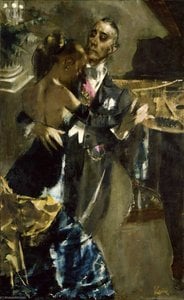
Jack Levine: A Life in Social Realism
Early Life and Education
- Born: January 3, 1915, Boston, Massachusetts.
- Levine grew up in the South End of Boston, observing a vibrant street life composed largely of European immigrants and marked by poverty. These early experiences profoundly shaped his artistic vision.
- Formal Training: He began studying drawing with Harold K. Zimmerman from 1924-1931. From 1929 to 1933, he studied at Harvard University under Denman Ross alongside Hyman Bloom.
- Even as an adolescent, Levine demonstrated exceptional draftsmanship, earning early recognition from Denman Ross who included his work in exhibitions and provided financial support.
Artistic Influences and Development
- Early Influences: Levine’s formative years were influenced by artists like Hyman Bloom, Chaïm Soutine, Georges Rouault, and Oskar Kokoschka.
- He became associated with Boston Expressionism, a style characterized by emotional intensity and expressive distortion.
- WPA Years: From 1935 to 1940, Levine worked for the Works Progress Administration (WPA), which provided crucial support for artists during the Great Depression. This period allowed him to focus on his art and develop his social commentary.
- European Influences: A Fulbright grant in 1951 took him to Europe, where he was deeply affected by the Mannerism of El Greco, inspiring him to exaggerate forms for expressive effect.
Themes and Style
- Social Commentary: Levine is best known for his biting satires on modern life, political corruption, and societal ills. His work often critiques power structures and exposes hypocrisy.
- Biblical Narratives: He frequently revisited biblical themes, offering unique interpretations of classic stories.
- Distinct Style: Levine’s style is characterized by expressive figures, dramatic compositions, and a keen eye for detail. His paintings often possess a sense of theatricality and psychological depth.
Major Achievements and Recognition
- Early Exhibitions: He had his first New York exhibition at the Museum of Modern Art in 1936, showcasing works like “Card Game” and “Brain Trust.”
- Controversial Work: His painting "Welcome Home" (1946) sparked controversy when displayed in Moscow due to its perceived criticism of military power.
- Museum Acquisitions: Numerous museums acquired his work, including the Metropolitan Museum of Art and the Whitney Museum of American Art.
- National Academy of Design: Elected into the National Academy of Design as an associate member in 1979 and became a full academician in 1982.
- In 1973, the Vatican purchased his painting “Cain and Abel,” to the satisfaction of Pope Paul VI.
Historical Significance and Legacy
- Social Realism Pioneer: Jack Levine is considered a pivotal figure in American Social Realism, using his art as a platform for social and political commentary.
- Lasting Impact: His work continues to resonate with audiences today, offering insights into the complexities of 20th-century society.
- Estate Representation: The estate of Jack Levine is represented by DC Moore Gallery, ensuring his legacy endures through continued exhibitions and scholarship.
- Levine died on November 8, 2010, in Manhattan, New York, at the age of 95, leaving behind a significant body of work that continues to be studied and admired.
Kysymykset ja vastaukset
Mistä löytää Jack Levine's teokset ryhmiteltynä avainsanojen mukaan?
Löytääksesi tiettyyn teemaan liittyviä Jack Levine teoksia, käytä taiteilijan Avainsanojen mukaan -sivua, joka ryhmittelee teokset avainsanojen mukaan.
Mistä löydän Jack Levine teokset ryhmiteltynä tekniikan mukaan?
Löytääksesi kaikki Jack Levine teokset tietyssä tekniikassa, käytä taiteilijan Kaikki tekniikat -sivua.
Onko Jack Levine teoksista saatavilla aikajana?
Jack Levine'n teokset ovat nähtävissä aikajärjestyksessä artistin Teosten aikajana -sivulla.