Early Life and the Grand Tour
Harriet Cheney’s story begins not in a bustling studio, but amidst the opulence and privilege of 18th-century Durham, England. Born in September 1771 to Isabella Byrne and Ralph Carr – a merchant and banker – her childhood was steeped in wealth and social standing. The Carr family were prominent figures, landowners with extensive interests including shipping, banking, and coal mining, establishing a legacy that would profoundly shape Harriet’s early life. While details of her upbringing remain somewhat sparse, it's known she received artistic instruction from John “Warwick” Smith before her marriage, laying the foundation for her future career as a watercolorist and portrait painter.
In 1791, at the tender age of twenty, Harriet embarked on an extraordinary journey – the Grand Tour. Alongside her brother, John, she traveled to Italy, a transformative experience that would irrevocably alter her artistic sensibilities and subject matter. This wasn’t merely a leisurely excursion; it was a carefully orchestrated event designed to refine her tastes, broaden her cultural horizons, and ultimately, hone her skills as an artist. The Carr family's considerable wealth allowed them to immerse themselves in the heart of Roman society, gaining access to galleries, meeting influential figures, and absorbing the artistic traditions of the era. The journey was fraught with challenges – a bout of illness in Geneva necessitated a detour, and the looming threat of war forced a protracted return to England. Yet, amidst these difficulties, Harriet’s artistic development flourished.
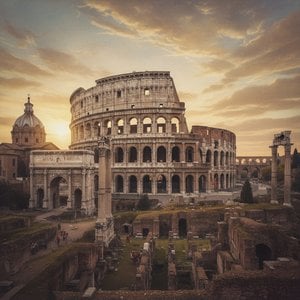
Her time in Rome proved pivotal. She spent nearly six months exploring the city's iconic landmarks, meticulously copying works by Old Masters within the Vatican and other prestigious institutions. This practice wasn’t simply about imitation; it was a rigorous exercise in observation, composition, and technique – essential skills for any aspiring artist. While the exact nature of her artistic mentors remains debated by modern scholars, there is evidence suggesting she received instruction from Jacobin artists who had fled to Florence during the tumultuous years following the French Revolution. Her experiences were documented through letters sent home to her family, revealing a keen eye for detail and a growing fascination with capturing the essence of Roman life.
A Life in Art: Portraits and Landscapes
Upon her return to England in 1794, Harriet continued to pursue her artistic endeavors with unwavering dedication. She established herself as both a portrait painter and a landscape artist, catering to a diverse clientele that included members of the British aristocracy and wealthy merchants. Her portraits were particularly admired for their realism and sensitivity, capturing the personalities and nuances of her subjects with remarkable skill. She produced numerous likenesses of prominent figures, including Emma, Lady Hamilton, and Georgina, Duchess of Devonshire – works that offer valuable insights into the social dynamics and artistic tastes of the era.
However, it was her landscapes that truly distinguished her work. Harriet’s watercolors of Roman scenes—particularly those depicting the Bay of Naples and the surrounding countryside—are characterized by their serene beauty and atmospheric depth. She skillfully employed light and shadow to evoke a sense of tranquility and grandeur, transporting viewers to the heart of Italy. These paintings are not merely representations of physical locations; they are imbued with a spiritual quality, reflecting Harriet’s deep appreciation for nature and her belief in its restorative power. The influence of classical art is evident in her compositions, which often incorporate elements of perspective and architectural detail reminiscent of Roman ruins.
The British Museum Collection and Legacy
Despite the challenges faced by female artists during this period, Harriet Cheney’s work gained recognition within certain artistic circles. Her paintings were exhibited at various salons and private collections, and she was included in the 1835 exhibition of the Royal Academy of Arts. A significant collection of her portraits—over forty studies produced between 1791 and 1794—was rediscovered in 2005 and subsequently sold at auction, providing valuable new insights into her artistic practice and career. These works demonstrate a remarkable level of technical skill and a deep understanding of human anatomy and expression.
Today, Harriet Cheney’s legacy endures as a testament to the resilience and creativity of women artists in the late 18th century. Her paintings offer a unique window into the cultural landscape of Rome during a pivotal period in European history, capturing both the beauty and the complexities of a bygone era. The British Museum holds several examples of her work, offering visitors a chance to appreciate the artistry and vision of this remarkable artist.
A Continuing Influence
Harriet Cheney’s artistic approach—a blend of realism, spirituality, and an appreciation for nature—continues to resonate with contemporary artists. Her work serves as a reminder of the importance of observation, empathy, and a willingness to embrace the unexpected. The echoes of her Roman landscapes can be seen in the works of later landscape painters, while her portraits offer valuable insights into the social customs and artistic trends of the era. Her story is one of ambition, perseverance, and a profound connection to the world around her—a legacy that continues to inspire and captivate audiences today.