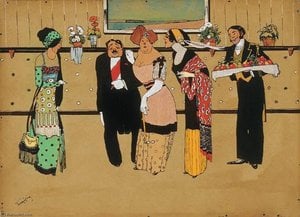
Geza Farago: A Hungarian Symbolist Visionary
Geza Farago (1877–1928) stands as one of Hungary’s most prominent figures in early 20th-century art, particularly celebrated for his distinctive contribution to the Symbolist movement and his masterful execution of poster design. His artistic journey began under the tutelage of Ferenc Újházy, establishing a foundation in drawing technique before venturing into the textile industry where he honed his craft. A pivotal moment arrived with his relocation to Paris in 1898, immersing him in the vibrant atmosphere of European artistic innovation and fostering connections with influential mentors like Alfonse Mucha.
Farago’s time at Mucha's atelier proved transformative, shaping his aesthetic sensibilities and introducing him to the techniques of decorative art – specifically the Japanese woodcuts—which would profoundly impact his subsequent work. This exposure fueled a fascination for bold colors, striking contours, and intricate ornamental patterns, elements that became hallmarks of his signature style. He participated in several exhibitions at the Nemzeti Szalon (National Salon), showcasing his talent alongside fellow Hungarian artists, and garnered recognition for his solo exhibition in Berlin in 1914.
The First World War served as a catalyst for Farago’s artistic productivity, propelling him into the role of propaganda poster designer—a task he undertook with considerable skill and creativity. Beyond his visual art, he excelled as a caricaturist and costume designer, cementing his reputation as a multifaceted artist who captured the spirit of his era. However, Farago's enduring legacy rests primarily on his extraordinary posters, which exemplify the dynamism and stylistic experimentation characteristic of Symbolism.
Under Mucha’s influence, Faragó developed a unique approach to decorative art—one that blended the elegance of Secession with astute humor and caricature. His canvases depict captivating figures against lush landscapes, exploring themes of loss, beauty, and timeless contemplation. Notable works include “The Modern Eve,” “Slim Woman with a Cat,” and "Paradise Lost," each demonstrating his mastery of color, composition, and expressive brushwork. These paintings are now housed in the Hungarian National Gallery, ensuring that Farago’s artistic vision continues to inspire audiences worldwide.
Faragó's distinctive style—characterized by bold contours, vibrant hues, and ornamental forms—established a precedent for Hungarian poster art. He skillfully blended visual artistry with social commentary, creating posters that resonated deeply with the public consciousness of his time. His enduring influence can be seen in subsequent generations of Hungarian artists who embraced similar stylistic conventions and thematic concerns.