A Witness to Industry: The Life and Art of Cavendish Morton
Cavendish Morton, a name resonating with the grit and grandeur of mid-20th century Britain, stands as a compelling chronicler of a nation in transition. Born in England (precise details remain elusive, adding to his mystique), Morton’s artistic journey unfolded against the backdrop of World War II and its immediate aftermath – a period profoundly shaping both his subject matter and aesthetic sensibility. He isn't an artist steeped in academic tradition or flamboyant self-promotion; rather, he is a quiet observer, meticulously documenting the power and poetry inherent in industrial landscapes and maritime activity. His work offers a unique perspective, eschewing romantic idealization for a stark realism tempered by a deep empathy for the working lives that fueled Britain’s engine of progress.
From Shipyards to Forges: The Core Themes
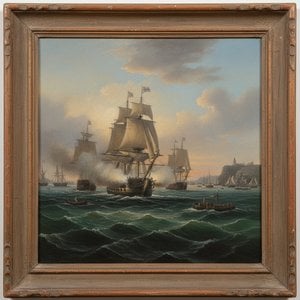
Morton's oeuvre is dominated by two central themes: marine scenes and industrial settings, particularly those associated with shipbuilding and heavy engineering. He found beauty not in idyllic countryside vistas but in the colossal structures of shipyards, the fiery heart of steelworks, and the relentless activity of docklands. Beardmore Forge, a sprawling complex on the River Clyde, became a recurring motif, providing him with an inexhaustible source of inspiration. His paintings aren’t merely depictions of machinery; they are portraits of human endeavor, capturing the scale of collective effort and the dignity of labor. The figures within his compositions – welders, riveters, crane operators – are not anonymous cogs in a machine but individuals engaged in purposeful work, their faces often etched with concentration or fatigue. He masterfully conveys the atmosphere of these environments: the deafening clang of metal, the acrid smell of smoke, and the intense heat radiating from furnaces.
Influences and Artistic Development
While a formal artistic lineage is difficult to pinpoint, Morton’s work reveals affinities with several traditions. The influence of Realism, particularly the social realism prevalent in interwar Britain, is evident in his commitment to depicting working-class life without sentimentality. He shares a sensibility with artists like John Armstrong and Norman Cornish, who similarly focused on the lives of miners and industrial workers. However, Morton’s palette often leans towards a more muted tonality, emphasizing atmosphere and texture over vibrant color. There's also a subtle echo of the Tonalism movement in his handling of light and shadow, creating a sense of drama and mystery within his scenes. His style is characterized by precise draftsmanship, careful observation, and a restrained emotionality – qualities that distinguish him from more overtly expressive contemporaries. He wasn’t interested in grand narratives or political statements; his focus remained on the inherent beauty and complexity of the subjects themselves.
Recognition and Legacy
Despite not seeking widespread acclaim, Morton achieved recognition within artistic circles during his lifetime. He was a member of the Norwich Twenty Group, an influential collective of East Anglian artists known for their progressive approach to painting. His work was exhibited at the Royal Academy on several occasions, demonstrating its acceptance by the established art world. Today, Cavendish Morton’s paintings are increasingly sought after by collectors and institutions interested in documenting Britain's industrial heritage. He represents a vital link to a bygone era – a time when heavy industry dominated the landscape and shaped the lives of millions. His work serves as a powerful reminder of the human cost and collective achievement inherent in the nation’s progress, offering a poignant glimpse into a world that has largely disappeared. Beyond their historical significance, his paintings possess an enduring aesthetic quality, captivating viewers with their masterful technique and evocative atmosphere. He is also gaining recognition for his potential contribution to Art Therapy, particularly within Suffolk where he resided later in life, as the repetitive nature of industrial scenes can be calming and grounding.