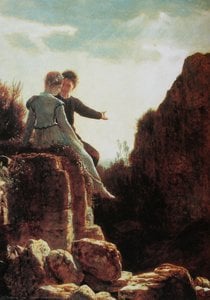
Saaren varjo
Basel, Sveitsi, tarjoaa lähtöpisteen elämälle, jota määrittää jännite aineellisen ja aavemaisen välillä. 16. lokakuuta 1827 syntynyt nuori mies, Christian Frederick Böcklinin ja Ursula Lippen poika, siirtyi lopulta isänsä silkkikaupan maailmasta Düsseldorfin akatemian kurinalaisiin saleihin. Schirmerin ohjauksessa hän alkoi omaksua maiseman kieltä, taidoksi, jota hän myöhemmin käytti ihmissielun maantiedon kartoittamiseen. Hän ei ainoastaan maalannut maisemia; hän rakensi maailmoja, joissa klassinen ja makaberi kohtaavat.
Siirtymä Düsseldorfin akateemisesta kurinalaisuudesta Pariisin valoon ja Rooman muinaiseen painoon merkitsee perustavanlaatuista muutosta hänen visiossaan. Louvressa hän omaksui mestareiden historian, mutta nimenomaan Italian tunnelma muovasi hänen kättään. Hän palasi Roomaan vuosien 1862 ja 1866 välisenä aikana, jolloin hänen palettinsa alkoi suosia voimakkaampia ja ekspressiivisempiä värejä. Kyseessä ei ollut renessanssin aurinkoinen ja loistokas Italia, vaan paikka, jota hallitsivat syvät varjot ja mytologinen painavuus. Hänen työnsä alkoi kääntyä allegoriseen suuntaan, hyödyntäen antiikin hahmoja kuolevaisuuden raskaan ja väistämättömän läsnäolon tutkimiseen.
Unien arkkitehtuuri
1800-luvun loppupuolella hänen mainettaan ankkuroi tietty, kummitteleva pakkomielle. Vuosien 1880 ja 1886 välisenä aikana hän loi viisi versiota teoksesta Kuolleiden saari. Tämä teos, joka sai inspiraationsa Firenzessa sijaitsevasta englantilaisesta hautausmaasta, jossa hänen tyttärensä lepää, nousi symbolismin liikkeen keskipisteeksi. Se on syvän tyven näky: kallioinen pieni saari, tummat sypressit ja rivipenkka, joka lähestyy hiljaista rantaa. Maalaus ei ainoastaan esitä paikkaa; se esittää olemisen tilan. Tämä kyky kuvata aineetonta – unien kuiskausta ja tuonpuoleisuuden painoa – nosti hänet uuden eurooppalaisen herkkyyden ytimeen.
Hänen tekninen lähestymistapansa hyödynsi usein paksua ja ekspressiivistä impasto-tekniikkaa, erityisesti teoksissa kuten La Guerre (1896). Tässä teoksessa kangas väristelee konfliktin kaaoksen voimasta. Hän välttää traditionalismin selkeitä linjoja ja valitsee sen sijaan tiheän, kerroksellisen sommittelun, jossa hahmot törmäävät raunioituneen arkkitehtuurin keskellä. Se on tuhon visuaalinen ilmentymä, jossa myytin ja todellisuuden välinen verho liukenee varjojen myrskyksi. Hänen tyylinsä risteili esirafaeliittien kanssa, mutta hän säilyi omana itsenään, keskittyen mystiikkaan, joka tuntui yhtä aikaa muinaiselta ja häiritsevän modernilta.
Vaikutuksen perintö
Hänen kuvastonsa vaikutus ulottui kauas kankaan ulkopuolelle, ulottuen jopa myöhäisromanttisen musiikin äänimaailmaan. Hänen maalauksensa tarjosivat visuaalisen stimuluksen säveltäjille, vaikuttaen erityisesti Gustav Mahlerin tuotannon tunnelmaan. Hänen kykynsä siltoittaa kuilu visuaalisen ja psykologisen välillä tarkoitti, että hänen vaikutuksensa tuntui niissä, jotka pyrkivät esittämään alitajuntaa. Hänen vaikutuksensa ulottui useisiin taiteilijasukupolviin:
- Hans Thoma, nuorempi taiteilija, jota vaikutti hänen symbolinen syvyytensä.
- Giorgio de Chirico, joka löysi syvän yhteyden Böcklinin sommitelmien eristyneisyydestä.
- Salvador Dalí ja Max Ernst, jotka ammensivat hänen kyvystään sekoittaa koominen elementti painajaismalliseen tunnelmaan.
- Marcel Duchamp, joka huomioi taiteilijan merkittävän vaikutuksen omaan kehitykseensä.
Hän kuoli Fiesolessa, Italiassa, jättäen jälkeensä teoskannan, joka kieltäytyi helposti luokiteltavasta. Hän oli sveitsiläisten maisemien, roomalaisten majatalojen ja mytologisten lehtien maalaaja, mutta hänen todellinen aiheensa säilyi tuntemattoman hiljaisena ja kestävänä läsnäolona. Hänen teoksiaan säilytetään merkittävissä kokoelmissa, kuten Kunstmuseum Baselissa ja Kunsthaus Zürichissä, toimien ankkureina niille, jotka tutkivat myytin ja kuolevaisuuden risteyskohtaa.
Kysymykset ja vastaukset
Missä ja minä vuonna Arnold Böcklin on syntynyt?
Arnold Böcklin syntyi Baselssä vuonna 1827.
Miten löydän teoksia artistilta Arnold Böcklin tietyn väripaletin mukaan?
Väripalettien mukaan-sivulla Arnold Böcklin:n teokset on ryhmitelty niiden väripalettien mukaan.
Kuinka monta Arnold Böcklin teosta on katseltavissa?
Voit selata taiteilijan Arnold Böcklin 233 teosta teosta sivulla Kaikki teokset.