Abraham Rademaker: A Dutch Master of Urban Landscapes and Architectural Prints
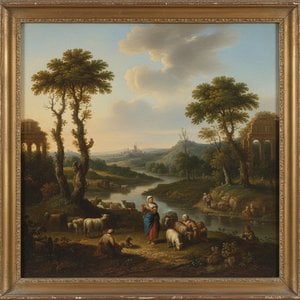
Abraham Rademaker (1677 – 1735) stands as a significant figure in the Dutch Golden Age artistic landscape, primarily recognized for his meticulous depictions of cityscapes and architectural drawings that captivated audiences and served as inspiration for numerous prints. Born in Lisse, Netherlands, Rademaker’s career spanned several decades during which he cultivated a versatile skillset encompassing Italianate landscapes alongside a prolific output of urban scenes—a genre particularly favored by the artistic tastes of his time.
Early Life and Training: Little is known about Rademaker's formative years; however, archival records indicate he received training in Haarlem, where he established himself as an artist and printmaker. Haarlem’s thriving printing industry fostered a collaborative environment that undoubtedly shaped Rademaker’s artistic vision—a crucial element for developing his distinctive style and mastering the techniques of architectural illustration. This dynamic setting encouraged experimentation and innovation, propelling him towards excellence within his chosen field.
Style and Technique: Rademaker’s signature aesthetic is characterized by unwavering attention to detail and a masterful command of perspective. His cityscapes, such as “The Jesuit Church on the Oude Langendijk in Delft,” exemplify this dedication—capturing not merely visual appearances but also conveying an impression of grandeur and depth through carefully considered compositional elements. He skillfully employed Renaissance principles of linear perspective, mirroring the artistic sensibilities prevalent during his era, resulting in images that resonate with realism and intellectual rigor.
Notable Prints and Illustrations: Rademaker’s renown rests principally upon his prints—remarkable reproductions of architectural drawings executed with exceptional accuracy. These images served as invaluable tools for urban planners and architects alike, documenting ambitious building projects and celebrating the beauty inherent in Dutch cities. His contribution to visual documentation solidified his position as a pivotal figure within the artistic landscape of his time.
Influences: Rademaker’s artistic sensibilities were profoundly impacted by the broader artistic currents circulating throughout Europe during the Baroque period. The dramatic chiaroscuro employed by Caravaggio—characterized by stark contrasts between light and shadow—served as an inspiration for Rademaker's compositions, enhancing emotional impact and creating a sense of theatrical grandeur. Furthermore, he absorbed the idealized landscapes championed by artists like Claude Lorrain, integrating elements of classical beauty into his own artistic endeavors.
Legacy: Although Rademaker’s output wasn’t as voluminous as some of his contemporaries—particularly Rembrandt—his prints endure as invaluable resources for reconstructing the visual culture of 18th-century Delft and beyond. His meticulous craftsmanship continues to inspire artists today, demonstrating the enduring value of observation and technical proficiency. Moreover, investigations into Delft's cultural heritage at Gemeentearchief reveal connections to the iconic Delft Blue pottery tradition—a symbol of Dutch artistic excellence and innovation—underscoring Rademaker’s place within a broader tapestry of artistic achievement. His work stands as a testament to the enduring legacy of Dutch Golden Age artistry.