Early Life and Florentine Beginnings
Sandro Botticelli, syntymänimi Alessandro di Mariano di Vanni Filipepi, nousi esiin poikkeuksellisen kulttuurikauden keskellä – varhaisrenessanssin (Quattrocento) aikana. Hänen elämänsä oli syvään juurtunut Firenzessä, kaupunkiin, joka oli tunnettu taiteellisesta ja sosiaalisesta elämästään; hän ei koskaan poistunut kotoaan Ognissanti -alueelta, mikä todistaa sekä perheen siteistä että luovaan ekosysteemiin, joka ruokki häntä. Hänen isänsä, Mariano Filipepi, oli aluksi kultaseppä ja myöhemmin tanner, mikä tarjosi hänelle varhaisen altistuksen käsityölle ja huolellisuudelle – ominaisuuksille, jotka vaikuttivat syvästi Botticellin taiteelliseen lähestymistapaan. Vaikka aluksi huhuttiin hänen harjoittelevan kultaseppänä, hän pian löysi kutsuntonsa Fra Filippo Lippin opettajuuden, merkittävän ajan Firenzen maalarin. Tämä harjoitus oli ratkaiseva, sillä se upposi hänet Firenzen koulun tekniikoihin ja esteettisiin arvoihin samalla kun se yhdisti hänet vaikutusvaltaisten sukunimiin, kuten Medicien sukuun.
A Style Defined by Grace and Myth
Botticellin taiteellinen tyyli on heti tunnistettavissa sen liriseen kauneuteen, johon kuuluu elegantti linjaisuus, virtaavat muodot ja herkkiä värejä. Hän mestarillisesti yhdisti myöhäisen goottilaisten traditioiden ja renessanssin nousun aikaa, ottaen vaikutteita taiteilijoista kuten Fra Angelico ja Paolo Uccello, mutta luoden samalla oman ainutlaatuisen näkökulmansa. Hänen hahmonsa ovat eteerisiä, usein kuvattuna pitkissä mittasuhteissa ja sulavissa asennoissa, jotka välittävät sekä rauhaa että hienovaraista melankoliaa. Työnsä keskeinen piirre on usein klassisen mytologian sisällyttäminen – heijastuksena renessanssin humanististen kiinnostusten koettelemisesta Firenzessä. Hän ei ainoastaan kuvannut näitä muinaisia tarinoita; hän upotti ne uusiin merkityksiin, tutkien teemoja kuten rakkautta, kauneutta ja hengellistä kaipuuta. Botticelli oli innovatiivinen aikansa standardeihin verrattuna. Hän käytti usein hopeakynän piirustusta alustuksena maalauksilleen, mikä edesauttoi niiden hehkua ja herkkiä yksityiskohtia. Hänen temperan maalin käyttönsä mahdollisti tarkat esitykset ja eloisat värit, kun taas myöhemmät kokeilut öljymaaleilla laajensivat hänen ilmaisukykyään.
Iconic Masterpieces and Artistic Development
Botticelli’n perintö perustuu muutamiin ikonisiin maalauksiin, jotka vangitsevat edelleen yleisön huomion vuosisatojen jälkeen.
Venuksen syntymä (c. 1486), luotu esimerkiksi, on ikoninen teos, joka esittää jumalatar Venusta syntymässä meren vaahdosta, ja se symboloi renessanssin aikakauden ihanteita kauneudesta ja harmoniasta. Sen elegantti kompositiot, herkät väripaletit ja herättävät symboliikat ovat tehneet siitä ikuisen symbolin ajanjaksona. Samoin tunnettu
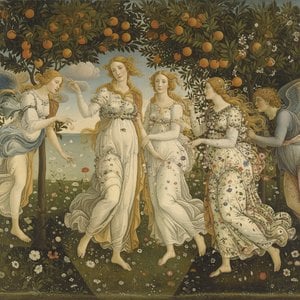
Kevät (c. 1482), luotu esimerkiksi, on monimutkainen allegorinen maalaus keväästä ja rakkaudesta, joka on täynnä symbolisia hahmoja klassisen mytologian hahmoista. Kevät on kooltaan varsin suuri, noin kaksi metriä korkea ja runsaat kolme metriä leveä. Botticelli’n taiteellinen matka kehittyi selkeisiin vaiheisiin. Varhaiset 1470-luvun vuodet näkivät hänet keskittyneen uskonnollisiin aiheisiin, hioen teknisiä taitojaan ja vakiinnuttaen mainetta taitavana suorittajana. 1480-luvulla tapahtui hänen luovuutensa huippu, kun hän loi tunnetuimmat mytologiset maalauksensa. Myöhemmin 1490-luvulla hänen tyylinsä muuttui kuitenkin vaikutteesta Girolamo Savonarolan intohimoiseen opetukseen – Dominikaaniluostarin munkki, joka tuomitsi mitä hän näki dekadenssin ja moraalin korruptioksi Firenzessä. Tämä aika johti synkempien ja tunteellisesti latautuneempiin teoksiin, jotka heijastivat kasvavaa hengellistä intensiteettiä.
Major Works
- Venuksen syntymä (c. 1486): Ikoninen teos, joka edustaa renessanssin aikakauden ihanteita kauneudesta ja harmoniasta.
- Kevät (c. 1482): Monimutkainen allegorinen maalaus keväästä ja rakkaudesta.
- Adoration of the Magi (1475-1476): Osoittaa varhaista mestarillisuutta kompositiossa ja perspektiivissä.
- Mystic Nativity (1501): Heijastaa muutosta hengellisiin teemoihin hänen myöhemmässä urassaan.
Influences and Legacy
Botticelli’n taiteen kehitykseen vaikuttivat merkittävästi varhaiset renessanssimaalarit kuten Fra Filippo Lippi ja Paolo Uccello, sekä antiikin kreikkalaisen ja roomalaisten taiteilijoiden vaikutus. Hänen tyylinsä yhdisti goottilaista ja renessanssimuotoa, mikä johti uuteen ja ainutlaatuiseen visioon. Botticelli’n teoksissa on usein nähtävissä klassisen mytologian hahmoja, kuten Venuksen, Cupidon ja Zephyrin, jotka edustavat antiikin jumaluuksia ja ihanteita. Hänen tyylinsä vaikutti myös Pre-Raphaeliteihin, jotka olivat 1800-luvun lopulla ja 1900-luvun alussa vaikuttanut taidekollektiivi, joka arvosti Botticelli’n linjaista tyyliä ja hänen luovaa näkemystään. Botticelli’n teokset ovat edelleen inspiraation lähde monille taiteilijoille ympäri maailmaa. Hänen työnsä on todiste Firenzen taiteellisesta saavutuksesta ja renessanssin humanismin voimasta.



 Esikatselu
 Vaihda tulosteeseen
 Jaa
Jaa Jaa
Jaa
 Tarkemmat tiedot

 Lataa
Lataa
 Samanlaisia
 Röntgenkuva
 Diaesitys
 Tilastot


 Näytä lisää






































 Lasivaihtoehto on saatavilla vain alle 110 cm kokoisina teoksina