Varhaiset vuodet, perhe ja koulutus
Jan Van Eyck syntyi noin vuonna 1390 maailmaan, jossa sivellin oli perintöasia. Hän ei ollut tyhjästä ilmestynyt yksinäinen kyky, vaan osa maalaajien sukua. Hän kasvoi veljiensä Hubertin ja Lambertin rinnalla taloudessa, jossa pigmenttien salaisuudet ja valmistusmenetelmät jaettiin todennäköisesti yhteisen pöydän ääressä. Tämä perheside tarkoitti, että hänen varhainen ymmärryksensä väristä ja muodosta muovautui van Eyck-nimen kollektiivisen tietämyksen pohjalta.
Ennen kuin hän koskaan herätti herttuoiden tai diplomaattien huomion, Jan Van Eyck ja hänen veljensä kävivät läpi ankaran koulutuksen, joka vaati äärimmäistä kärsivällisyyttä. Heitä koulutettiin miniatyyrimaalareiksi ja kuvittajiksi, jotka työskentelivät käsikirjoitusten herkimmillä pinnoilla. Tämä varhainen kurinalaisuus vaati vakaata kättä ja silmää pienimmälle mahdolliselle yksityiskohdalle. Juuri näissä pienissä ja arvokkaissa tiloissa hän oppi ensimmäisen kerran hallitsemaan valoa ja varjoa – taidoksi, joka määrittäisi myöhemmin hänen lähestymistapansa paljon suurempiin kangaspinnoihin.
Perheen työpaja oli yhteisen työn ja yhteisten kunnianhimojen paikka, mutta kohtalon julmuus sai veljesten polut lopulta erkaantumaan. Siinä missä Jan jatkoi ammattitaitonsa hioimista, hänen veljensä Hubert kuoli vuonna 1426. Tämä menetys jätti Janin kantamaan perheen taiteellisen perinnön raskasta taakkaa, mukaan lukien merkittävien uskonnollisten teosten loppuunsaattaminen, joita veljekset olivat aloittaneet yhdessä. Hän kulki eteenpäin paitsi käsityöläisenä, myös miehenä, joka oli hallinnut välineensä olemuksen vuosien huolellisen ja pienen mittakaavan tutkimuksen kautta.
Suojelijat, työpaja ja tilaukset
Jan Van Eyckin elämää muovasivat Burgundin hovin korkean panoksen poliittiset liikkeet. Hän ei työskennellyt ainoastaan hiljaisessa ateljeessa, vaan hän liikkui vallan saleissa palvellen Burgundin herttua Filip Hyvää. Tämä asema toi hänet aikakautensa vaikutusvaltaisimpien henkilöiden sisäpiiriin. Ennen pitkää virkaansa hovissa hän löysi työtä Haagista, palvellen Hollannin hallitsijaa Johannes Baiierin palveluksessa. Hänen läsnäolonsa tuntui vilkkaissa keskuksissa, kuten Brugge ja Lille, joissa hänen maineensa houkutteli puoleensa niin hartaita kuin mahtaviakin.
Hänen tehtävänsä ulottuivat usein paljon kankaan maalaamista pidemmälle. Herttua luotti häneen diplomaattina ja lähetti hänet virallisille missioille, jotka vaativat sekä harkintakykyä että älykkyyttä. Vuonna 1428 hän matkusti Portugaliin maalaamaan Portugalin Isabellaa, tehtävä, joka edellytti ulkomaisten hovien monimutkaisten verkostojen hallitsemista. Nämä matkat ja poliittiset vastuualueet tarjosivat vakautta ja resursseja, joita hänen tekniset kokeilunsa vaativat. Hän oli maailmankansalainen, joka viihtyi yhtä lailla kuninkaiden seurassa kuin kappellien hiljaisuudessa.
Hänen taitonsa kysyntä oli suurta yhteiskunnan kaikissa kerroksissa. Hän sai lukuisia uskonnollisia tilauksia ja loi teoksia, jotka puhkivat aikakauden syvää uskoa. Samanaikaisesti nouseva porvaristo ja vakiintunut aateli tavoittelivat hänen kättään. Hän maalasi Burgundin hovivieraiden, paikallisten aatelisten, kirkonmiesten ja varakkaiden kauppiaiden kasvoja, vangiten muotokuvat niistä ihmisistä, jotka muovasivat viidennen vuosisadan taloutta ja henkistä maailmaa.
Tekniikka ja tyyli
Hänen tapansa käsitellä valoa oli hiljainen vallankumous. Siinä missä muut taistelijat munan-temperan tasaisella ja mattapintaisella viimeistelyllä, hän löysi uuden tavan saada värit hengittämään. Hän hallitsi öljymediaan rakentamalla ohuita, läpikuultavia pigmenttilasauksia, jotka kerrostuivat toistensa päälle. Tämä menetelmä antoi hänelle mahdollisuuden vangita se tapa, jolla valo todellisuudessa käyttäytyy osuessaan pintaan. Hän ei ainoastaan maalannut väriä; hän maalasi tavan, jolla valo elää värin sisällä. Hienovaraisen varjostuksen ja hehkuvien sävyjen avulla hän saavutti syvyyden, joka teki fyysisen maailman tekstuureista käsin kosketeltavia. Hänen siveltimenvetojensa kautta saattoi melkein tuntea raskaan samettisen viitan painon tai kiillotetun metalliastian kylmän kovuuden.
Hänen silmänsä oli koulutettu näkemään olemassaolon pienimmätkin yksityiskohdat. Häntä ajoi eteenpäin levoton uteliaisuus pienimpiin asioihin; hän tallensi tarkan tavan, jolla valo tarttuu yksittäiseen hiussuortuvaan tai ihmisen ihon hienovaraiseen tekstuuriin. Tämä yksityiskohtien pakkomielle ulottui myös siihen tilaan, jossa hänen hahmonsa asuivat. Hän hyödynsi ilmaperspektiiviä luodakseen valtavuuden tuntua, näyttäen kuinka kaukaiset maisemat pehmenevät siniseen usvaan vetäytyessään kohti horisonttia. Tämä antoi hänen sommitelmilleen hienostuneen syvyysvaikutelman, joka veti katsojan uskottavaan, kolmiulotteiseen todellisuuteen.
Hän oli myös mies, joka halusi tulla tunnetuksi omalla kädellään. Aikakaudella, jolloin monet taiteilijat pysyivät nimettöminä käsityöläisinä, hän vakuutti identiteettinsä allekirjoittamalla teoksensa nimellä "JOHANNES DE EYCK". Hän liitti allekirjoitukseensa usein henkilökohtaisen mottonsa, "Als ich kan", mikä tarkoittaa "Niin hyvin kuin osaan". Se oli rohkea väite hänen teknisestä taidostaan, joka oli kaiverrettu suoraan hänen luomustensa todellisuuteen.
Keskeiset teokset ja mestariteokset
Hänen kunnianhimonsa mittakaava on kenties nähtävissä parhaiten teoksessa Ghentin alttaritaulu, massiivinen kaksitoista paneelin polyptyykki, jonka hän viimeisteli vuonna 1432. Tämä teos, joka esittää Lampaan palvontaa, vaati syvällistä hallintaa monimutkaista uskonnollista symboliikkaa ja realistisia hahmoja kohtaan. Se oli monumentaalinen ponnistus, joka osoitti, kuinka hän kykeni hallitsemaan valtavia ja yksityiskohtaisia kohtauksia säilyttäen samalla hengellisen painoarvon. Hänen kykynsä kuvata maailma niin selkeästi ei rajoittunut vain jumalalliseen; hän sovelsi samaa intensiivistä havainnointia myös ihmisten yksityisiin elämään.
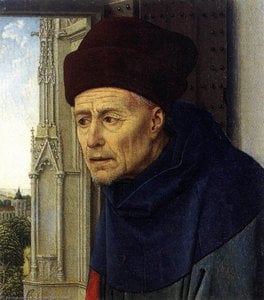
Vuonna 1434 hän maalasi Arnolfinin muotokuvan, allekirjoitetun ja päivätyn teoksen, joka vangitsee kodinomaisen kohtauksen hämmästyttävällä tarkkuudella. Sen kehyksissä koira edustaa uskollisuutta ja hylätyt kengät merkitsevät pyhää maata, kun taas taustalla oleva peili heijastaa todellisuuden piilotettua kerrosta. Tämä tarkkuus ulottui myös hänen henkilökohtaisiin tutkimuksiinsa, kuten vuoden 1433 öljyvärimaalaukseen, joka tunnetaan nimellä Portrait of a Man, tai kenties itsetutkisteluun. Teoksen kehyksiin on kaiverrettu näkyvästi hänen henkilökohtainen mottonsa "Als ich kan", joka on hiljainen vakuutus hänen omasta taidostaan. Hän jatkoi näiden intiimien havaintojen hienosäätöä myöhäisvuosinaan, mukaan lukien Madonna ja lapsi sekä kanoni van der Paele vuonna 1436 sekä kantslerin Rolinin Madonna. Jopa elämänsä loppupuolella, noin vuonna 1440, hän käänsi katseensa jumalalliseen teoksessaan Portrait of Christ.
- Ghentin alttaritaulu (1432)
- Portrait of a Man (1433)
- Arnolfinin muotokuva (1434)
- Madonna ja lapsi sekä kanoni van der Paele (1436)
- Portrait of Christ (noin 1440)
Perintö ja vaikutus
Jan Van Eyckin käsissä taiteellinen loisto muuttui tekniseksi mestaruudeksi, joka jätti jäljen, jota aika ei ole voinut pyyhkiä pois. Häntä pidetään tyylisuunnan edelläkävijänä, jolle oli ominaista äärimmäisen yksityiskohtainen realismi pintojen heijastuksissa ja siinä, miten luonnonvalo laskeutuu maailman ylle. Täydellistämällä öljylasuurteiden käytön hän antoi taiteilijoille uuden tavan vangita korujen hienovaraiset välkkeet tai ihon pehmeä tekstuuri. Hänen menetelmänsä määrittivät, miten sukupolvet taiteilijoita lähestyivät valoa ja pintaa, siirtäen maalaustaidetta pois menneisyyden litteistä ja mattapintaisista ilmenemismuodoista kohti valoa hehkuvaa, kolmiulotteista todellisuutta.
Tämä muodollisen sommittelun ja teknisen taituruuden mestaruus toi hänelle maineen varhaisen alankomaalaisen maalaustaiteen todellisena innovaattorina. Hänen vaikutuksensa ei rajoittunut vain Euroopan pohjoisosiin; hänen teoksensa toimivat esikuvana sukupolville taiteilijoita sekä Alppien pohjois- että eteläpuolella. Vaikka tyylit muuttuivat, hänen asettamansa standardit tarkkuudelle ja havainnointikyvylle pysyivät vertailukohtana niille, jotka pyrkivät kuvaamaan aineellista maailmaa täydellisellä selkeydellä.


 Esikatselu
 Jaa teos
 Jaa
Jaa
 Tiedot
 Opas
Opas

 Lataa kuva
 Samanlaisia kohteita
 Röntgenkuvaus
 Diaesitys
 Kysymykset ja vastaukset
 Tilastot

 Lue lisää
 Vaihda tulosteeseen





































 Lasivaihtoehto on saatavilla vain alle 110 cm kokoisille teoksille